
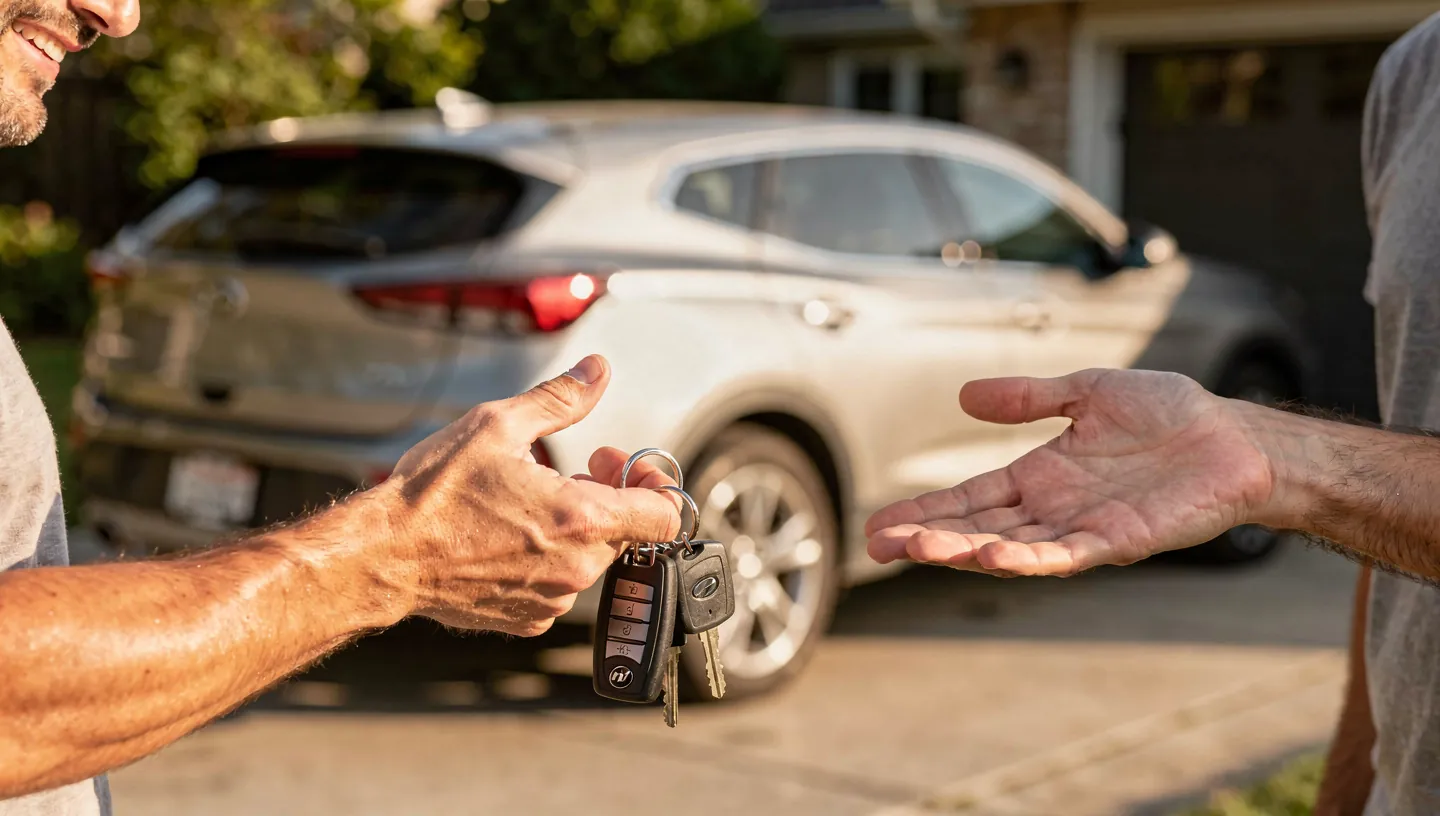
So, is insurance on the car or the driver? The short answer is: insurance primarily follows the car. Under the legal principle of permissive use, the vehicle owner’s auto policy typically extends to cover any licensed driver operating the vehicle with permission — even if that driver isn’t listed on the policy. But this rule has critical boundaries, exceptions, and nuances that can mean the difference between a fully covered claim and a financially devastating denial.
The “insurance follows the car” rule applies broadly to liability coverage, collision coverage, and comprehensive coverage. However, the dynamic shifts considerably when it comes to household members, long-term unlisted drivers, commercial use, and rideshare work. Drivers also carry their own layer of protection through non-owned auto insurance, which acts as a financial safety net when the owner’s policy limits run out.
Whether you’re lending your car to a friend, borrowing a colleague’s vehicle, or driving for a gig economy platform, understanding exactly where coverage begins and ends is not optional — it’s essential. Gaps in this knowledge cost policyholders thousands of dollars every year in denied claims and out-of-pocket liability. This guide breaks down everything you need to know, clearly and completely.
Key Takeaways
- The General Rule: Auto insurance follows the vehicle, covering permissive drivers who operate the car with the owner’s permission.
- Liability Coverage: The owner’s policy is the primary protection, paying for injuries and property damage caused to others when a permissive driver is at fault.
- Physical Damage (Collision/Comprehensive): These coverages protect the car itself, regardless of who is behind the wheel at the time of the incident.
- Household Drivers: Regular household drivers — including adult children and live-in partners — must typically be listed on the policy to be fully and consistently covered.
- Driver’s Perspective: A driver’s own personal auto policy provides secondary (excess) coverage through non-owned auto insurance if the owner’s limits are exhausted.
- Exclusions: Coverage is voided for drivers who are explicitly excluded by name on the policy or who are operating the vehicle without permission.
- Modern Trends: Telematics devices and AI-powered fraud detection are making it increasingly difficult to hide unlisted drivers or commit insurance “fronting.”
The General Rule: Insurance Follows the Car
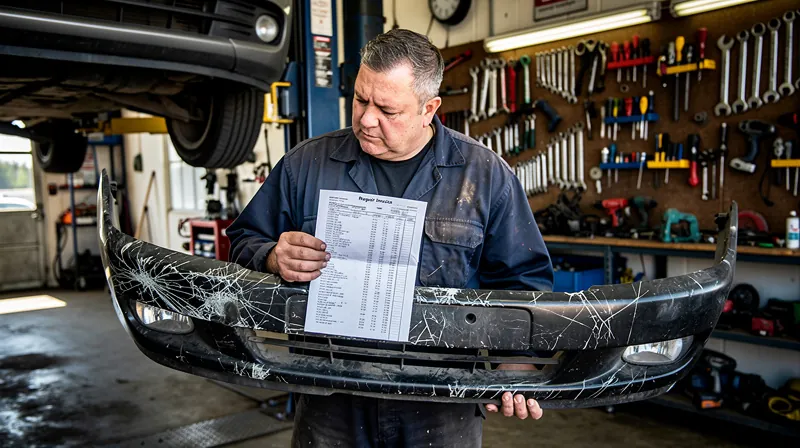
Auto insurance is tied to the vehicle, not the individual driver. This means that when you insure your car, you are purchasing a policy that covers the vehicle and extends protection to anyone you permit to drive it. The owner’s policy becomes the first line of financial defense in an accident, regardless of whether the driver is listed on the declaration page.
This principle is foundational to how U.S. auto insurance law operates in the vast majority of states. When an insurer underwrites a policy, they are accepting the risk associated with the car being used by the owner — and, by extension, by individuals the owner reasonably allows to drive it. The technical term for this extension of coverage is permissive use.
It’s important to understand what this rule does and does not protect. The owner’s policy protects the vehicle owner and third parties (people injured in an accident), but it does not provide personal coverage to the driver in terms of their own medical bills or personal liability beyond the policy’s limits. That’s where the driver’s own insurance enters the picture.
What is Permissive Use Defined?
Permissive use refers to the explicit or implied consent given by a vehicle owner for another person to operate their car. Courts and insurers recognize two types of permission, and the distinction between them can directly affect whether a claim is honored.
- Express permission: The owner provides explicit verbal or written consent — for example, saying “You can borrow my car this weekend.”
- Implied permission: The owner’s behavior suggests consent without direct communication, such as regularly leaving keys accessible or allowing someone to use the vehicle on prior occasions.
The gray area lies in what courts call “reasonable belief” of consent. If a driver genuinely believed they had permission — even without explicit confirmation — some jurisdictions will still extend coverage. However, insurers often contest these claims vigorously, making documentation of permission an important practical step whenever possible.
Liability Coverage Breakdown
When a permissive driver causes an accident, the owner’s liability coverage is the primary policy that pays — first and up to its limits — for bodily injury and property damage sustained by the other party. The driver’s own insurance does not come into play until the owner’s limits are fully exhausted.
Here is the standard payout order for a permissive-use accident:
- Owner’s Liability Policy (Primary): Pays up to the policy’s stated limits for third-party injuries and property damage.
- Driver’s Non-Owned Auto Insurance (Excess/Secondary): Kicks in only if the damages exceed the owner’s liability limits.
This structure means that as the vehicle owner, your insurance policy — and your premium rates — are directly impacted by the actions of anyone you permit to drive your car. Lending your car to a poor driver is not just a safety risk; it’s a financial one.
The Driver’s Perspective: Non-Owned Auto Coverage
If you cause an accident while driving someone else’s car, your own personal auto policy typically provides secondary, or “excess,” coverage through a provision called non-owned auto insurance. This critical layer of protection is frequently overlooked by drivers who assume the vehicle owner’s policy fully handles everything — it doesn’t, especially when damages are large.
Most standard personal auto policies include non-owned auto coverage as a built-in component of the liability portion. This means that even when you don’t own the vehicle, your policy can still respond — but only after the owner’s policy has paid out its maximum limits. Understanding this distinction is vital for anyone who regularly borrows vehicles.
Primary vs. Secondary Coverage
The relationship between the owner’s policy and the driver’s policy follows a strict hierarchical order. The owner’s policy is always primary; the driver’s policy is always excess. This isn’t negotiable — it’s a standard principle embedded in almost every auto insurance contract written in the United States.
Here’s a concrete example to illustrate how this plays out in practice:
Scenario: You borrow a friend’s car and cause an accident resulting in $100,000 in damages to the other party. Your friend carries liability coverage with a $50,000 limit. Your friend’s insurer pays the first $50,000. Your own personal auto policy — through non-owned auto coverage — then pays the remaining $50,000, protecting you from a devastating personal judgment.
Without your own policy as a backstop, you would be personally liable for that remaining $50,000. This is why maintaining your own auto insurance is valuable even when you don’t own a vehicle — a fact that surprises many consumers who have sold their cars but still occasionally drive borrowed or rented vehicles.
There is one important limitation: collision and comprehensive coverage on the driver’s own policy do not extend to vehicles they do not own. If you borrow a friend’s car and crash it, your collision coverage will not pay for repairs to their vehicle. Only the owner’s collision coverage — if they carry it — will protect the car itself.
| Coverage Type | Owner’s Policy | Driver’s Policy |
|---|---|---|
| Liability (Third-Party Injury/Damage) | Primary — pays first | Excess — pays after owner’s limits |
| Collision (Damage to the Borrowed Car) | Primary — applies to the vehicle | Does NOT extend to non-owned vehicles |
| Comprehensive (Non-collision Vehicle Damage) | Primary — applies to the vehicle | Does NOT extend to non-owned vehicles |
| Medical Payments / PIP | May cover driver’s injuries | Driver’s own MedPay/PIP may apply |
Critical Exclusions: When You Aren’t Covered

The permissive use rule has firm boundaries, and crossing them can leave both the driver and the vehicle owner entirely without coverage. Insurers are not obligated to pay claims that fall outside the policy’s defined terms, and two of the most common reasons claims are denied involve excluded drivers and non-permissive use of the vehicle.
These are not edge cases. Failure to list a regular household driver is one of the leading causes of claim denial in personal auto insurance. Understanding who must be listed — and under what circumstances — is essential for anyone who shares a vehicle, lives with other drivers, or allows friends to borrow their car with any regularity.
Excluded Drivers and Household Members
Insurance companies distinguish between occasional permissive drivers and regular household drivers, and they treat these two groups very differently. A household member who drives the car regularly is expected to be listed on the policy — and failing to do so is treated as a material misrepresentation, which can void coverage entirely.
Here is how the rules typically break down by relationship:
- Spouses and domestic partners: Usually automatically covered under most policies, but insurers expect them to be listed. Unlisted spouses can trigger coverage disputes.
- Minor children (teen drivers): Often covered under the parent’s policy once they are licensed, but must typically be formally added. Teen drivers significantly increase premiums.
- Adult children living at home: Must be listed on the policy. An adult child who drives the family car regularly but is not listed is a major coverage gap.
- Roommates: Generally NOT covered under the vehicle owner’s policy. A roommate is not a household member in the insurance sense and will likely be excluded from coverage unless specifically added.
- Explicitly excluded drivers: Insurers can allow owners to formally name an individual as an excluded driver (e.g., a high-risk family member). If that person drives the car and causes an accident, all coverage is voided — including protection for the owner.
The financial stakes here are severe. If a claim is denied because an unlisted driver was operating the vehicle, the owner could be personally sued and held liable for all damages, potentially losing savings, property, and future wages.
Non-Permissive Use
If someone takes your vehicle without your knowledge or explicit permission, it is legally classified as theft — and standard auto insurance does not cover damages caused by an unauthorized driver. This applies even in situations that feel ambiguous, such as a friend taking the car for a “quick errand” without asking.
The practical consequences of non-permissive use are significant:
- The vehicle owner’s insurance company will deny liability claims, leaving victims of the accident to sue the unauthorized driver directly.
- The unauthorized driver has no coverage from the owner’s policy and, unless they carry their own insurance with non-owned auto coverage, faces unlimited personal liability.
- The owner may still face legal challenges if a court determines that they were negligent in securing access to the vehicle (e.g., leaving keys in an unlocked car).
The lesson is straightforward: always make permission explicit, never assume implied permission is legally sufficient, and secure your keys to prevent unauthorized access.
Rental Cars, Commercial Use, and Special Situations
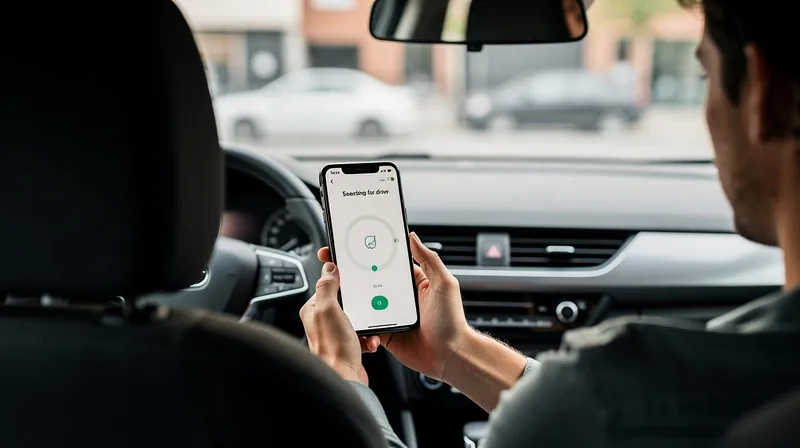
Your personal auto insurance policy extends to rental cars and loaner vehicles in most circumstances, but it is critically voided the moment you begin using your vehicle for commercial purposes — including driving for rideshare and delivery platforms. This is one of the most consequential and most misunderstood distinctions in all of consumer auto insurance.
The gap between personal coverage and commercial use has grown dramatically with the rise of the gig economy. Millions of Americans drive for Uber, Lyft, DoorDash, Amazon Flex, and similar platforms under the false assumption that their personal policy covers them. It does not — and the financial exposure from this misunderstanding can be catastrophic.
Rental Cars and Loaner Vehicles
When you rent a car from an agency like Enterprise, Hertz, or Avis, your personal auto policy generally extends the following coverages:
- Liability coverage: Extends to the rental vehicle, protecting you against claims from third parties if you cause an accident.
- Collision and comprehensive coverage: If you carry these on your personal vehicle, they typically extend to rental cars of a similar or lesser value. This means you may not need to purchase the rental company’s expensive Collision Damage Waiver (CDW).
- Credit card benefits: Many premium credit cards provide secondary collision coverage for rentals when the card is used to pay for the rental. This can fill gaps left by your personal policy’s deductible.
Important caveat: Always check your specific policy before declining rental car coverage. Some policies exclude rentals, and policies with only liability coverage (no collision/comprehensive) will leave you responsible for physical damage to the rental vehicle.
Commercial Use and Rideshare
Driving for Uber, Lyft, DoorDash, FedEx, or any other commercial platform immediately voids your standard personal auto insurance policy while you are operating in a commercial capacity. Insurers classify gig economy driving as “commercial use” — a fundamentally different risk profile that standard personal policies are not designed or priced to cover.
The rideshare coverage gap breaks down into three critical phases:
- App Off: Your personal policy provides normal coverage. You are not operating commercially.
- App On, No Passenger (Waiting for a Match): Your personal policy is voided. The rideshare company’s contingent liability may apply, but only at reduced limits. This is the most dangerous coverage gap.
- Passenger En Route or In Vehicle: The rideshare company’s commercial policy ($1M liability) typically applies, providing stronger coverage.
To close this gap, drivers must purchase one of the following:
- A rideshare endorsement added to their personal policy (available from Progressive, State Farm, GEICO, and others at a modest premium increase).
- A commercial auto policy that explicitly covers gig economy and delivery work.
Failure to secure appropriate coverage while driving commercially isn’t just a financial risk — it is a policy violation that can result in permanent policy cancellation if the insurer discovers the unauthorized commercial use.
Modern Trends: Telematics and AI
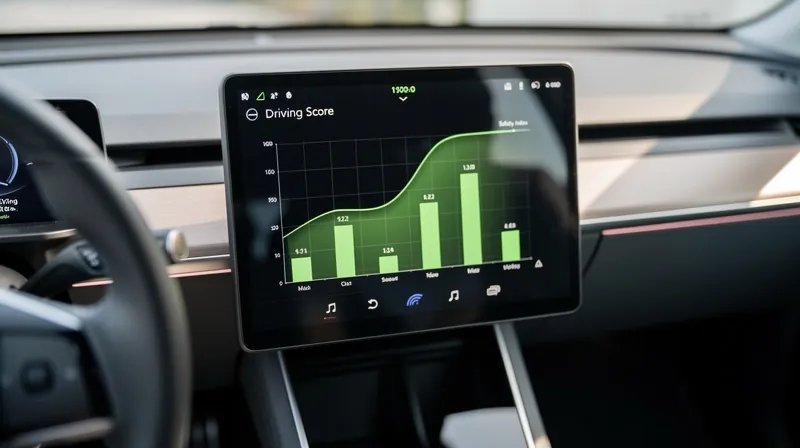
The insurance industry is undergoing a technological revolution that is fundamentally shifting the “car vs. driver” dynamic. Usage-Based Insurance (UBI) programs, powered by telematics devices and artificial intelligence, are enabling insurers to monitor not just how a car is driven, but who is actually driving it — making the old tricks of hiding risky drivers far more difficult and far more costly when discovered.
For the average policyholder, this shift has both benefits and risks. Safe drivers can earn meaningful premium discounts through telematics programs. But unlisted drivers, permissive users with poor driving habits, and those attempting to commit insurance fraud face increasing exposure as AI systems become more sophisticated at detecting anomalies in driving data.
Telematics and AI Fraud Detection
Telematics works by collecting real-time driving data through a plug-in device (OBD-II port), a smartphone app, or integrated vehicle systems. This data typically includes speed, braking patterns, acceleration, cornering behavior, time of day, and mileage. Insurers analyze this data to assess risk and price policies accordingly.
Here’s where it gets particularly relevant to the “car vs. driver” question:
- Detecting unlisted drivers: AI systems can identify statistically distinct driving patterns within the same vehicle — for example, one driving profile that is consistently aggressive and another that is consistently cautious. This flags the likely presence of an unlisted driver.
- Fronting detection: Fronting is the practice of listing a low-risk driver (such as a parent) as the primary driver on a policy for a high-risk driver (such as a teenager) to obtain lower premiums. It is insurance fraud. AI models trained on telematics data can identify when the actual driving behavior doesn’t match the listed driver’s risk profile, triggering investigations and policy cancellations.
- Impact on permissive users: In UBI programs, a permissive driver with a poor driving score can negatively impact the vehicle owner’s discount — or trigger a premium increase — even if the permissive driver was entirely at fault and covered under the policy.
The rise of telematics represents a structural shift in how insurers think about risk. Traditionally, insurance underwriting was retrospective — based on past claims history and statistical profiles. Today, it is increasingly behavioral and real-time, with the actual driver’s habits mattering as much as the car’s registration. Policyholders who fail to account for this shift risk both premium increases and fraud investigations without even realizing they’ve triggered a red flag.
Frequently Asked Questions
Can someone drive my car if they are not on my insurance nationwide?
Yes, in most states, a person can legally drive your car if you give them permission, and your insurance will typically cover them under the permissive use doctrine even if they are not listed on your policy. However, this varies by state law and individual policy language — some policies restrict permissive use coverage or apply reduced limits for unlisted drivers. Always review your specific policy terms before allowing an unlisted person to drive your vehicle.
What happens if the car is insured but not the driver?
If the car is insured and the driver has the owner’s permission, the owner’s insurance typically covers the accident under permissive use — even though the driver is not specifically listed on the policy. However, if the driver is formally excluded by name on the policy, or if they are a household member who should have been listed, the insurer may deny the claim entirely. The uninsured driver could then face personal liability for all damages.
Can my girlfriend drive my car if she’s not on my insurance?
Yes, your girlfriend can generally drive your car with your permission, and your insurance will cover her under permissive use — as long as she does not live in your household and is not a regular driver of the vehicle. If she lives with you, insurers typically expect her to be listed on the policy as a household member. Failure to list a live-in partner who regularly drives the car is a common cause of claim denial.
Can I drive someone else’s car if I am fully comprehensive?
In the U.S., having comprehensive coverage on your own vehicle does not extend physical damage coverage to a car you borrow — your comprehensive and collision coverages are tied to your own insured vehicle, not to you as a driver. However, your liability coverage will typically provide secondary (excess) protection if you cause an accident in someone else’s car and the owner’s policy limits are insufficient. For physical damage to the borrowed vehicle, only the owner’s collision and comprehensive coverage applies.
Does my auto insurance cover a rental car I borrow?
In most cases, yes — your personal auto insurance policy extends liability, collision, and comprehensive coverage to rental cars, making it unnecessary to purchase the rental company’s Collision Damage Waiver. However, this only applies if you currently carry collision and comprehensive on your personal vehicle, and coverage limits match your personal policy. Always verify with your insurer before declining rental coverage, as some policies include rental exclusions.
Can I drive for Uber or Lyft with a personal policy?
No — driving for Uber, Lyft, or any rideshare platform with only a personal auto policy leaves you with a significant coverage gap, particularly during the period when the app is on but no passenger has been accepted. Standard personal policies explicitly exclude commercial use, and most insurers will deny claims that arise during commercial driving activity. You must add a rideshare endorsement to your personal policy or purchase a separate commercial auto policy to be properly covered.
Does comprehensive coverage cover anyone driving my car?
Yes, comprehensive coverage follows the car, not the driver — meaning it covers damage to your vehicle from non-collision events (theft, weather, vandalism) regardless of who is operating it at the time, as long as they have your permission. If the driver is formally excluded from your policy, however, coverage may be voided even for comprehensive claims. Additionally, a driver who is not listed but causes a comprehensive-related loss may still trigger a claims investigation.
What is “fronting” in car insurance?
Fronting is a form of insurance fraud in which a higher-risk driver (typically a young or inexperienced driver) is insured under a lower-risk driver’s policy as the “primary” driver to obtain artificially reduced premiums. For example, a parent lists themselves as the primary driver of a car that their teenager actually drives most of the time, in order to benefit from the parent’s lower risk classification. Fronting is illegal, can result in policy cancellation and claim denial, and is increasingly detected by AI-powered telematics analysis that identifies mismatches between the listed driver’s profile and actual driving behavior data.