

Driving off the dealership lot in your new car is one of life’s most satisfying milestones — but the moment you take the wheel, an important insurance transition begins. Whether you’re replacing an old vehicle or buying your very first car, understanding how insurance works when you buy a new car is critical to staying protected, compliant, and financially secure from day one.
Most existing auto insurance policies automatically extend a temporary “grace period” to cover your new vehicle, but this protection is conditional and time-sensitive. It doesn’t last forever, and it may not provide the level of coverage your lender requires. Missing the window to formally add your vehicle to your policy can leave you exposed to serious legal and financial consequences.
Navigating the administrative side of a new car purchase — proof of insurance, VIN registration, lienholder notifications, and coverage selection — is just as important as negotiating the purchase price. If you’re financing the vehicle, your lender imposes coverage mandates that go well beyond what most states require. And if you’re in California, sweeping regulatory changes are rewriting the rules on minimum liability limits starting in 2025 and 2026.
This guide walks you through every step of the insurance process for a new car purchase, from the grace period to gap insurance, so you can drive with complete confidence.
Key Takeaways
- Your current insurance typically provides a 7-to-30-day grace period to officially add the new car to your policy.
- Dealerships require proof of insurance before you can drive the car off the lot, which can be satisfied by showing your current card or calling your agent.
- If you are financing the car, your lender requires comprehensive and collision coverage, and you must notify them within 2–3 days of adding the vehicle.
- Newer state laws, such as California’s 2026 updates, have significantly increased minimum liability requirements, potentially raising your premiums.
- Gap insurance is highly recommended for financed vehicles to cover the difference between the loan balance and the car’s actual cash value.
- You can usually add a new car to your policy via a mobile app or by calling your insurer, but timing matters to avoid a lapse in coverage.
- Failing to update your policy within the grace period could leave you driving uninsured and facing legal penalties.
The Grace Period: Temporary Coverage Explained
When you buy a new car, your existing auto insurance policy typically extends temporary, automatic coverage to the new vehicle through what’s known as a grace period. This brief window — usually lasting between 7 and 30 days — gives you time to formally update your policy without an immediate lapse in coverage.
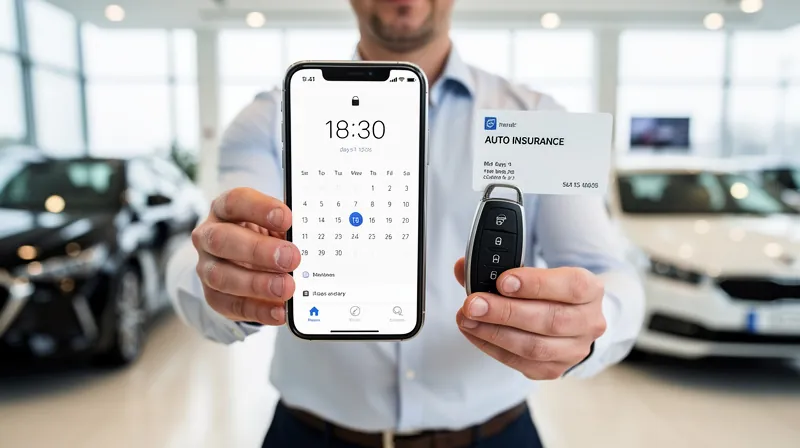
The grace period exists for a practical reason: the administrative process of adding a new vehicle takes time. You need to gather the VIN, confirm financing details, notify your lienholder, and contact your insurer — none of which always happens within minutes of driving off the lot. The grace period bridges that gap.
It’s important to understand that during the grace period, your new car typically inherits the broadest coverage currently on your existing policy. So if you carry full coverage (liability, collision, and comprehensive) on another vehicle, that same level of protection generally extends to the new car. If you only carry liability coverage, that’s all that transfers — which can be a critical shortfall for a brand-new financed vehicle.
How Long Is the Grace Period?
The standard grace period for adding a new car to an existing auto insurance policy ranges from 7 to 30 days, depending on your insurer and state regulations. Some major carriers like Progressive offer a full 30-day window, while others may only extend coverage for as few as 7 days.
- Progressive: Up to 30 days of automatic coverage
- Most standard carriers: 14–30 days typical range
- Minimum grace periods: Some carriers offer as little as 7 days
This is not a universal legal right — it’s a policy provision. Your specific grace period is defined in the terms of your insurance contract, so it’s worth confirming the exact duration with your agent before you head to the dealership.
What Happens During the Grace Period?
During the grace period, your new vehicle inherits the existing coverage limits from your current policy. If you have a multi-car policy with collision and comprehensive on all vehicles, your new car receives that same protection automatically. However, several important exceptions apply:
- The grace period ends immediately if you switch insurance providers before formally adding the vehicle to a policy.
- The grace period generally does not apply to brand-new drivers who have no existing policy — they must secure coverage before taking possession of the vehicle.
- An insurance lapse on your existing policy (e.g., due to a missed payment) can void the grace period entirely.
The takeaway: don’t treat the grace period as a reason to delay. Treat it as a safety net while you complete the proper administrative steps promptly.
Proof of Insurance Requirements at the Dealership
Before you can drive your new car off the dealership lot, you must provide proof of insurance. This is a non-negotiable requirement at virtually every dealership in the United States, regardless of whether you’re buying new or used, financing or paying cash. No proof, no keys.
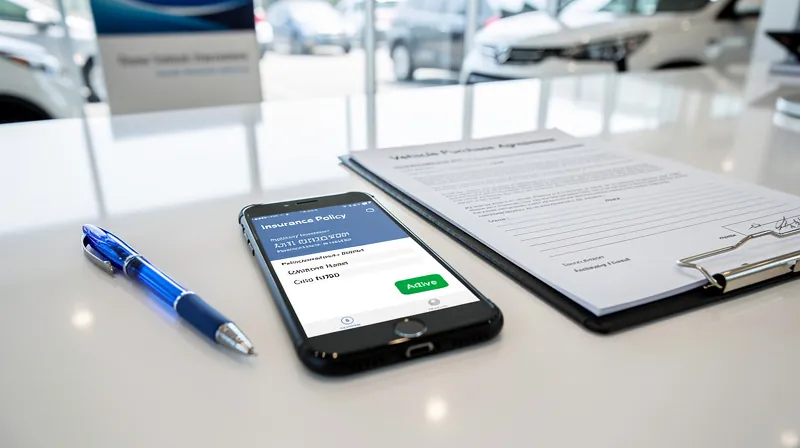
The good news is that satisfying this requirement is usually straightforward if you already have an active auto insurance policy. Your current insurance card — physical or digital — is typically sufficient to demonstrate coverage. Most dealerships simply need to see that you have an active policy before handing over the keys.
How to Provide Proof of Insurance
There are several ways to present proof of insurance at the dealership, and modern digital tools have made this easier than ever:
- Show your current insurance card: Your physical or digital insurance card confirms you have an active policy. Even if the new car isn’t listed yet, the grace period coverage is typically sufficient.
- Call your insurer from the lot: Ask your agent to fax or email a new declarations page or binder letter directly to the dealership, showing the new vehicle.
- Use your insurer’s mobile app: Many major carriers allow you to add a vehicle and generate instant digital proof of insurance directly from your smartphone — often in under five minutes.
If the dealership needs a specific document (like a binder letter listing the new VIN), ask your insurer for a fax number at the dealership so your agent can send it over immediately. Most agents are experienced in handling this exact scenario.
Requirements for First-Time Buyers
If this is your first car purchase and you have no existing auto insurance policy, the grace period does not apply to you. First-time buyers must secure a policy before taking possession of the vehicle. Here’s how to handle this situation:
- Get insurance quotes before your purchase appointment, so you can bind coverage on the spot.
- Many insurers allow you to start a policy online or over the phone within minutes, even without the exact VIN (you can update it afterward).
- Some states allow temporary operating permits for short periods, but these do not replace the need for actual liability coverage.
Don’t wait until you’re sitting at the finance desk to start thinking about insurance. A little preparation ensures you walk out with keys — not a delay.
Financing and Lienholder Requirements
When you finance a new car, the lender — known as the lienholder — has a direct financial stake in your vehicle. To protect their collateral, lenders require you to carry comprehensive and collision coverage for the full life of the loan, regardless of what your state’s minimum liability requirements dictate.

This is one of the most frequently overlooked aspects of buying a new car with financing. State minimums only require liability coverage, which protects others from damage you cause — it does nothing to protect the vehicle itself. Your lender needs to know the car will be repaired or replaced if it’s damaged or totaled, and that assurance comes from physical damage coverage.
The Lienholder Notification Timeline
One of the most time-sensitive steps after buying a financed vehicle is notifying your lender. Most lienholders require notification within 2–3 business days of purchasing the vehicle that they have been added to your insurance policy. This is a step many buyers miss — and the consequences can be serious.
- If you fail to notify the lienholder in time: The lender may purchase a separate insurance policy on your behalf (called “force-placed insurance”), which is significantly more expensive and offers you far less protection.
- How to add lienholder info: When you contact your insurer to add the new vehicle, simply provide the lender’s full legal name, address, and loan account number. Your insurer will add them to the policy as an “Additional Interest.”
- Confirmation: Your insurer will send a declarations page to the lienholder confirming they’re listed on your policy.
Coverage Levels for Financed Vehicles
Lenders typically impose specific coverage requirements beyond just carrying collision and comprehensive. Here’s what most financing agreements demand:
- Collision coverage: Covers damage to your vehicle from accidents, regardless of fault.
- Comprehensive coverage: Covers non-collision damage such as theft, vandalism, hail, floods, and fire.
- Deductible caps: Many lenders require deductibles of $500 or lower for both collision and comprehensive coverage. A $1,000 deductible may violate your loan agreement.
- Lienholder listed as Additional Interest: This ensures the lender receives payment directly if the vehicle is declared a total loss.
If you’re leasing rather than financing, the requirements are similar but often more stringent. Lease agreements frequently mandate higher liability limits and may require gap coverage to be included as part of the lease terms.
Coverage Breakdown: Liability, Collision, and Comprehensive
Auto insurance isn’t a single product — it’s a package of individual coverages, each serving a different purpose. For a new car purchase, understanding the difference between liability coverage, collision coverage, and comprehensive coverage is essential to selecting the right protection and meeting both legal and lender requirements.
Understanding Liability vs. Full Coverage
Liability coverage is the foundation of any auto insurance policy and is legally required in nearly every state. It covers damage you cause to others — it does not cover your own vehicle. There are two components:
- Bodily injury liability: Covers medical expenses, lost wages, and legal fees for people injured in an accident you cause.
- Property damage liability: Covers repair or replacement costs for other people’s property (vehicles, structures, etc.) damaged in an accident you cause.
“Full coverage” is an informal term that typically refers to a policy combining liability, collision, and comprehensive. Here’s the distinction:
- Collision coverage pays for damage to your vehicle resulting from a collision with another car or object, regardless of fault.
- Comprehensive coverage pays for damage from non-collision events: theft, vandalism, weather damage, animal strikes, and more.
For a new or nearly-new vehicle, full coverage is almost always the financially prudent choice — and it’s mandatory if you’re financing or leasing.
State Minimum Requirements
Every state sets minimum liability limits that all drivers must carry. These are typically expressed as a three-number format, such as 25/50/25, representing:
- $25,000 bodily injury per person
- $50,000 bodily injury per accident
- $25,000 property damage per accident
However, state minimums are often dangerously insufficient for new vehicle owners. A single serious accident can generate medical bills and legal fees that far exceed these limits, leaving you personally liable for the difference. For a new car — which likely represents one of your largest assets — carrying significantly higher limits is strongly recommended to protect your financial wellbeing.
Gap Insurance: Protecting Your Investment
Gap insurance covers the financial “gap” between what you owe on your auto loan and what your car is actually worth at the time of a total loss. It’s a critical — and often underappreciated — protection for anyone who finances or leases a new vehicle.
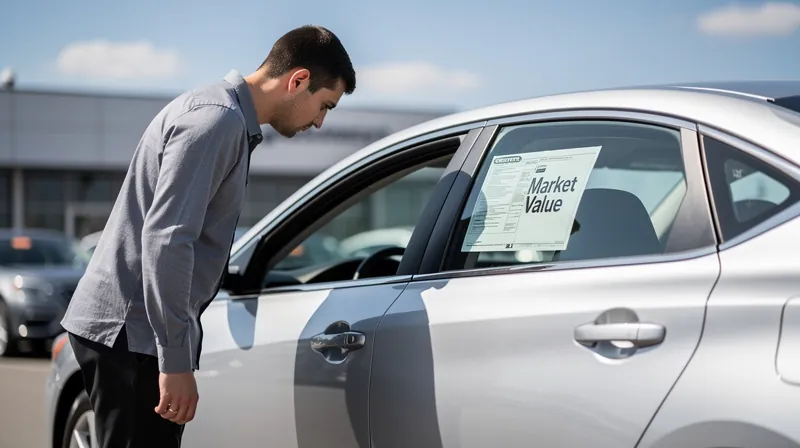
Here’s why it matters: a new car can lose 15–25% of its value the moment you drive it off the lot. If your car is totaled in the first year, your standard insurance policy pays out the current actual cash value (ACV) of the vehicle — not what you paid for it or what you still owe. That difference can easily amount to thousands of dollars.
When Is Gap Insurance Necessary?
Gap insurance is most valuable — and most necessary — in these common scenarios:
- Small or no down payment: If you financed most or all of the vehicle’s purchase price, you’re immediately “underwater” due to depreciation. Gap insurance prevents you from owing money on a car you no longer have.
- Rapid depreciation: New vehicles depreciate fastest in the first 1–3 years. During this window, the loan balance almost always exceeds the car’s market value.
- High-interest loans: When a larger portion of your monthly payment goes toward interest rather than principal, your loan balance shrinks slowly — keeping the “gap” open longer.
- Long-term loans: 72- or 84-month loan terms are increasingly common, extending the period during which you could be underwater on the loan.
Gap insurance is rarely needed for vehicles you’ve paid for outright in cash, since there’s no loan balance to worry about.
How Gap Insurance Works
The mechanics of gap insurance are straightforward. If your vehicle is declared a total loss or is stolen and unrecovered:
- Your primary insurer pays out the vehicle’s actual cash value (e.g., $22,000).
- If your remaining loan balance is higher (e.g., $27,000), gap insurance covers the $5,000 difference.
- Without gap insurance, you would owe that $5,000 out of pocket — on a car you can no longer drive.
Gap coverage is often included in lease agreements for a short period, so check your lease terms before purchasing it separately. For financed vehicles, it’s available as an affordable add-on through most insurers or can be purchased through the dealership — though dealership pricing is often higher. Adding it through your insurer is typically the most cost-effective option.
State-Specific Updates: The California 2026 Shift
California is undergoing the most significant overhaul of its auto insurance minimum requirements in decades. Starting with policy renewals on January 1, 2025, and fully in effect for all policies by 2026, the state has dramatically increased its minimum liability limits — a change that affects every California driver who buys a new car.

For context, California’s previous minimums of 15/30/5 — among the lowest in the nation — were set decades ago and had not kept pace with the reality of modern accident costs. The new requirements represent a substantial step toward meaningful consumer protection.
The New California Minimums
Under California’s updated requirements, drivers must now carry at least:
- $30,000 bodily injury liability per person (up from $15,000)
- $60,000 bodily injury liability per accident (up from $30,000)
- $15,000 property damage liability per accident (up from $5,000)
These new 30/60/15 minimums represent a doubling of bodily injury limits and a tripling of property damage coverage. If you’re buying a new car in California, your policy must meet these thresholds — and your new vehicle’s coverage must comply from the moment you take possession.
Impact on Current Policyholders
California policyholders need to understand several practical implications of these changes:
- Automatic updates at renewal: Existing policies were automatically adjusted to meet the new minimums upon their first renewal on or after January 1, 2025. You don’t need to request the change, but you should verify it happened.
- Premium increases: Higher minimum limits mean higher baseline premiums. California drivers should expect moderate rate increases, particularly those who previously carried only the bare minimum coverage.
- Reassess overall adequacy: Even the new minimums may be insufficient for drivers with significant personal assets. If you’re financing a new vehicle, your lender’s requirements plus adequate personal asset protection may push your ideal coverage well above the new state floors.
California drivers purchasing a new car right now should review their entire policy — not just the liability limits — to ensure comprehensive and collision coverages are also at appropriate levels for a new vehicle’s value.
Modern Workflows: Mobile Apps vs. Phone Calls
Adding a new car to your insurance policy used to mean a lengthy phone call during business hours, followed by waiting for paperwork in the mail. Today, most major insurers offer mobile app workflows that let you add a vehicle, confirm coverage, and generate proof of insurance in minutes — directly from the dealership lot.
Adding a Car via Mobile App
The digital process for adding a new vehicle is remarkably streamlined with most major carriers. Here’s the typical workflow:
- Open your insurer’s mobile app and navigate to your policy management section.
- Select “Add a Vehicle” and enter the make, model, year, and trim level of your new car.
- Enter or scan the VIN — many apps allow you to photograph the VIN barcode or manually enter the 17-character number.
- Select your coverage levels — the app will typically pre-populate your current coverage levels and allow you to adjust.
- Confirm and receive instant proof of insurance via email or in-app, which you can show to the dealership immediately.
The primary advantage of the app workflow is speed and availability — it works at midnight on a Saturday just as well as it does at noon on a Tuesday. For dealership purchases that run long or happen outside of business hours, this is invaluable.
The Phone Call Workflow
The traditional method — calling your agent or insurer’s customer service line — remains a reliable option, especially for complex situations like adding a financed vehicle with lienholder requirements. To make the call as efficient as possible:
- Have all vehicle details ready: Year, make, model, trim level, VIN, purchase price, and odometer reading.
- Have your financing information ready: Lender name, address, and loan account number so they can be added as the lienholder immediately.
- Ask for the dealership’s fax number: Your agent can fax a binder or declarations page directly to the dealership to satisfy their proof of insurance requirement on the spot.
- Confirm your grace period details: Ask your agent to confirm the exact duration and what coverage is currently active on your new vehicle under the grace period.
Whether you choose app or phone, the goal is the same: formally add your vehicle before the grace period expires and ensure all parties — your insurer, your lender, and the dealership — have the documentation they need.
Documents and Information Needed
When it’s time to add your new car to your insurance policy, having the right information on hand makes the process fast and error-free. Missing or inaccurate details can cause delays, coverage gaps, or administrative headaches with your lienholder.
Here’s what you’ll need to gather before contacting your insurer:
- Vehicle Identification Number (VIN): The unique 17-character identifier for your specific vehicle.
- Driver’s license information: For all drivers who will be listed on the policy.
- Vehicle purchase price: Used to determine coverage amounts and calculate your premium.
- Lienholder information: Full legal name, mailing address, and your loan account number (if financing).
- Current odometer reading: Some insurers require this at the time of policy addition.
- Vehicle title or purchase agreement: May be needed for verification purposes.
The VIN: More Than Just a Number
The Vehicle Identification Number (VIN) is a 17-character alphanumeric code that serves as the definitive identifier for your specific vehicle. No two VINs are alike, and your insurer uses it to access the vehicle’s complete specification data — make, model, year, engine type, safety features, and more — all of which factor into your premium calculation.
- Where to find the VIN: On the driver’s side dashboard (visible through the windshield), on the driver’s side door jamb sticker, or on your vehicle title and purchase documents.
- Why it’s required for policy activation: Insurers need the VIN to accurately rate the vehicle and connect the policy to the correct car in their databases.
- Anti-fraud purpose: The VIN also helps verify that the vehicle being insured matches its reported history, flagging any discrepancies in prior damage or ownership.
Lienholder Contact Info
If you’re financing your new car, accurately adding your lienholder’s contact information to your policy is one of the most important administrative steps you’ll take. Here’s why it matters and how to handle it:
- Why it’s required: Your lender is a co-stakeholder in the vehicle. If it’s totaled, they need to be paid from the insurance settlement before you receive any remaining funds.
- How to obtain it: Your loan documents will list the lender’s full legal name and mailing address. If you financed through a dealership, the finance manager can provide this before you leave the lot.
- The importance of accuracy: An incorrect lender name or address can delay insurance payouts in a claim and may constitute a violation of your loan agreement. Double-check the information against your loan documents before submitting it to your insurer.
Frequently Asked Questions
How does insurance work with a brand new car?
When you buy a brand new car, your existing auto insurance policy typically extends automatic temporary coverage to the new vehicle through a grace period lasting 7 to 30 days. During this window, the new car inherits the coverage levels currently on your policy. You must formally add the vehicle to your policy before the grace period expires to avoid a coverage lapse.
How soon do I need to get insurance after buying a new car?
You need proof of insurance before you drive the car off the dealership lot — it’s required at the point of sale. If you have an existing policy, the grace period provides temporary coverage while you formally add the vehicle, but you should contact your insurer within 24–48 hours of purchase. Waiting until the grace period ends risks a coverage lapse and potential legal penalties.
How does insurance work when buying the first car?
First-time car buyers have no existing insurance policy to extend coverage from, so there is no grace period available to them. You must purchase and bind an insurance policy before taking possession of the vehicle. Many insurers allow you to start a policy online or by phone within minutes, even using a temporary VIN placeholder that you update with the actual VIN after purchase.
When you buy a car from a dealership, does it come with insurance?
No — a car purchased from a dealership does not come with insurance included. The dealership is responsible for providing the vehicle; insurance is entirely your responsibility as the buyer. Some dealerships offer short-term dealer plates for test drives or transport, but these do not constitute personal auto insurance coverage for the new owner.
What is a grace period for auto insurance?
A grace period in auto insurance is a temporary window — typically 7 to 30 days — during which your existing policy automatically extends coverage to a newly acquired vehicle. It’s a policy provision (not a legal right) designed to give you time to formally update your policy. The coverage active during the grace period mirrors the broadest coverage on your existing policy.
Do I need gap insurance if I paid cash for my car?
No — gap insurance is not necessary if you paid cash for your vehicle. Gap insurance exists to cover the difference between your loan balance and the car’s actual cash value in the event of a total loss. Since you have no loan balance when you pay cash, there is no “gap” to cover.
What happens if I drive a new car without insurance?
Driving without insurance is illegal in nearly every state and can result in fines, license suspension, vehicle impoundment, and personal financial liability for any damages you cause. If you’re caught driving an uninsured vehicle, the penalties vary by state but can be severe and long-lasting. Additionally, if you’re financing the car, driving without the required coverage violates your loan agreement.
How does adding a car affect my premium?
Adding a new car to your policy will increase your premium, with the exact amount depending on the vehicle’s make, model, year, safety ratings, theft rates, and the coverage levels you select. However, insuring a second vehicle on the same policy may qualify you for a multi-car discount, partially offsetting the premium increase. Replacing an old vehicle entirely may result in a higher premium if the new car is more valuable.
What documents do I need to add a car to my insurance?
To add a new car to your insurance policy, you’ll typically need the vehicle’s VIN, year, make, model, and trim level, along with your driver’s license information and the vehicle purchase price. If the car is financed, you’ll also need the lienholder’s full legal name, address, and your loan account number. Having these details ready before you call or use the app makes the process significantly faster.
Do I need to notify my lienholder when I buy a new car?
Yes — and you must do so quickly. Most lenders require notification within 2–3 business days of purchase that they have been added to your insurance policy as a lienholder. Failing to notify them on time can result in the lender purchasing force-placed insurance on your behalf, which is more expensive and provides you with less personal protection. Your insurer handles the notification by adding the lender’s details to your policy and sending them a declarations page.
Is the grace period the same for all insurance companies?
No — the grace period varies by insurer and is not standardized by law in most states. It typically ranges from 7 to 30 days depending on your provider, with some companies like Progressive offering a full 30 days. Always confirm your specific grace period with your insurer before purchasing a new vehicle, as assuming the wrong duration could leave you uninsured.
Can I switch insurance companies when buying a new car?
Yes, buying a new car is an excellent time to shop for a new insurer, as it’s a natural policy transition point. However, if you switch providers, the grace period on your old policy ends immediately — your new policy must be active and the new vehicle must be listed before you drive off the lot. Coordinate the timing carefully to ensure there is no gap in coverage during the switch.