
Your car is gone. The spot where you parked it is empty, and a cold wave of panic sets in. Before you spiral, there’s one question that matters most right now: what does insurance do if your car is stolen? The direct answer is this: only Comprehensive Coverage reimburses you for a stolen vehicle — not Liability Insurance, not Collision Coverage. If you don’t carry comprehensive on your policy, your insurer owes you nothing for the stolen car itself.
But knowing you’re covered is only the beginning. The payout you receive is based on your vehicle’s Actual Cash Value (ACV) — its depreciated market value at the time of theft — not what you originally paid for it. For a three-year-old car, that gap can be thousands of dollars. Understanding this distinction before you file your car insurance claim is the difference between a smooth recovery and a financial shock.
Time is also a critical factor. Most insurers enforce a strict 24-hour rule for reporting theft, both to local police and to your insurance company. Missing this window can result in a claim denial that leaves you with nothing. Whether your car is financed, leased, or paid off, what happens next depends entirely on how quickly you act and what coverage you actually have.
This guide walks you through every stage: what’s covered, how much you’ll receive, the exact claims process, and the special scenarios — like Gap Insurance for financed vehicles and the exclusion of personal property left inside the car — that most people only learn about after it’s too late.
Key Takeaways
- Comprehensive Coverage is the only auto insurance type that reimburses you for a stolen vehicle — liability and collision do not apply.
- Insurers pay the Actual Cash Value (ACV) — the depreciated market value at the time of theft — not your original purchase price or loan balance.
- You must file a police report and contact your insurer within 24 hours of discovering the theft to file a valid claim and avoid denial.
- Your deductible reduces the final payout — and personal property inside the car is generally not covered by auto insurance.
- Gap Insurance is essential for leased or financed vehicles to cover the difference between the ACV payout and your remaining loan balance.
- Custom parts and aftermarket modifications are often excluded from standard comprehensive policies and require a separate rider.
What Insurance Covers a Stolen Car? (Comprehensive vs. Liability)
Comprehensive Coverage — sometimes called “Other Than Collision” coverage — is the only type of auto insurance that pays out for a stolen vehicle. It is specifically designed to protect you from losses that aren’t caused by a traffic accident: theft, fire, flood, hail, falling objects, and vandalism all fall under this umbrella. If you only carry liability or collision on your policy, a stolen car represents a total, uninsured loss.
This surprises many drivers because the term “full coverage” is often misused. “Full coverage” is not a standardized insurance term — it’s informal shorthand that usually means a policy bundles liability, collision, and comprehensive together. But if an agent or dealer quoted you “full coverage” years ago and you never verified the details, you may not actually have comprehensive protection. Check your declarations page right now to confirm.
The Critical Difference Between Coverage Types
Understanding why only comprehensive applies requires a clear look at what each coverage type actually does:
- Liability Insurance covers bodily injury and property damage that you cause to others in an accident. It has no function related to your own vehicle’s theft or damage.
- Collision Coverage pays for damage to your vehicle when it strikes another object — another car, a guardrail, a tree. Theft is not a collision, so this coverage does not apply.
- Comprehensive Coverage covers non-collision events, including theft, attempted theft, vandalism, fire, weather damage, and animal strikes. This is your only path to reimbursement for a stolen car.
Because liability is legally required in most states and collision is often mandated by lenders, many drivers assume they have comprehensive too. That assumption can be costly. Verify your coverage today — especially if you dropped comprehensive to lower your premium on an older vehicle.
Break-In Damage vs. Theft
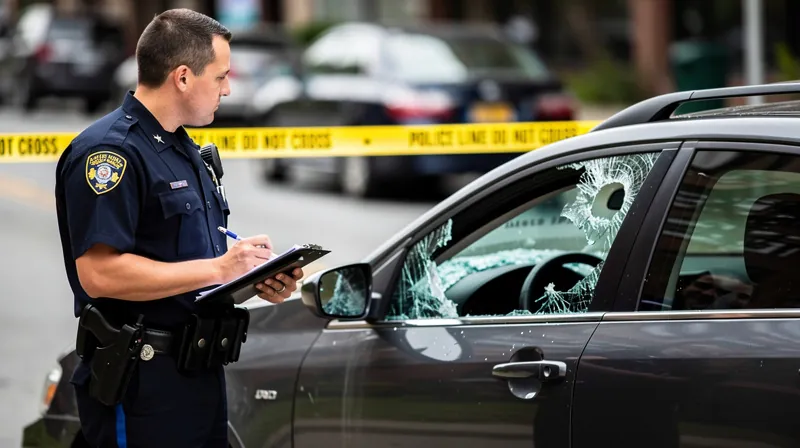
Comprehensive Coverage applies even in partial theft scenarios. If someone breaks into your car — shattering a window, forcing a lock, or prying open a door — the cost to repair that break-in damage is covered under comprehensive, regardless of whether the car itself was stolen. This is a frequently misunderstood benefit.
- Smashed windows, broken door locks, and damaged ignition switches caused by an attempted or successful theft are all covered repairs.
- OEM (original equipment manufacturer) parts and factory-installed stereo systems are generally covered under standard comprehensive policies.
- If the vehicle is stolen and never recovered, the scenario shifts to a total loss claim rather than a repair claim — a meaningfully different process.
How Much Will You Actually Receive? (ACV and Deductibles)
When your insurer settles a stolen car claim, they pay you the Actual Cash Value of the vehicle — its depreciated market value on the day it was stolen — minus your deductible. This is almost always less than what you paid for the car, and for financed vehicles, it may be less than what you still owe. Managing this expectation from the start is critical to avoiding financial distress after a claim.
Understanding Actual Cash Value (ACV)
Actual Cash Value is not your car’s original sticker price, its replacement cost, or your loan balance. It is what your vehicle was worth on the open market at the exact moment it was stolen, accounting for age, mileage, condition, and comparable sales in your area.
Insurers typically use third-party valuation tools — such as Kelley Blue Book, NADA Guides, or proprietary databases — to calculate ACV. The specific factors they weigh include:
- Mileage: Higher mileage means lower ACV.
- Condition: Pre-existing wear, dents, or mechanical issues reduce value.
- Market demand: A popular model in short supply may have a higher ACV than the same car in a saturated market.
- Geographic location: Regional market data influences the valuation significantly.
This is where the “Depreciation Gap” becomes painful. A car purchased for $32,000 two years ago may have an ACV of only $21,000 at the time of theft. New vehicles depreciate roughly 20% in the first year alone. If you’re not prepared for this reality, the settlement check will feel deeply inadequate.
Pro Tip: If you believe your insurer’s ACV calculation is too low, you have the right to dispute it. Gather comparable vehicle listings in your area (similar make, model, year, mileage, and condition) and present them to your adjuster. Many insurers will negotiate the valuation when presented with solid market evidence.
The Impact of Your Deductible
Your deductible is the out-of-pocket amount you agreed to pay before your insurance coverage kicks in, and it is subtracted directly from your ACV payout. This is a fixed, pre-agreed number from your policy — not negotiable at the time of the claim.
Here’s how the math works in practice:
- Vehicle ACV: $10,000
- Comprehensive deductible: $500
- Insurer’s payout: $9,500
- Vehicle ACV: $10,000
- Comprehensive deductible: $1,500
- Insurer’s payout: $8,500
Drivers who chose a higher deductible to lower their monthly premium often feel the trade-off most acutely during claims. A $1,500 deductible saves perhaps $10–$20 per month but costs significantly more when a claim occurs. There is no universally “right” deductible — it depends on your savings cushion and risk tolerance.
The Claims Process: Steps, Timeline, and Documentation

Filing a stolen car claim requires you to take two immediate actions within 24 hours: file a police report and notify your insurance company. Every step after that follows a defined investigation timeline. Knowing this process in advance prevents costly delays and protects you from claim denial based on procedural missteps.
Immediate Action: The 24-Hour Rule
The moment you confirm your car is missing — and not simply towed or moved by someone you know — begin the following steps without delay:
- Call 911 or your local non-emergency police line to file a police report. Get the report number and the responding officer’s name. This case number is required to file your insurance claim.
- Contact your insurance company via their 24-hour claims hotline or your agent’s direct line. Provide your policy number, the vehicle’s VIN number, license plate, and the police report number.
- Gather your documentation: title or registration, proof of ownership, any photos of the vehicle, and recent maintenance records if available.
- Do not cancel your registration or insurance until the claim is fully resolved — the car may be recovered.
Failing to report the theft to police within 24 hours, or failing to notify your insurer promptly, is one of the primary grounds for claim denial. Insurers take these timelines seriously, both because of genuine investigation needs and because delay can be a red flag for insurance fraud.
The Investigation Timeline
After you file, your insurer will open a formal investigation that typically takes 7 to 14 days before a settlement decision is made. During this window, the adjuster is working to verify the theft, check for the vehicle in police databases, and confirm your ownership and coverage.
What happens during those 7–14 days:
- Database verification: The insurer cross-references the VIN number with the National Crime Information Center (NCIC) and local law enforcement records to confirm the theft report.
- Ownership verification: You may be asked to provide the vehicle title, registration, purchase agreement, and loan documents.
- Vehicle history check: Maintenance records or a CarFax report may be requested to validate the car’s condition before the theft, which directly impacts ACV.
- Recovery window: Most insurers wait the full investigation period to allow for the possibility that the vehicle will be recovered by police. If it is recovered, the claim shifts from a total loss to a repair assessment.
If your insurer suspects fraud — such as an implausible story, a recently increased policy, or a vehicle with a financial motive for disposal — expect the investigation to extend significantly and potentially involve a Special Investigations Unit (SIU). This is not uncommon and does not automatically mean your claim will be denied.
Once the investigation concludes and the car remains unrecovered, your insurer will issue a settlement offer based on ACV minus your deductible. You’ll sign over the vehicle title, and the claim will close. If your insurer offers Rental Reimbursement coverage, you may be entitled to a rental car during this investigation period — check your policy for this benefit.
Special Scenarios: Leased Vehicles, Gap Insurance, and Custom Parts
For leased or financed vehicles, a stolen car claim becomes significantly more complicated because the insurer’s ACV payout goes to the lender first — and it often doesn’t cover the full outstanding loan or lease balance. This is where Gap Insurance transforms from a nice-to-have into a financial lifeline.
Payouts for Leased and Financed Vehicles
When you finance or lease a vehicle, the lender or leasing company holds a security interest in the car. This means:
- The insurer’s ACV payout is issued to the lender first, not to you.
- If the ACV payout equals or exceeds the remaining loan balance, the lender is paid in full and any surplus goes to you.
- If the ACV payout is less than the loan balance — which is extremely common — you are still legally responsible for the remaining balance, even though the car is gone.
This is not a loophole or an error. It is the standard contractual structure of auto financing. Without additional protection, you could owe thousands of dollars on a vehicle you no longer possess.
The Role of Gap Insurance in Theft
Gap Insurance (Guaranteed Asset Protection) pays the difference between your vehicle’s ACV and your remaining loan or lease balance when the car is stolen and declared a total loss. It is one of the most important — and most overlooked — protections available for financed and leased vehicles.
Consider this real-world scenario:
- Remaining loan balance: $24,000
- Vehicle ACV at time of theft: $19,000
- Comprehensive deductible: $500
- Insurer pays lender: $18,500
- Remaining balance you owe without Gap Insurance: $5,500
- Remaining balance you owe with Gap Insurance: $0
Gap Insurance is particularly critical in the first 24 months of a loan, when depreciation is steepest and the gap between ACV and loan balance is widest. It is available through your auto insurer (typically as a low-cost add-on to your comprehensive policy), through the dealership, or through the lender. Dealership Gap Insurance is often significantly overpriced — purchasing it through your insurer is usually the more cost-effective option.
Once your loan balance drops below your vehicle’s market value — meaning you have positive equity — Gap Insurance is no longer necessary. Review your loan statements annually to assess whether it remains relevant to your situation.
Custom Parts and Aftermarket Exclusions
Standard Comprehensive Coverage protects factory-installed (OEM) parts and equipment, but aftermarket modifications and custom upgrades are explicitly excluded from most standard policies. This is a gap that costs car enthusiasts thousands of dollars every year.
What is and isn’t typically covered:
- Covered by standard comprehensive: Factory stereo systems, OEM alloy wheels, manufacturer-installed navigation systems, factory roof racks.
- Not covered without a rider: Aftermarket stereo and speaker systems, custom paint jobs, aftermarket wheels and rims, performance exhaust systems, custom upholstery, LED lighting kits.
Many insurers offer a Custom Parts & Equipment (CPE) rider — sometimes called an “Endorsement for Custom Parts” — that extends coverage to aftermarket modifications up to a specified limit, often $1,000 to $5,000. If your modifications exceed that limit, the excess is your financial responsibility.
The key distinction here is between pre-installed OEM parts and aftermarket additions. A factory-installed sunroof is covered. A sunroof you had installed by an aftermarket shop after purchase is not — unless you added a CPE rider and declared it to your insurer. Always notify your insurer of significant modifications when they are made, not after a theft occurs.
Are Stolen Cars Usually Totaled?
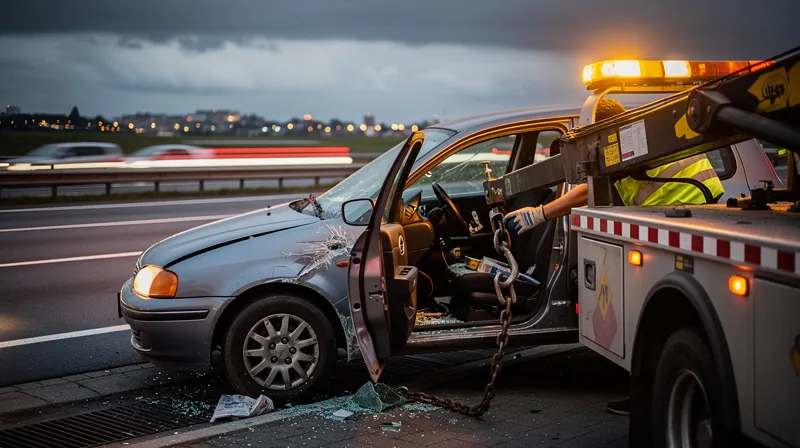
In the context of theft, a vehicle is only considered “totaled” if it is recovered in a damaged condition where repair costs exceed its Actual Cash Value — or if it is never recovered at all, in which case it is treated as a constructive total loss. The vast majority of unrecovered stolen vehicles result in a total loss settlement.
Determining if a Stolen Car is Totaled
The “totaled” threshold works the same in theft as it does in collision: if the cost to restore the vehicle to its pre-theft condition exceeds its ACV (typically 70–80% of ACV depending on the state), the insurer declares it a total loss. In theft scenarios, this plays out in two ways:
- If the car is never recovered: It is automatically treated as a total loss after the investigation period. The insurer pays ACV minus the deductible, and you sign over the title.
- If the car is recovered with significant damage: A claims adjuster inspects the vehicle. If damage repair costs exceed the total loss threshold, the insurer totals the car and pays ACV minus deductible. You may have the option to retain the salvage title vehicle for a reduced payout.
- If the car is recovered with minor damage: The insurer pays for repairs (broken windows, damaged locks) rather than issuing a cash payout, and you get your car back.
What Happens if the Car is Recovered?
If police recover your stolen vehicle before your claim settles, the claim pivots from a total loss to a repair claim — and your vehicle may be returned to you, depending on its condition. This is actually the preferred outcome for both you and your insurer.
The post-recovery process typically works as follows:
- The insurer sends an adjuster to inspect the recovered vehicle for damage.
- If damage is within repair threshold, comprehensive pays for break-in damage repairs: broken windows, forced locks, damaged steering column, missing interior parts.
- If theft-related damage is extensive, the car may still be totaled even after recovery.
- Regardless of outcome, filing a comprehensive claim will likely result in a premium increase at your next renewal — even if the theft was entirely beyond your control. Some insurers offer “accident forgiveness” programs; check whether yours applies to theft claims.
Rental Reimbursement coverage is especially valuable during this waiting period. If your policy includes this add-on, the insurer will cover a rental car for the duration of the investigation and repair period, up to the daily and total limit specified in your policy. Without it, you are paying out of pocket for transportation while your claim is pending.
Frequently Asked Questions
Can insurance refuse to pay for a stolen car?
Yes, an insurer can deny a stolen car claim under specific circumstances. Common grounds for denial include failing to file a police report, not reporting the theft to the insurer within the required timeframe, having an active lapse in coverage, providing inconsistent statements during the investigation, or if the evidence suggests insurance fraud. If you believe your denial is wrongful, you have the right to file a formal appeal with your insurer and, if necessary, a complaint with your state’s insurance regulatory body.
Do insurance companies pay out for a stolen car?
Yes — but only if you carry Comprehensive Coverage on your policy at the time of the theft. Insurers pay the vehicle’s Actual Cash Value minus your deductible. If you only have liability or collision coverage, no payout is issued for the stolen vehicle itself. Always verify your coverage type before assuming you are protected.
How does insurance investigate if a car has been stolen?
Insurers verify stolen car claims by cross-referencing the VIN with police databases (including the NCIC), reviewing your proof of ownership, and confirming the details of the police report. They may also request maintenance records, purchase documentation, and a recorded statement from you. If the claim raises red flags — such as a recent policy increase, financial distress, or inconsistent statements — a Special Investigations Unit (SIU) may conduct a deeper review, which can extend the timeline significantly.
Are stolen cars usually totaled?
If a stolen car is never recovered, it is treated as a constructive total loss and you receive the ACV payout. If it is recovered, whether it’s totaled depends on the extent of the damage — if repair costs exceed the vehicle’s ACV (typically 70–80% in most states), it is declared a total loss. Many recovered stolen vehicles do sustain significant damage, making total loss outcomes relatively common even after recovery.
What is the difference between comprehensive and liability coverage?
Liability coverage pays for damage or injuries you cause to other people — it offers no protection for your own vehicle. Comprehensive coverage protects your own vehicle from non-collision events, including theft, vandalism, fire, and weather damage. They serve entirely different purposes, and only comprehensive is relevant when your car is stolen.
Does my homeowners insurance cover items stolen from my car?
Personal property stolen from your car is not covered by your auto insurance policy — but it may be covered by your homeowners or renters insurance policy under off-premises personal property coverage. Most homeowners policies extend coverage to personal belongings regardless of where they are stolen, subject to your homeowners deductible and coverage limits. High-value items like electronics or jewelry may require a separate scheduled rider to be fully protected.
What is a deductible and how does it affect my payout?
A deductible is the fixed dollar amount you agreed to pay out of pocket before your insurance coverage applies — it is subtracted directly from your ACV settlement. For example, if your car has an ACV of $15,000 and your comprehensive deductible is $1,000, your insurer pays you $14,000. Choosing a higher deductible lowers your monthly premium but reduces your net payout in the event of a claim.
How long does it take to get paid after a stolen car claim?
Most stolen car claims are resolved within 14 to 30 days of filing, though the typical investigation window is 7 to 14 days. If the vehicle is recovered during the investigation period, the timeline extends to account for damage assessment and repairs. Complex cases involving fraud investigations or disputed ACV valuations can take significantly longer. Prompt submission of all required documentation — police report, title, ownership proof — speeds up the process considerably.
What should I do immediately after my car is stolen?
The moment you confirm your car is stolen, call police immediately to file a report and obtain the case number, then contact your insurer within 24 hours. Do not cancel your registration or insurance during the investigation period. Gather all available documentation: your title, registration, VIN, recent photos of the vehicle, and any maintenance records. If you have Rental Reimbursement coverage, ask your insurer about activating it immediately so you have transportation during the claims process.
Is gap insurance necessary if I pay off my car early?
No — Gap Insurance is only necessary when you owe more on your loan than the vehicle is currently worth. Once your loan balance drops below the vehicle’s market value (meaning you have positive equity), Gap Insurance serves no practical purpose and can be canceled. Review your loan balance against your vehicle’s current market value annually; most drivers reach positive equity within 2 to 3 years of a standard loan term.
Does comprehensive insurance cover personal property inside the car?
No — Comprehensive Coverage covers the vehicle itself and its factory-installed components, but not personal belongings left inside. Laptops, phones, bags, clothing, and cash stolen from your car are excluded from your auto policy. These items may be covered under your homeowners or renters insurance policy as off-premises personal property, subject to that policy’s deductible and limits. Review your homeowners policy to understand your off-premises coverage limits.
Can I get a rental car while my claim is being processed?
You can get a rental car during a stolen vehicle claim only if your policy includes Rental Reimbursement coverage — it is not automatic under Comprehensive Coverage. Rental Reimbursement is typically an inexpensive add-on (often $5–$15 per month) that covers a daily rental rate up to a specified limit (commonly $30–$50 per day) for the duration of your claim. Without this coverage, all rental costs come out of your own pocket during the investigation period, which can last two weeks or longer.