
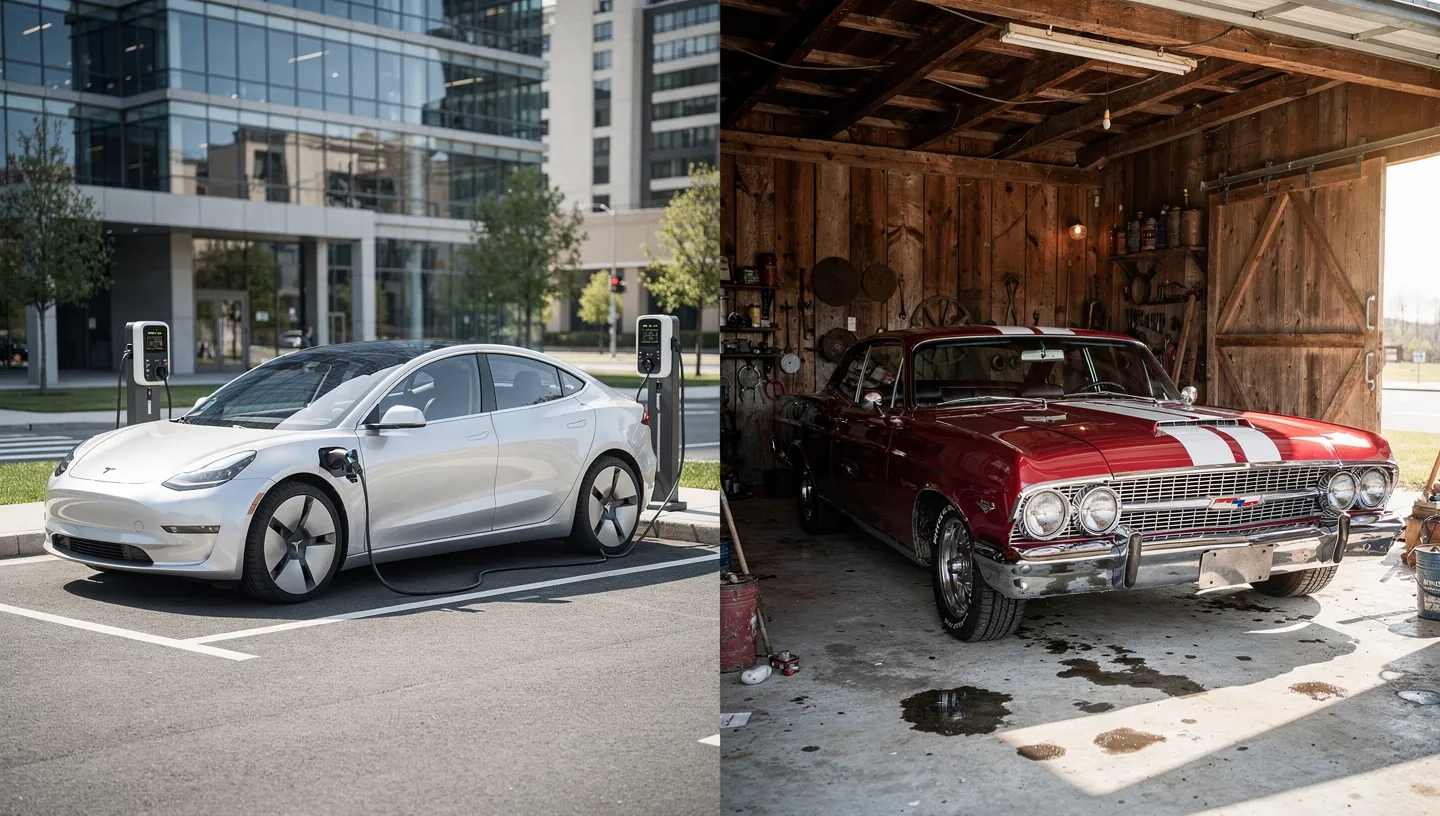
Yes, the year of a car directly and significantly affects your insurance premiums. Insurers treat vehicle model year as one of their primary rating factors because it influences three critical variables simultaneously: the car’s actual cash value (ACV), its repair and parts costs, and its safety technology profile. A brand-new 2026 model can cost 20–50% more to insure than a comparable 2017 model, while a 2008 vehicle may carry surprisingly high liability costs despite its low replacement value.
The relationship between a car’s model year and its insurance premium is not a simple linear curve. Newer vehicles (0–3 years old) sit at the expensive end of the spectrum, driven up by the cost of replacing advanced sensors, cameras, and high-value battery systems. Older vehicles (10+ years) see their physical damage premiums shrink dramatically, but that savings is frequently offset by elevated liability exposure tied to outdated crash safety standards. Between these two extremes lies a strategic window — vehicles approximately 7–10 years old — where depreciation and safety technology converge to produce the most cost-effective premiums available in the market today.
Electric vehicles, state-specific regulations in places like California and Michigan, and the explosion of Advanced Driver-Assistance Systems (ADAS) have added new layers of complexity to how vehicle age is priced. This guide breaks down every dimension of that pricing logic so you can make a more informed decision about your next vehicle purchase or coverage adjustment.
Key Takeaways
- Newer cars cost 20–50% more to insure than older cars primarily due to higher repair bills for advanced safety systems and greater actual cash value.
- Liability insurance does not decrease as fast as a car’s value, meaning older cars can become surprisingly expensive to insure if they lack modern safety features.
- The insurance “sweet spot” is typically a 7–10 year old vehicle with good safety ratings — it balances meaningful depreciation with retained safety technology.
- Electric vehicles (EVs) often carry a 25–40% premium surcharge over comparable gas-powered cars due to battery replacement costs and specialized repair networks.
- State laws in California and Michigan cap how much vehicle age can factor into premiums, offering specific consumer protections not available in most other states.
New vs. Old Car Premiums: The General Trend
Insurers don’t simply look at a car’s age in years — they sort vehicles into defined age tiers to apply structured rate adjustments. The four primary tiers used across most major carriers are 0–3 years, 4–7 years, 8–12 years, and 13+ years. Each tier reflects a distinct combination of actual cash value, parts availability, theft appeal, and safety technology that collectively determines your base auto insurance premium.

Vehicles in the 2024–2026 model year range carry the highest premiums across all coverage types. Their high ACV means collision and comprehensive coverage alone can add hundreds of dollars per month to a policy. Parts are expensive, often proprietary, and require dealer-level calibration. At the other end, 2013 and older vehicles typically have the lowest physical damage premiums because their replacement values have depreciated to a fraction of the original price — but as we’ll explore, that does not mean their total insurance cost is always low.
The 0–3 Year Spike
Vehicles under three years old frequently cost 25–40% more to insure than similar models from five to seven years ago. The primary driver of this spike is not simply the car’s sticker price — it is the cost of repairing the sophisticated technology embedded throughout the vehicle.
- Advanced Driver-Assistance Systems (ADAS), including lane-keeping cameras, adaptive cruise control radar, and automatic emergency braking sensors, are integrated into nearly every panel and bumper on modern vehicles.
- High theft appeal for newer hybrid and electric models — particularly Tesla, Rivian, and plug-in hybrid SUVs — pushes comprehensive coverage premiums higher in urban markets.
- New car replacement coverage and GAP insurance, often required or strongly recommended for financed new vehicles, further add to the monthly premium burden.
The 10+ Year Drop
Vehicles over 10 years old see the steepest drop in comprehensive and collision premiums, simply because the car’s actual cash value has depreciated to the point where full coverage becomes mathematically questionable. Many owners in this bracket drop collision and comprehensive entirely, paying only for liability coverage and saving hundreds of dollars per year.
- Dropping full coverage on a vehicle worth less than $4,000–$5,000 is a widely recommended financial strategy.
- However, liability premiums can rise for older vehicles that lack crumple zones, electronic stability control, or adequate airbag systems.
- The net savings may be smaller than expected if the vehicle has poor crash test scores from the IIHS or NHTSA.
The Liability Trap: Why It Doesn’t Drop as Fast
One of the most misunderstood dynamics in auto insurance is that liability coverage — which pays for injuries and property damage you cause to others — does not follow the same depreciation curve as the car itself. While your collision and comprehensive premiums shrink as your vehicle ages, your liability exposure is determined by the risk you pose to other people, not the value of your car.

This creates what insurance professionals sometimes call a “double penalty” for older vehicles: the car’s low replacement value means physical damage coverage costs little, but inadequate structural safety can drive liability rates upward. Insurers evaluate this risk using crash test data, injury severity statistics, and historical claims patterns tied to specific model years and generations.
Safety Ratings vs. Age
IIHS research consistently shows that pre-2012 vehicles have significantly higher fatality and serious injury rates in comparable crashes versus modern vehicles, primarily because they predate mandatory electronic stability control and evolved structural design standards.
- A vehicle with a poor IIHS small overlap front crash rating — a test not standardized until 2012 — signals to insurers that occupants and other road users are at elevated injury risk.
- Insurers adjust liability rates to reflect the statistical probability of severe bodily injury claims, which are far more expensive than vehicle repair claims.
- A 15-year-old sedan might carry low collision costs but elevated bodily injury liability rates if its crash performance data is poor.
The Impact of Poor Crash Performance
Older vehicles frequently feature less rigid passenger compartments, smaller airbag systems, and absent side-curtain protection — structural deficiencies that directly increase the severity of injuries when accidents occur. Insurers track bodily injury liability claim payouts by vehicle make, model, and generation. When a specific older vehicle consistently generates large injury settlements, that data flows back into the premium calculation for all owners of that model.
The practical consequence: the “older is always cheaper” myth is demonstrably false when examining total policy cost. Drivers who own older vehicles with poor crash test histories may find that switching to a newer, better-rated vehicle actually reduces their total premium — even accounting for the higher ACV of the newer car.
Repair Costs and the Technology Factor
Modern vehicles have become rolling computers, and the financial implications for insurance pricing are profound. The average cost to repair a vehicle involved in a collision has risen dramatically over the past decade, not because labor rates alone have changed, but because the technology embedded in every panel, bumper, mirror, and windshield now requires specialized calibration and expensive proprietary parts.

A collision that would have generated a $600 repair estimate on a 2010 vehicle can easily produce a $3,500 bill on a 2023 equivalent, once sensors, cameras, and mandatory recalibration are factored in. Insurers build these elevated repair costs directly into premiums for newer model years, which is why the gap between new and old vehicle insurance rates has widened significantly since 2018.
The ADAS Cost Explosion
Advanced Driver-Assistance Systems have fundamentally changed the economics of collision repair. A single modern bumper assembly can house radar sensors for adaptive cruise control, ultrasonic sensors for parking assistance, and a front-facing camera for lane departure warning — all of which must be replaced and recalibrated after even a minor impact.
- Bumper repairs on ADAS-equipped vehicles average $2,000–$4,500, compared to $500–$800 on vehicles without these systems.
- Camera and radar calibration typically requires 4–8 hours of specialized labor in addition to parts costs.
- Windshield replacement on vehicles with front-facing cameras can exceed $1,500 when mandatory recalibration is included.
- Insurers use actuarial data from repair cost databases to price these risks by model year, meaning a 2023 vehicle with full ADAS will always be rated higher than a 2015 model without those systems.
Parts Scarcity and Aftermarket Options
The parts equation works differently at each end of the age spectrum. For newer vehicles, insurers often mandate the use of OEM (Original Equipment Manufacturer) parts — particularly for safety-critical components like airbag systems and sensor arrays — which prevents repair shops from substituting lower-cost alternatives and keeps claims costs elevated.
For older vehicles, OEM parts may be discontinued or available only through specialty suppliers at premium prices. However, the broader aftermarket ecosystem for common older models typically provides adequate alternatives, keeping repair costs manageable. The use of certified aftermarket parts on older vehicles can modestly lower comprehensive and collision premiums in states that allow insurers to factor parts sourcing into their rates.
The Sweet Spot: 7–10 Year Old Vehicles
The 7–10 year old vehicle range represents the most financially optimal window for auto insurance purposes. At this age, a vehicle has typically shed 50–65% of its original value through depreciation, meaningfully reducing the cost of collision and comprehensive coverage. Yet it retains enough of the modern safety infrastructure introduced during the 2015–2019 model years to maintain competitive liability rates.

This combination — significant depreciation plus retained safety technology — is precisely why insurance professionals and financial planners frequently recommend this vehicle age bracket to cost-conscious consumers. It is often the most financially strategic time to purchase a used vehicle when total cost of ownership, including insurance, is factored into the calculation.
Balancing Safety and Value
A 2016–2019 model year vehicle hits the sweet spot across multiple dimensions simultaneously. Consider the practical advantages from an insurance standpoint:
- Safety technology retention: Many 2016–2019 models include blind-spot monitoring, forward collision warning, automatic emergency braking, and rear-view cameras — features that help lower liability rates without the cost premium of the very latest technology.
- Depreciation benefit: A vehicle that originally sold for $32,000 in 2017 may have an ACV of $12,000–$16,000 today, making full coverage (collision and comprehensive) far more affordable on a monthly basis.
- Theft deterrence: Vehicles in the 7–10 year range are significantly less attractive to thieves than brand-new models, reducing comprehensive premium risk.
- Repair cost moderation: While these vehicles may have early-generation ADAS, their repair complexity is lower than 2021+ vehicles, keeping claims costs — and therefore premiums — in check.
Owners of vehicles in this bracket can typically afford full coverage without the financial strain that comes with insuring a new car. This makes the 7–10 year window not just an insurance optimization strategy, but a holistic personal finance decision.
EVs and Hybrids: A New Premium Class
Electric vehicles and plug-in hybrids occupy their own distinct premium category in the auto insurance market, and that category is consistently more expensive than comparable gas-powered vehicles. EV owners typically pay 25–40% more in annual premiums than they would for an equivalent internal combustion engine vehicle — a surcharge driven by battery replacement costs, specialized repair networks, and the relatively limited claims data available to actuaries for many EV models.
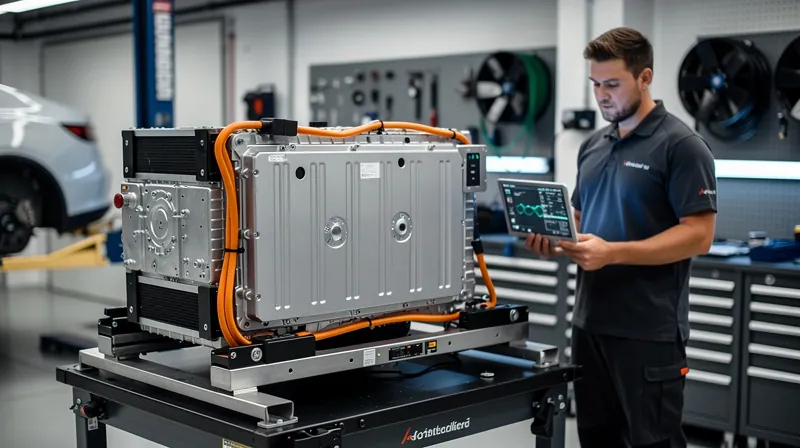
This EV premium penalty is particularly significant for new model year vehicles, where the combination of high ACV, expensive battery systems, and limited repair infrastructure creates a compounding cost burden. Understanding why this premium exists — and whether newer data may begin to moderate it — is increasingly important as EV adoption accelerates.
Battery Replacement and Repair
The lithium-ion battery pack is the single most expensive component in an electric vehicle, and its cost has enormous implications for insurance pricing. Battery replacement costs currently range from $8,000 to over $20,000 depending on the vehicle and battery capacity, which dramatically raises the threshold at which an EV becomes a total loss.
- A vehicle with a $45,000 ACV and a $20,000 battery replacement cost effectively creates a higher total loss trigger than a comparable gas vehicle at the same ACV.
- Specialized EV technicians are required for high-voltage battery work, limiting which shops can perform repairs and driving up labor rates significantly.
- Li-ion battery packs can be difficult to source quickly, extending repair timelines and increasing rental car costs covered under comprehensive policies.
- Some newer EV models, particularly those from established manufacturers with maturing supply chains, are beginning to see more competitive repair costs — but insurers remain cautious until sufficient claims data accumulates.
The EV Repair Network Gap
Unlike gasoline-powered vehicles that can be serviced at tens of thousands of independent repair shops nationwide, EVs require specialized diagnostic tools, manufacturer-specific software interfaces, and high-voltage electrical certifications. This fundamental infrastructure gap limits competition in the repair market, which directly sustains elevated labor rates.
Insurers view limited repair network competition as a quantifiable risk factor that is reflected in annual premiums. As the EV repair ecosystem matures and more certified shops enter the market, these costs may moderate — but for the 2025–2026 model year window, EV owners should budget for meaningfully higher insurance costs than their gas-powered counterparts. Some newer hybrid models with strong IIHS safety ratings and more accessible repair networks are beginning to qualify for modest discounts that partially offset this surcharge.
State-Specific Regulations and Caps
Not all states allow insurers to use vehicle age as freely as others when setting premiums. A handful of states have enacted specific regulations that cap or limit how much model year can influence your rates, offering meaningful consumer protections that simply do not exist in the majority of the country. Understanding your state’s regulatory environment can reveal coverage options and pricing leverage that drivers in less-regulated markets do not have access to.
- States with no-fault insurance laws approach liability adjustments based on vehicle age differently, since personal injury protection (PIP) pays regardless of fault.
- Some states require insurers to file their rating factors publicly, giving consumers — and their insurance agents — visibility into exactly how vehicle age is weighted in the premium formula.
- Shopping for coverage across multiple carriers is especially valuable in heavily regulated states, where rate compression between competitors creates meaningful savings opportunities.
California and Michigan Caps
California’s Proposition 103 framework gives the state’s Insurance Commissioner broad authority over auto insurance rating factors. Under current California regulations, vehicle age is effectively capped at 10 years for rating physical damage coverage — meaning a 12-year-old vehicle and a 10-year-old vehicle are treated identically for collision and comprehensive pricing purposes, preventing insurers from continuing to reduce rates as vehicles age beyond that threshold.
Michigan’s unique no-fault system creates a different dynamic. Because Michigan’s Personal Injury Protection (PIP) benefits are among the most comprehensive in the nation — covering unlimited lifetime medical benefits in some policy tiers — vehicle age interacts differently with medical benefit pricing than in tort-based states. The Michigan auto insurance reform of 2020 added further complexity, creating tiered PIP options that interact with vehicle age in ways that require careful analysis when shopping for coverage.
In both California and Michigan, these regulatory frameworks provide a meaningful check on extreme rate hikes tied to vehicle age, offering protections that consumers in states like Florida, Louisiana, or Michigan’s neighboring states simply do not receive. If you live in a regulated state, working with an independent insurance agent who understands the local regulatory landscape is particularly valuable.
Strategies to Lower Your Premiums
Understanding how vehicle age affects insurance gives you actionable leverage to reduce your annual premium. Several proven strategies work specifically within the age-related pricing dynamics described throughout this guide, and combining multiple approaches can produce savings of several hundred dollars per year.
- Raise your deductible: Increasing your collision and comprehensive deductible from $500 to $1,000 can reduce those coverage costs by 15–25%. This is most effective for vehicles in the 4–7 year range where full coverage still makes financial sense.
- Bundle home and auto insurance: Most major carriers offer 5–15% multi-policy discounts that apply regardless of vehicle age.
- Enroll in telematics programs: Usage-based insurance programs from carriers like Progressive (Snapshot), State Farm (Drive Safe & Save), and Allstate (Drivewise) can generate 10–30% discounts for safe drivers, applied on top of any vehicle age rating.
- Complete a defensive driving course: Many states mandate that insurers offer discounts for approved defensive driving courses, particularly beneficial for drivers over 55 and those with minor violations.
- Compare quotes annually: As your vehicle ages and crosses into a lower tier (e.g., from 4–7 years to 8–12 years), your current insurer may not automatically pass through the full rate reduction — shopping competing quotes ensures you capture the market rate.
Adjusting Coverage for Value
One of the most impactful decisions you can make as your vehicle ages is reassessing whether full coverage — collision plus comprehensive — remains mathematically justified. The standard financial rule of thumb is straightforward: if your annual collision and comprehensive premium exceeds 10% of your vehicle’s current ACV, those coverages may no longer be cost-effective.
- For vehicles over 15 years old with an ACV below $4,000–$5,000, dropping collision is a widely recommended strategy that can save $400–$900 annually.
- Before dropping coverage, ensure you have sufficient emergency savings to cover the out-of-pocket cost of replacing or repairing the vehicle after an at-fault accident.
- Consider maintaining comprehensive coverage even after dropping collision — comprehensive is significantly cheaper and covers non-collision events like theft, hail damage, and flooding, which remain real risks regardless of vehicle age.
- If you have an outstanding auto loan, your lender will require both collision and comprehensive regardless of ACV — GAP insurance becomes particularly important in this scenario to cover the difference between the loan balance and the vehicle’s actual cash value.
Frequently Asked Questions
Does the year of a car matter for insurance?
Yes, the year of a car is one of the most significant factors in determining your auto insurance premium. Insurers use model year to assess the vehicle’s actual cash value, repair cost complexity, safety technology profile, and theft risk — all of which directly influence the rate you pay for collision, comprehensive, and even liability coverage.
Does the year of a car make insurance go up?
Newer model years generally make insurance premiums go up, primarily because newer vehicles have higher actual cash values and more expensive repair costs driven by advanced safety sensors and electronics. However, the relationship is not always linear — a very old car with poor crash test ratings can also see elevated liability premiums, meaning the “lowest year equals lowest cost” assumption is not universally true.
Does the year on a car matter when comparing insurance quotes?
Absolutely — model year is one of the first variables an insurance company inputs when generating a quote, and it affects every line of coverage on your policy. When comparing quotes across carriers, ensure you are using the exact same model year, trim level, and mileage to generate a valid apples-to-apples comparison, since even a one-year difference in model year can shift quotes by 5–15%.
Is it cheaper to insure an older or newer car?
In most cases, older cars are cheaper to insure for physical damage coverage (collision and comprehensive) because their actual cash value has depreciated significantly. However, liability coverage does not follow the same downward trend, and very old vehicles with poor safety ratings can carry elevated total premiums — making the 7–10 year old vehicle the most cost-effective overall, rather than simply the oldest car you can find.
How much more does a new car cost to insure?
A brand-new vehicle typically costs 20–50% more to insure than a comparable model that is 5–7 years older, primarily due to higher actual cash value and elevated repair costs for ADAS technology. For high-end models or electric vehicles, that surcharge can be even larger — some new EV models carry premiums 40–60% higher than equivalent-value gas vehicles from five years prior.
Why doesn’t liability insurance go down as much as the car’s value?
Liability insurance is priced based on the risk you pose to other people — not on the value of your car — which is why it remains relatively stable even as physical damage premiums shrink with age. Older vehicles with poor crash safety structures, outdated airbags, and absent stability control create higher bodily injury claim risks, which insurers price into liability rates regardless of what the car itself is worth.
What is the best year to buy a car for insurance?
From a pure insurance cost perspective, the optimal window is a vehicle that is 7–10 years old — typically corresponding to 2015–2019 model years in the current market. These vehicles have depreciated enough to make collision and comprehensive coverage affordable while retaining modern safety features like automatic emergency braking and blind-spot monitoring that help keep liability rates competitive.
Are electric vehicles more expensive to insure?
Yes, electric vehicles are consistently more expensive to insure than comparable gas-powered vehicles, with most studies showing a 25–40% premium surcharge for EVs. The primary drivers are high battery replacement costs (which can exceed $20,000), limited specialized repair networks that sustain elevated labor rates, and the relatively sparse claims data available to actuaries for many newer EV models.
How do safety features affect premiums by year?
Safety features have a dual effect on premiums: they lower liability rates by reducing the probability and severity of crashes, but they raise repair costs because replacing and calibrating those systems after a collision is expensive. Modern vehicles (2019+) with comprehensive ADAS suites benefit from liability discounts but pay a repair cost premium — while older vehicles without these systems avoid the repair cost issue but may face liability rate adjustments due to inferior crash protection.