
Yes, you can get gap insurance on a used car — but only under specific conditions that most dealerships won’t bother explaining to you. Guaranteed asset protection (GAP) coverage is available for used vehicles, but it is strictly limited to cars that are three model years old or newer, financed under approved terms, and backed by active comprehensive and collision coverage. If your vehicle checks those boxes, GAP insurance can protect you from a financially devastating scenario that thousands of used-car buyers face every year.
Here’s the core problem GAP solves: the moment you drive a used car off the lot, its actual cash value (ACV) — the amount an insurer will pay after a total loss — may already be lower than your outstanding loan balance. This “upside-down loan” situation is the financial gap that this coverage is designed to bridge. Without it, you could be left paying thousands of dollars out of pocket on a car you no longer own.
In 2026, the used car market has stabilized compared to the volatility of the early 2020s, which means the gap between ACV and loan balance is narrower for many buyers. However, high-depreciation vehicles — especially used EVs and luxury models — still carry meaningful negative equity risk. And dealer GAP products remain a costly trap for uninformed buyers. This guide will show you exactly what qualifies, what it costs, and how to avoid the fine print pitfalls that can leave you underprotected.
Key Takeaways
- Eligibility is capped at 3 years old; most standard insurers will not cover older used vehicles under a GAP policy.
- Dealer GAP is almost always a markup — often 300% higher than buying directly from an insurance carrier, which typically costs only $20–$60 per year.
- You must carry comprehensive and collision coverage to qualify for GAP insurance from any provider.
- High down payments or shorter loan terms (such as a 36-month loan) significantly reduce or eliminate the need for GAP coverage.
- Used EVs and hybrids face unique depreciation risks that make GAP highly advisable, particularly in the first two years of ownership.
- Lender-bundled GAP often duplicates coverage — always read your financing contract before paying for it separately.
- GAP insurance only pays out for total losses — it does not cover repairs, maintenance, dents, or any partial damage claim.
The Short Answer: Can You Get GAP on a Used Car?
Yes — used car buyers can purchase GAP insurance, but the coverage comes with strict age and financing restrictions that eliminate a large portion of the used-car market. Most policies are limited to vehicles under three model years old that are actively financed or leased, not paid off in full.
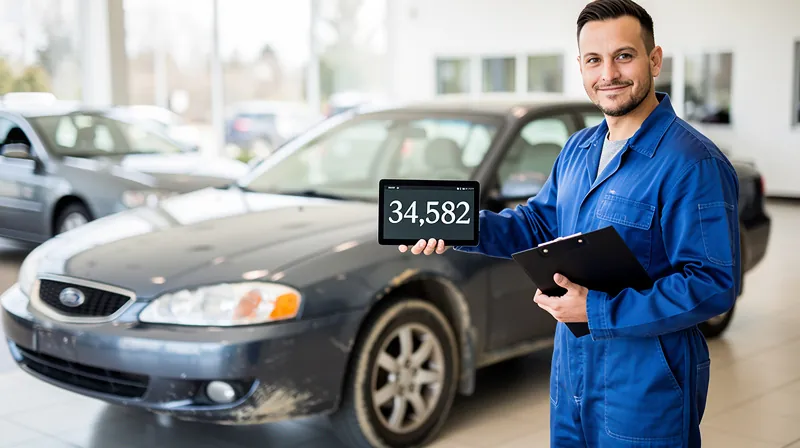
The logic behind this restriction is straightforward. GAP insurance only makes financial sense when a loan balance can realistically exceed the vehicle’s ACV. On older used cars, lenders typically issue smaller loans relative to value, and rapid depreciation in early years has already occurred — meaning the gap risk is lower for the insurer, but also means the vehicle often doesn’t qualify at all.
Who Qualifies for Used Car GAP?
Qualifying for used car GAP insurance requires meeting several simultaneous criteria. All of the following boxes must be checked before a policy will be issued:
- Vehicle age: Typically less than 3 model years old, though some lenders extend this to 5–7 years.
- Mileage: Usually under 36,000 miles, though this varies by provider.
- Loan term: Financing terms for used cars typically max out at 96 months (8 years).
- Active coverage: You must have both comprehensive and collision insurance already in place.
- Loan status: The car must be financed or leased — GAP has no purpose on a vehicle you own outright.
The 2026 Market Reality
Stabilized used car values in 2026 have narrowed the coverage gap for many buyers who purchased vehicles in 2023 or 2024 at elevated prices. However, market normalization doesn’t mean GAP is irrelevant — it means you need to calculate your specific loan-to-value ratio before assuming you’re protected.
Used EV values have risen modestly, partially reducing the urgency for some mainstream electric models. That said, high-mileage used cars remain ineligible for GAP due to the accelerated wear risk that insurers price into their underwriting decisions. If your vehicle has over 50,000 miles, finding a GAP policy will be difficult regardless of its age.
Eligibility Criteria: Age, Mileage, and Loan Limits
Vehicle age is the single biggest barrier for used car buyers seeking GAP insurance. The eligibility window is narrow, and exceeding any one of the threshold criteria — age, mileage, or loan terms — will disqualify you from most standard policies.
Vehicle Age and Mileage Restrictions
The most important number to know is three years. Standard insurers like Progressive and Allstate typically cap their GAP add-on coverage at vehicles three model years old or newer. This is not an arbitrary cutoff — it reflects the depreciation curve, which is steepest in years one through three of a vehicle’s life.
However, not all lenders follow the same rules:
- Navy Federal Credit Union and some regional lenders allow GAP coverage on used cars up to 7 model years old in certain cases.
- High mileage — typically anything over 50,000 miles — disqualifies a vehicle regardless of its age or loan terms.
- The vehicle must be in operational condition with no major mechanical failures that would affect its ACV.
- Salvage title vehicles are universally excluded from GAP coverage.
Financing Terms and Lender Requirements
The loan-to-value (LTV) ratio is the mathematical reason GAP insurance exists. If you borrow more than the car is worth — which happens easily with low down payments and rolled-over negative equity — you are upside-down from day one.
Key financing dynamics to understand:
- Lenders may actually require GAP insurance if your down payment is under 20%, since low equity increases their exposure to total-loss losses.
- Dealership financing packages frequently include mandatory GAP products bundled into the contract — often at a significant markup that you’re paying interest on for the life of the loan.
- Credit union GAP policies vary widely in their terms, caps, and exclusions compared to standard auto insurance add-ons.
- Always check your loan contract before purchasing GAP separately — lender-bundled GAP often means you’re already paying for it.
Cost Comparison: Dealer vs. Insurance
The difference in cost between dealer GAP and insurer GAP is not a minor pricing variation — it is a fundamental difference in value that can cost you hundreds or even thousands of dollars. Buying GAP through your auto insurance company is almost always the smarter financial decision.

Why Dealer GAP is Expensive
Dealer GAP products are marked up an estimated 200–300% compared to what the same coverage costs through a standard insurance carrier. This is one of the most consistently exploitative practices in the auto finance industry, and it is entirely legal.
What you need to know before signing a dealer financing contract:
- Dealer GAP typically costs $400–$1,000 as a lump sum rolled into your loan — which means you’re paying interest on it for years.
- In most cases, this product is non-refundable if you pay off your car early, sell it, or refinance — you lose the unused coverage.
- Dealer GAP is often classified as a finance product, not a true insurance policy, which means it may carry different regulatory protections.
- Avoid high-pressure F&I (finance and insurance) offices that bundle GAP with extended warranties, tire protection, and paint sealant in a single package. Each product should be evaluated individually.
The Insurer Route: How Much Does It Cost?
When you add GAP coverage directly through your auto insurance carrier, the cost is dramatically lower. Most drivers pay between $2 and $20 per month, translating to approximately $20–$60 per year as an insurance premium add-on.
Additional advantages of the insurer route include:
- Costs scale proportionally with the value of the car — a $15,000 used sedan will carry a lower GAP premium than a $35,000 used SUV.
- You can cancel coverage at any time once you’ve built sufficient equity in the vehicle.
- Some carriers offer multi-policy discounts for bundling GAP with homeowners or renters insurance.
- It is regulated as a true insurance product, giving you formal consumer protections under state insurance law.
How GAP Works: ACV vs. Loan Balance
GAP insurance covers the financial difference between what your insurer pays after a total loss — the vehicle’s actual cash value — and what you still owe on your loan. It does not cover your deductible, and it only activates in a total loss scenario.

Understanding Actual Cash Value (ACV)
ACV is the current market value of your vehicle at the time of loss — not what you paid for it. This distinction is critical, and it’s where most people first discover they are underprotected after a serious accident.
How insurers calculate ACV in 2026:
- Insurers primarily reference NADA Guides or Kelley Blue Book to establish fair market value at the time of the claim.
- Depreciation is factored in aggressively — a 2023 used car purchased for $28,000 may carry an ACV of $21,000 by 2025.
- In 2026, used car ACV is more predictable and stable than in the pandemic-era market, which reduces extreme edge cases but doesn’t eliminate the loan balance gap.
- Modifications, aftermarket parts, and wear conditions can lower the ACV below standard book value.
The Payout Formula
Understanding exactly how a GAP claim pays out will help you set realistic expectations. Here is the standard settlement structure:
- Your comprehensive and collision insurer pays out the ACV of the totaled vehicle, minus your deductible.
- The GAP policy pays the remaining loan balance — the difference between the ACV payout and what you still owe the lender.
- If you are “right-side up” — meaning you owe less than the ACV — there is no GAP claim. The surplus from the insurer’s settlement goes to you after the loan is paid off.
Example: Your used car is totaled. The ACV is $18,000. Your deductible is $1,000. Your loan balance is $22,000. Your collision insurer pays $17,000 ($18,000 minus deductible). Your GAP policy covers the remaining $5,000 owed to the bank. Without GAP, that $5,000 comes directly out of your pocket — on a car you can no longer drive.
Is GAP Insurance Worth It for Used Cars?
GAP insurance is worth it for a used car when your loan balance meaningfully exceeds the vehicle’s current market value — typically the case with low down payments, long loan terms, or vehicles prone to rapid depreciation. It is unnecessary if you have strong equity or a short financing term.
Pros and Cons Analysis
The decision comes down to your specific financial position at the time of purchase:
When GAP is worth it:
- You made a down payment under 20% and are financing for 60 months or longer.
- You rolled negative equity from a previous vehicle into your current used car loan.
- You are financing a used luxury vehicle, EV, or high-depreciation model.
- Your lender required it, confirming they see high LTV risk in your loan.
When GAP is not worth it:
- You put down 20% or more and are financing on a 36-month term.
- You have already built equity and owe less than the current ACV.
- The vehicle is ineligible due to age or mileage restrictions.
The EV and Hybrid Depreciation Nuance
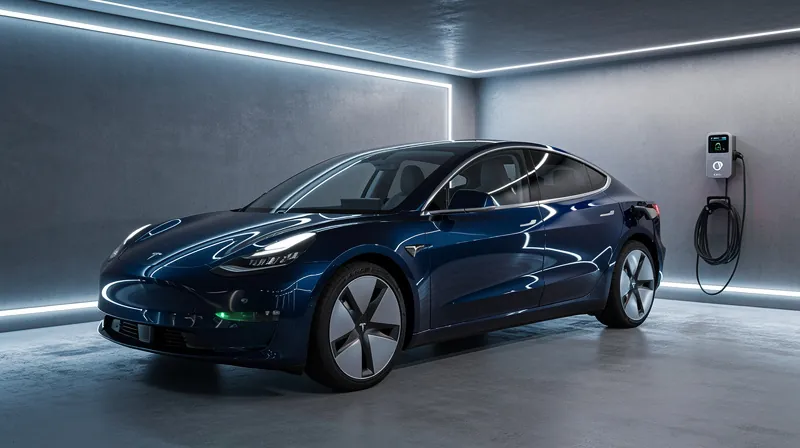
Used electric vehicles represent the highest-risk segment for negative equity, making GAP coverage strongly advisable for most used EV purchases. Battery-powered vehicles have historically depreciated 40–50% in their first year — a rate far exceeding conventional gas-powered cars — though this has begun to stabilize for mainstream models in 2026.
Critical EV-specific considerations for GAP coverage:
- Battery degradation directly affects ACV — a used EV with degraded battery range is worth less at appraisal than a comparable unit with full battery health, regardless of book value.
- High-mileage used EVs (over 50,000 miles) are typically ineligible for GAP insurance, creating a coverage blind spot for buyers of older high-use electric vehicles.
- Used luxury EVs carry the highest risk — a vehicle that cost $75,000 new may appraise at $35,000 used, and lenders may still issue loans that exceed this rapidly declining ACV.
- Used hybrids depreciate at a more moderate rate, but buyers should still calculate their LTV ratio carefully before deciding against coverage.
Common Exclusions and Fine Print Traps
GAP insurance has a clearly defined scope of coverage, and the list of exclusions is long enough to surprise most buyers. Understanding what GAP does not cover is just as important as knowing what it does — because assuming broader protection is one of the most common and costly mistakes used-car buyers make.

What GAP Does NOT Cover
GAP is a narrowly defined product. The following situations are excluded from virtually every standard policy:
- Mechanical breakdowns, wear and tear, and cosmetic damage — GAP is not a warranty or maintenance plan.
- Overdue loan payments or late fees — any arrears on your loan at the time of the total loss will not be covered by GAP.
- Balloon payments and lease-end disposition fees are typically excluded from the GAP payout calculation.
- If a vehicle is totaled as a result of a manufacturer defect or recall, some policies will not pay out — read this clause carefully.
- Your deductible — this comes out of the ACV settlement, not the GAP coverage. Some lenders offer “GAP plus deductible” products at higher premiums, but standard GAP does not include this.
- Vehicles declared a total loss due to excess mileage violations in a lease agreement may face partial coverage denials.
The Refinancing Trap
Refinancing your used car loan to lower monthly payments is a financially appealing move — but it carries a hidden GAP risk that very few buyers consider. Extending your loan term through refinancing can reset your negative equity exposure and invalidate or complicate your existing GAP coverage.
Here’s how the refinancing trap works in practice:
- When you refinance and extend the loan term, your new loan balance may again exceed the vehicle’s current ACV, even if you had been building equity.
- Your existing GAP policy may not automatically transfer to the new lender — you may need to purchase new coverage.
- Rolling over negative equity from a previous car into a new used car loan is an especially dangerous form of this trap — you are starting a new loan already upside-down before depreciation even begins.
- Always contact your insurer directly after refinancing to confirm whether your GAP coverage is still valid, and whether your new lender has already bundled GAP into the refinanced terms — potentially causing a double payment.
Frequently Asked Questions
Is gap insurance worth it for a used car?
GAP insurance is worth it for a used car if your loan balance exceeds the vehicle’s actual cash value — a common situation when making low down payments or financing over 60 months. If you have significant equity or a short loan term, the coverage provides little practical benefit and may not be necessary.
Why would a car not qualify for gap insurance?
A car typically doesn’t qualify for GAP insurance if it is more than three model years old, has high mileage (often over 50,000 miles), carries a salvage or rebuilt title, or lacks active comprehensive and collision coverage. Vehicles that are paid off outright — with no active financing or lease — also do not qualify, since there is no loan balance for GAP to protect against.
How much does it cost to get gap insurance?
Purchased directly through an auto insurance carrier, GAP insurance typically costs between $20 and $60 per year, or roughly $2–$20 per month as an add-on to your existing policy. Dealer-provided GAP products are dramatically more expensive, often ranging from $400 to $1,000 as a lump-sum finance charge rolled into your loan at interest.
What does Dave Ramsey say about gap insurance?
Dave Ramsey generally advises against financing cars at all, but acknowledges that if you do carry a car loan, GAP insurance is one of the few insurance products he considers reasonable — provided you buy it through an insurer, not the dealership. He specifically warns against dealer finance office add-ons, which he considers a major profit center built on consumer confusion.
Can I get GAP insurance after buying a used car?
Yes, you can typically purchase GAP insurance after buying a used car, though many insurers and lenders require you to add it within 30 days of the purchase or financing date. The vehicle must still meet all eligibility criteria — age, mileage, and active comprehensive and collision coverage — at the time you apply for the policy.
Does GAP insurance cover a totaled used car?
Yes, GAP insurance specifically covers the scenario where a used car is declared a total loss. In that case, your standard insurer pays out the vehicle’s actual cash value, and your GAP policy pays the remaining difference between that payout and your outstanding loan balance, subject to applicable exclusions and after your deductible is applied.
Can I cancel GAP insurance on a used car?
If you purchased GAP through your auto insurance carrier, you can cancel it at any time — for example, once your loan balance drops below the vehicle’s ACV and you no longer carry negative equity. Dealer GAP products are often non-refundable or only partially refundable based on a pro-rated schedule, which is one of the strongest arguments for buying through an insurer instead.
What is the difference between GAP and standard insurance?
Standard auto insurance (specifically comprehensive and collision) pays out the vehicle’s actual cash value at the time of a total loss — which may be significantly less than what you owe on the loan. GAP insurance is a supplemental product that covers only the difference between that ACV payout and the remaining loan balance, and it does not cover repairs, liability, or partial damage claims.
Is GAP insurance necessary for electric vehicles?
GAP insurance is strongly recommended for used electric vehicles because EVs historically depreciate 40–50% in their first year, creating a large gap between loan value and market value. Battery degradation can further reduce a used EV’s ACV below standard book value at appraisal, making the risk of being significantly upside-down on a used EV loan considerably higher than with a comparable gas-powered vehicle.
How long does GAP insurance last on a used car?
GAP insurance on a used car lasts as long as you carry it and continue paying the premium — it does not have a fixed expiration date. However, the coverage becomes functionally unnecessary once your loan balance drops below the vehicle’s ACV, meaning you have built positive equity in the car. Most financial advisors recommend reviewing your loan balance against current market value annually and canceling GAP coverage once you are no longer upside-down.