
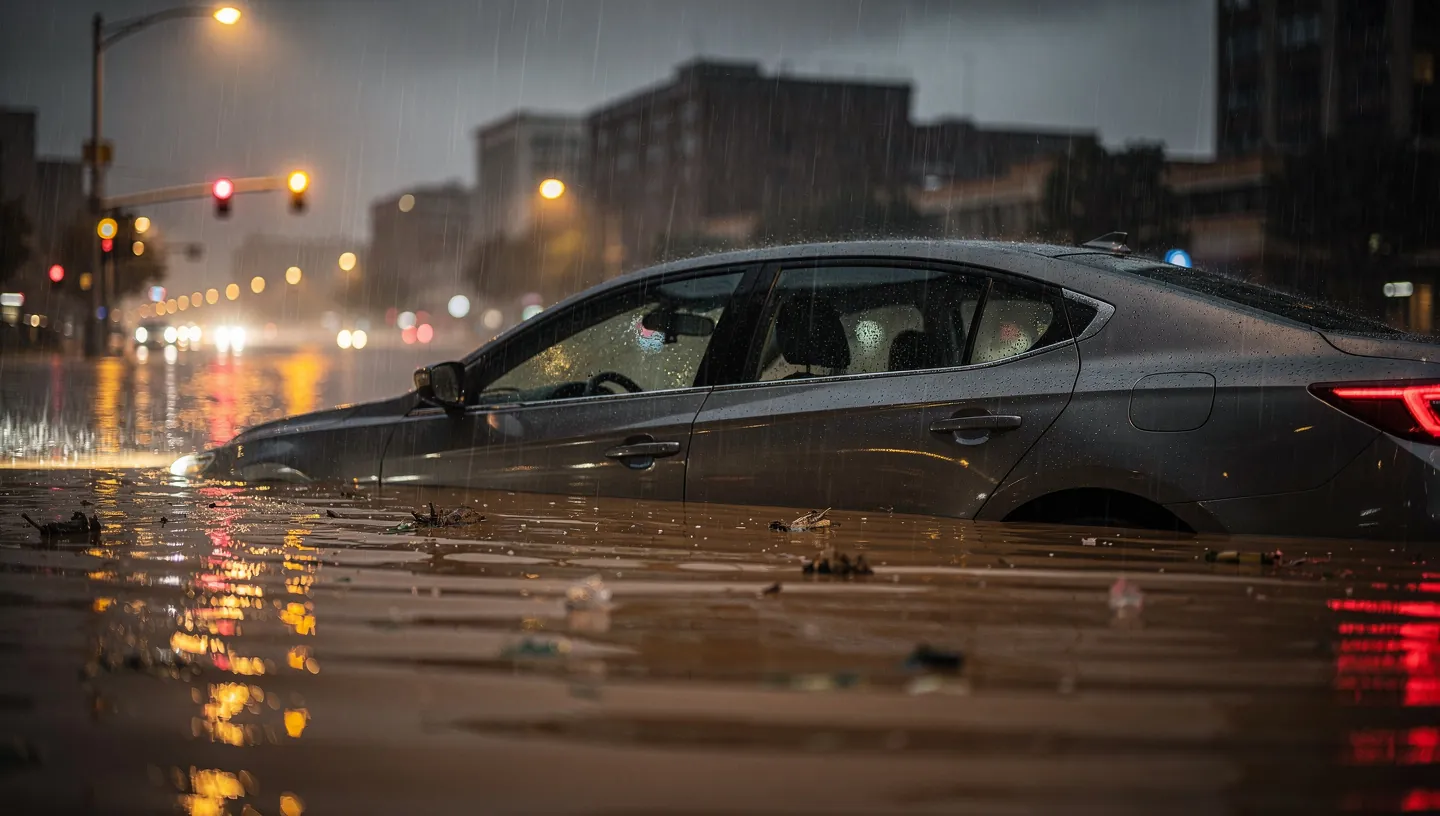
The direct answer to “does insurance cover a flooded car” is yes — but only if you have comprehensive coverage. Standard liability insurance, the minimum required in most states, pays for damage you cause to others and will not contribute a single dollar toward repairing or replacing your flood-damaged vehicle. If you are staring at a waterlogged car right now, the first thing you need to do — before turning the key — is check your policy declarations page for the word “comprehensive.”
In 2026, flood claims have become one of the fastest-growing categories in personal auto insurance. Insurers are responding with premium hikes of 15–30% in high-risk flood zones, new protocols for electric vehicles, and emerging products like parametric insurance that can pay claims in under 48 hours. Understanding how this landscape works is no longer optional — it is financially critical.
This guide will walk you through exactly what your insurer will pay, how a total loss declaration works, what a salvage title means for your financial future, and the single most common mistake that causes flood claims to be denied outright. That mistake? Turning on the ignition.
Key Takeaways
- Liability insurance does NOT cover your own vehicle. You need comprehensive coverage for flood damage to be reimbursed.
- If repair costs exceed 70–80% of your car’s Actual Cash Value (ACV), your insurer will likely declare it a total loss.
- Electric vehicles (EVs) face unique risks — including battery thermal runaway — and are totaled at significantly higher rates after flooding.
- Starting a flooded engine causes hydrolock, which insurers frequently classify as operator negligence and use to deny claims.
- A salvage title permanently reduces resale value by 30–50% and raises future insurance premiums.
- New 2026 trends include parametric insurance for faster payouts and significant premium hikes driven by AI-modeled flood risk in climate-vulnerable regions.
The Short Answer: Does Insurance Cover Flood Damage?
Flood damage is covered by comprehensive auto insurance, not liability or collision coverage. Comprehensive coverage is the specific policy component designed for non-collision losses — events like floods, hail, wildfire, theft, and falling objects. Without it, the financial burden of a flooded vehicle falls entirely on you, regardless of whether the flood was a declared federal disaster.
Many drivers believe they have “full coverage” and assume they are protected from everything. In the insurance industry, “full coverage” typically means a bundle of liability + collision + comprehensive. But this term is not standardized — some budget policies sold as “full coverage” omit comprehensive entirely to keep premiums low. Always verify by reading your declarations page, not just the marketing label.
The cost of adding comprehensive to an existing policy is often more affordable than drivers expect. The national average for comprehensive coverage alone is approximately $167–$220 per year, according to recent industry data — a fraction of the cost of a single flood repair job, which can easily run $10,000 to $40,000 or more.
Liability vs. Comprehensive: What You Need to Know
Understanding the difference between these two coverage types is the foundation of any flood claim conversation.
| Coverage Type | What It Covers | Covers Your Flooded Car? | Typical Cost/Year |
|---|---|---|---|
| Liability | Bodily injury and property damage you cause to others | No | $600–$900 |
| Collision | Damage from hitting another car or object | No (flood is not a collision) | $300–$500 |
| Comprehensive | Floods, hail, fire, theft, vandalism, animals | Yes | $167–$220 |
- Liability is legally required in nearly every U.S. state. It protects other people from you, not you from the world.
- Comprehensive is optional unless your lender requires it (which most do if you have a car loan or lease).
- Your deductible for comprehensive is typically $500 to $2,000. This is the amount subtracted from your payout before you receive anything.
- In 2026, premiums for comprehensive coverage are rising across flood-prone states like Florida, Louisiana, Tennessee, and California due to increasing climate-related claims frequency.
Is My Car Totaled? Determining Actual Cash Value
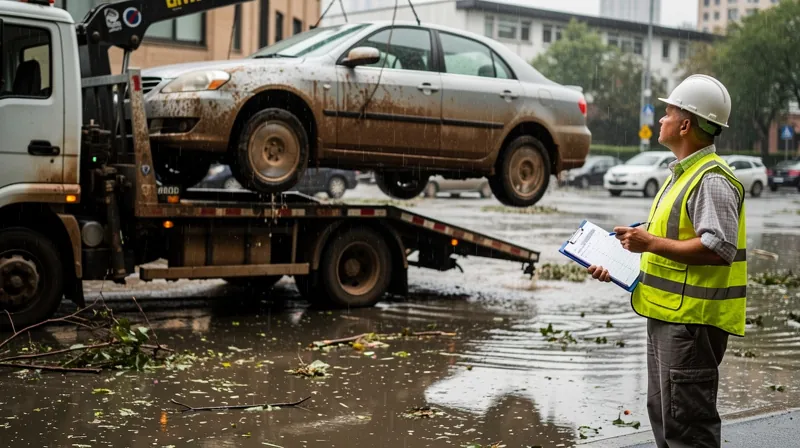
Your insurer will declare your car a total loss when the estimated repair cost exceeds 70–80% of its Actual Cash Value (ACV). ACV is not what you paid for the car — it is what your car was worth on the open market the moment before the flood hit, accounting for depreciation, mileage, condition, and local market comparables. Flood damage frequently triggers this threshold because water damage is rarely limited to one system.
When an adjuster inspects a flooded vehicle, they are not just looking at what is visibly wet. They are projecting the full scope of damage, which almost always expands once a vehicle is disassembled. A car that looks like it “just got a little wet inside” may have compromised its ECU (engine control unit), rusted its brake lines, and begun growing mold beneath the carpet — all of which compound repair costs rapidly.
The payout formula is straightforward but often surprises owners:
Claim Payout = Actual Cash Value (ACV) − Your Deductible
If your car’s ACV is $18,000 and your deductible is $1,000, your maximum payout is $17,000.
If you still owe money on the car, your lender is paid first. If the ACV payout is less than your loan balance, you are responsible for the gap — which is exactly what GAP insurance is designed to cover. Without GAP coverage, you could be paying a loan on a car that no longer exists.
The True Cost of Flood Damage
Flood damage is uniquely destructive because water infiltrates every system simultaneously. Here is what adjusters actually find and what it costs:
- Engine failure and hydrolock: If water entered the intake before the engine was shut off, internal components may be bent or seized. Engine replacement or rebuild costs range from $4,000 to $10,000+.
- Transmission damage: Submerged transmissions absorb water into fluid systems, causing slipping, shuddering, and eventual failure. Replacement costs run $3,000 to $7,000.
- Mold remediation: Mold begins colonizing wet foam, carpet, and insulation within 24 to 48 hours. Professional mold remediation in a vehicle can cost $1,500 to $6,000 and is never fully guaranteed.
- Electrical system failure: Modern vehicles have dozens of control modules, sensors, and wiring harnesses. Diagnosing and replacing flood-corroded electronics can add $2,000 to $8,000 to a repair estimate.
- Rust and corrosion: Even after the car appears dry, saltwater or sediment-laden floodwater accelerates long-term metal corrosion, which continues to degrade the vehicle’s structural integrity for years.
Salvage Titles and Resale Value
When a vehicle is declared a total loss, the insurer takes ownership of the wreck and the vehicle is issued a salvage title by the state DMV. This designation permanently follows the vehicle through every future transaction and has serious financial consequences.
- A salvage title reduces the vehicle’s market value by 30–50% compared to a clean-title equivalent.
- Most mainstream lenders will not finance a salvage-title vehicle, limiting buyers to cash-only transactions or specialty lenders with high interest rates.
- Insuring a salvage-title car is significantly harder and more expensive. Many insurers will only offer liability coverage for salvage-title vehicles, not comprehensive — meaning if it floods again, you get nothing.
- If a salvage vehicle is repaired and passes a state inspection, it may receive a “rebuilt” or “reconstructed” title, but this designation still signals flood history to any buyer who runs a vehicle history report.
The 2026 Landscape: EV Risks & New Trends
The frequency of catastrophic flood events in the U.S. has increased flood-related auto claims by an estimated 20–35% over the past five years, reshaping how insurers price and process these claims in 2026. Two factors are driving the most significant changes: the rapid growth of the electric vehicle fleet and the insurance industry’s adoption of AI-powered risk modeling. Both are producing outcomes that catch policyholders off guard.
Climate migration is also quietly reshaping insurance markets. As homeowners relocate from flood-prone coastal areas to inland cities, they bring their vehicles into regions where local insurers now face new accumulations of risk. Insurers are recalibrating their models in real time, and policyholders in previously “safe” zip codes are seeing their comprehensive premiums rise for the first time.
EV Vulnerabilities: Thermal Runaway and Battery Damage

Electric vehicles are disproportionately likely to be declared a total loss after flooding because their high-voltage battery packs — often the single most expensive component — are catastrophically vulnerable to water ingress. A flooded EV is not simply a wet car; it is a potential fire risk that can reignite hours or even days after the initial event.
Here is what makes EV flood damage uniquely dangerous and expensive:
- Water in high-voltage battery packs causes short circuits that can deliver lethal voltage to anyone who touches the vehicle. Emergency responders and repair technicians must follow specialized protocols before approaching a submerged EV.
- Thermal runaway is a chain reaction inside the battery where one failing cell triggers neighboring cells to overheat, catch fire, and potentially explode. Fires from thermally compromised EV batteries can burn at temperatures exceeding 1,000°F and reignite after being extinguished.
- Battery pack replacement costs for popular EVs range from $15,000 to $30,000+ — often exceeding the ACV of the vehicle itself, which makes a total loss declaration almost automatic after significant submersion.
- Specialized EV repair technicians are scarce. The shortage of certified high-voltage technicians means even minor EV flood damage takes longer to assess, drives up labor costs, and pushes repair estimates over the total loss threshold.
- Insurers are implementing stricter EV flood inspection protocols in 2026, including mandatory battery pack testing, isolation resistance checks, and in some cases, battery replacement as a precautionary standard rather than an option — regardless of whether the battery shows overt damage.
EV owners in flood-prone areas should specifically confirm with their insurer how their policy handles battery replacement in a total loss scenario and whether their ACV calculation accounts for current EV battery market prices, which differ significantly from standard ICE vehicle replacement parts.
Emerging Trends: Parametric Insurance and Premium Hikes
Parametric insurance is an emerging product that pays claims automatically when a predefined weather event occurs — such as rainfall exceeding a specific threshold — rather than requiring a traditional damage assessment process. For flood events, this means payouts can be triggered and disbursed in under 48 hours, compared to the 7–21 day average for traditional auto claims.
- How it works: A sensor network or government weather station records rainfall data. When the data crosses your policy’s trigger level, the payout is sent automatically. No adjuster visit, no repair estimate, no negotiation.
- The trade-off: Parametric policies pay a fixed pre-agreed amount, which may be higher or lower than your actual loss. They offer speed and certainty, but lack the flexibility of a traditional ACV-based claim.
- AI-driven flood risk modeling is now being used by major insurers to identify previously underpriced zip codes. Properties and vehicles in areas that have historically avoided flood premiums are being re-rated, sometimes dramatically, at renewal.
- NFIP (National Flood Insurance Program) changes continue to push consumers toward private auto and homeowner policies, as federal flood coverage for structures does not extend to vehicles. This is increasing demand — and pricing pressure — on the private comprehensive auto market.
- In the highest-risk flood zones, some insurers are non-renewing comprehensive policies entirely rather than absorbing the modeled risk, leaving vehicle owners with limited private-market options.
Step-by-Step: What to Do Immediately After a Flood
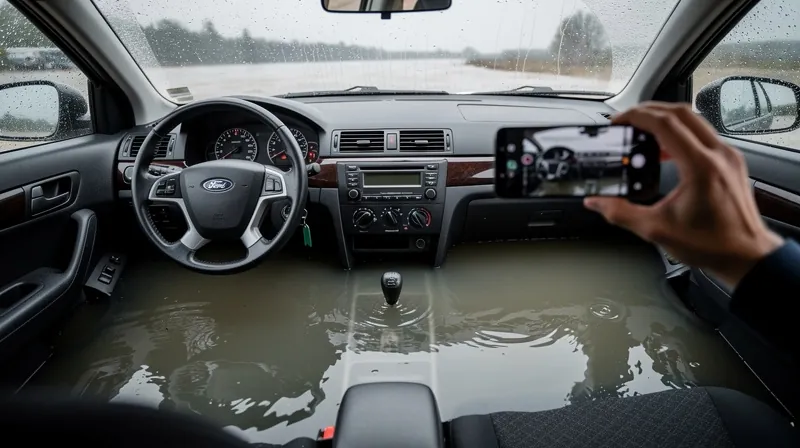
The single most important rule after flood damage is: do not turn on the ignition. Every other step in the claims process can be corrected or compensated — a destroyed engine from hydrolock cannot, and it may cost you your entire claim. Once the car is safe to approach, your actions in the first 12–24 hours will directly determine the speed and size of your insurance payout.
Follow these steps in order:
- Confirm the car is safe to approach. Do not enter floodwater to reach your vehicle. Check for downed power lines, unstable terrain, and ongoing flood risk before getting close.
- Do NOT turn the key or push the start button. Not even to check electronics. Not to “just see.” Any rotation of the engine with water in the cylinders is enough to cause hydrolock.
- Disconnect the battery if it is safe to do so and the water has fully receded. This prevents inadvertent electrical shorts from causing additional damage or fire.
- Document everything immediately before anything is moved, dried, or disturbed.
- Call your insurer to open a claim. Most insurers have 24/7 claim hotlines. Do not wait for the storm to pass — call as soon as it is safe.
- Begin the drying process to mitigate mold growth while the adjuster is being scheduled.
- Arrange a tow to a dry, covered location. Do not attempt to drive the vehicle even if it appears undamaged.
How to Document Your Claim
Thorough documentation is the single most effective thing a policyholder can do to protect their claim. Adjusters base their assessments on evidence — the more you provide, the less room there is for disputes.
- Photograph the water line on the exterior of the car and on the surrounding neighborhood. High-water marks on buildings, fences, and street signs establish the flood’s severity and corroborate your claim.
- Record video walkarounds of the entire exterior, then the engine bay (lid open, not started), then the interior — focusing on the dashboard, floor mats, seats, and any visible debris or sediment.
- Photograph the VIN plate, odometer reading, and all four tires relative to the water line to establish ACV-relevant condition details.
- Keep all receipts for emergency expenses: towing, temporary transportation, tarps, industrial fans, dehumidifiers, and professional mold remediation consultations.
- Download weather data for your zip code from NOAA or Weather Underground for the date of the event. This timestamped third-party data strengthens your claim if there is any dispute about the event’s severity.
The Drying Process and Mold Prevention
Mold is one of the primary reasons flood-damaged cars are declared total losses even when the mechanical damage alone might have been repairable. Acting quickly to begin drying is not just about comfort — it is about preserving the vehicle’s salvageability and demonstrating to your insurer that you took reasonable steps to mitigate further damage. Most policies require policyholders to take reasonable mitigation steps; failing to do so can reduce your payout.
- Remove all wet material immediately once it is safe: floor mats, carpeting, seat cushions, trunk liners. These items hold moisture against metal surfaces and accelerate both mold growth and rust.
- Deploy industrial fans and dehumidifiers inside and around the vehicle. Residential box fans are insufficient — rent commercial-grade equipment if necessary. Your insurer may reimburse reasonable mitigation costs.
- Leave doors and windows open in a covered, dry location to maximize airflow. Do not do this outdoors if there is any risk of additional rain.
- Mold colonies can establish within 24–48 hours in wet vehicle interiors. If more than 48 hours pass before drying begins, professional mold testing is strongly recommended before any repair estimate is finalized.
- Use odor-neutralizing sprays designed for automotive use (enzyme-based, not masking agents) to address early microbial growth. Document all steps you take with photos and dated receipts.
Common Exclusions: When Claims Are Denied
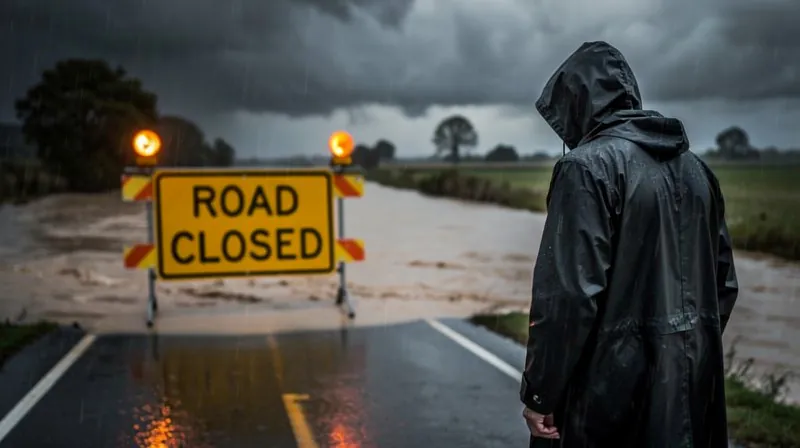
Comprehensive insurance covers sudden, accidental flood damage — but insurers will investigate whether your own actions contributed to or worsened the damage. Claim denials and partial payouts are common when adjusters find evidence of negligence, operator error, or preventable secondary damage. Understanding these exclusions before a flood event is the best protection against a denied claim.
Hydrolock and Engine Damage
Hydrolock occurs when water enters an engine’s cylinders and the piston attempts to compress it — an impossible task, since water does not compress like air-fuel mixture. The result is a bent connecting rod, cracked engine block, or completely seized engine. This is one of the most expensive single-component failures in automotive repair.
- Insurers view hydrolock as operator negligence in most cases, because it requires the engine to be running or started after water ingress. If your car flooded while parked and you did not touch it, hydrolock is unlikely. If you tried to drive through rising water or restarted the engine after the flood, the insurer may deny the engine damage portion of your claim while still covering other flood-related losses.
- An adjuster can often determine from forensic evidence whether the engine was running when water entered the intake, so attempting to misrepresent this is both ineffective and potentially fraudulent.
- The rule is simple and non-negotiable: if your car was in or near floodwater, do not start it.
Other Common Exclusions to Know
- Driving into a flooded road: If you intentionally drove into a flooded road that was barricaded or visibly unsafe, your insurer may classify this as negligence and reduce or deny your claim. “Road Closed” signage is taken very seriously in claim investigations.
- Pre-existing maintenance issues: A vehicle with known leaking door seals, a damaged sunroof, or a pre-existing rust condition that allowed water easier entry may see a reduced payout on the grounds of poor maintenance contributing to the damage.
- Personal belongings: Auto insurance does not cover personal items inside the vehicle — laptops, clothing, child car seats, sporting equipment. These losses may be covered under a homeowner’s or renter’s insurance policy, so file a separate claim there.
- Mold from delayed reporting: If you wait weeks to report the claim and significant mold damage has developed that could have been mitigated, the insurer may argue that the additional mold damage is not covered.
State-Specific Title Washing Scams
Title washing is the illegal practice of moving a salvage-titled vehicle through multiple state transfers to obtain a clean title in a state with less rigorous title tracking — then reselling the flood-damaged vehicle without disclosure. It is a billion-dollar fraud problem that peaks in the months following major flood events like hurricanes.
- How it works: A salvage vehicle is purchased at auction in State A, which brands the title “Salvage.” The vehicle is then registered in State B, which may issue a “rebuilt” title without requiring a rigorous inspection. It is then sold to an unsuspecting buyer in State C, who believes they are purchasing a clean-title vehicle.
- How to protect yourself: Always run a vehicle history report through the NMVTIS (National Motor Vehicle Title Information System) before purchasing any used vehicle, especially after a major regional flood event. Services like Carfax and AutoCheck pull from NMVTIS data.
- What to look for: Multiple state registrations in a short period, gaps in ownership history, an odometer reading that seems inconsistent with the vehicle’s age, and any mention of “salvage,” “flood,” or “rebuilt” in the title history.
- State-specific disclosure laws vary widely. States like Texas and Florida require sellers to disclose known flood damage in writing. However, private sellers who were not the ones who had the vehicle titled as salvage may claim (often dishonestly) that they had no knowledge of the damage. Do not rely on a seller’s verbal assurances.
- If you purchase a flood-damaged vehicle with a washed title, your comprehensive insurance claim may be significantly complicated. Insurers assess ACV based on title status — a vehicle with an undisclosed salvage history will be valued accordingly once discovered, potentially reducing your payout.
Frequently Asked Questions
How much will insurance pay for a flooded car?
Insurance will pay the Actual Cash Value (ACV) of your vehicle minus your deductible. ACV is the pre-flood market value of your car based on its age, mileage, condition, and local comparable sales — not its purchase price or replacement cost. For example, if your ACV is $20,000 and your deductible is $1,500, your payout would be $18,500. If the car is repairable, the insurer pays the repair cost minus your deductible, up to the ACV limit.
What happens if my car gets flooded and I have insurance?
If you have comprehensive coverage and your car is flooded, you should immediately document the damage, avoid starting the engine, and contact your insurer to file a claim. An adjuster will inspect the vehicle and determine whether it is repairable or a total loss. If it is a total loss, the insurer takes ownership of the wreck, pays you the ACV minus your deductible, and the vehicle receives a salvage title.
Are flooded cars usually totaled?
Yes — flooded cars are declared total losses at a significantly higher rate than collision-damaged vehicles. The combination of engine damage, electrical system failure, mold remediation costs, and long-term corrosion risk frequently pushes repair estimates beyond the 70–80% of ACV total loss threshold. Electric vehicles are totaled at an even higher rate due to battery replacement costs.
What type of water damage is not covered by insurance?
Auto insurance does not cover water damage caused by operator negligence, poor vehicle maintenance, or damage that occurred while intentionally driving through flooded roads. Additionally, personal belongings inside the car are not covered by auto insurance — those losses fall under homeowner’s or renter’s insurance. Mechanical damage caused by hydrolock after restarting a flooded engine is frequently excluded as negligence.
Does comprehensive insurance cover floods?
Yes, comprehensive auto insurance specifically covers flood damage as part of its protection against non-collision losses. This includes damage from rising water, storm surge, flash floods, and hurricane flooding. It does not cover flood damage if you only have liability or collision coverage — comprehensive must be explicitly listed on your policy declarations page.
Does liability insurance cover a flooded car?
No — liability insurance covers damage you cause to other people or their property, not damage to your own vehicle from any cause, including floods. This is the most common misunderstanding in flood claim situations. Drivers who carry only the state-required minimum liability coverage will receive zero reimbursement for a flooded vehicle.
What is hydrolock and does insurance cover it?
Hydrolock is engine damage that occurs when water enters the cylinders and the pistons cannot compress it, causing the engine to seize or internal components to bend or break. Whether insurance covers it depends on how it happened. If the car was parked and flooded, and you did not start it, engine damage from water intrusion is typically covered. If you started the engine after the flood or drove into rising water, insurers frequently classify the hydrolock as operator negligence and deny that specific damage.
Does GAP insurance help if my flooded car is totaled?
Yes — GAP (Guaranteed Asset Protection) insurance pays the difference between your car’s ACV payout from comprehensive insurance and the remaining balance on your auto loan. This is critically important for newer vehicles that depreciate faster than loan balances decrease. Without GAP coverage, you could owe thousands of dollars on a loan for a car that your insurer has already paid out and taken title of.
How do I know if my car has a salvage title after a flood?
You can check a vehicle’s title history by running its VIN through the NMVTIS database or a paid service like Carfax or AutoCheck. These reports will show any salvage, flood, or rebuilt title designations from any participating state. You can also request a title search directly from your state’s DMV. If you are purchasing a used vehicle, always run this check before finalizing any sale, particularly after regional flood events.
Will my insurance premiums go up after a flood claim?
A comprehensive flood claim may or may not raise your premiums, depending on your insurer, your state’s regulations, and your prior claims history. Many insurers treat natural disaster claims differently from at-fault collision claims — some states prohibit rate increases for comprehensive weather-related claims. However, if you file multiple claims within a short period, or live in a region where flood risk is being repriced industry-wide, your renewal rate may increase regardless. Consult your agent after filing to understand your specific exposure.