
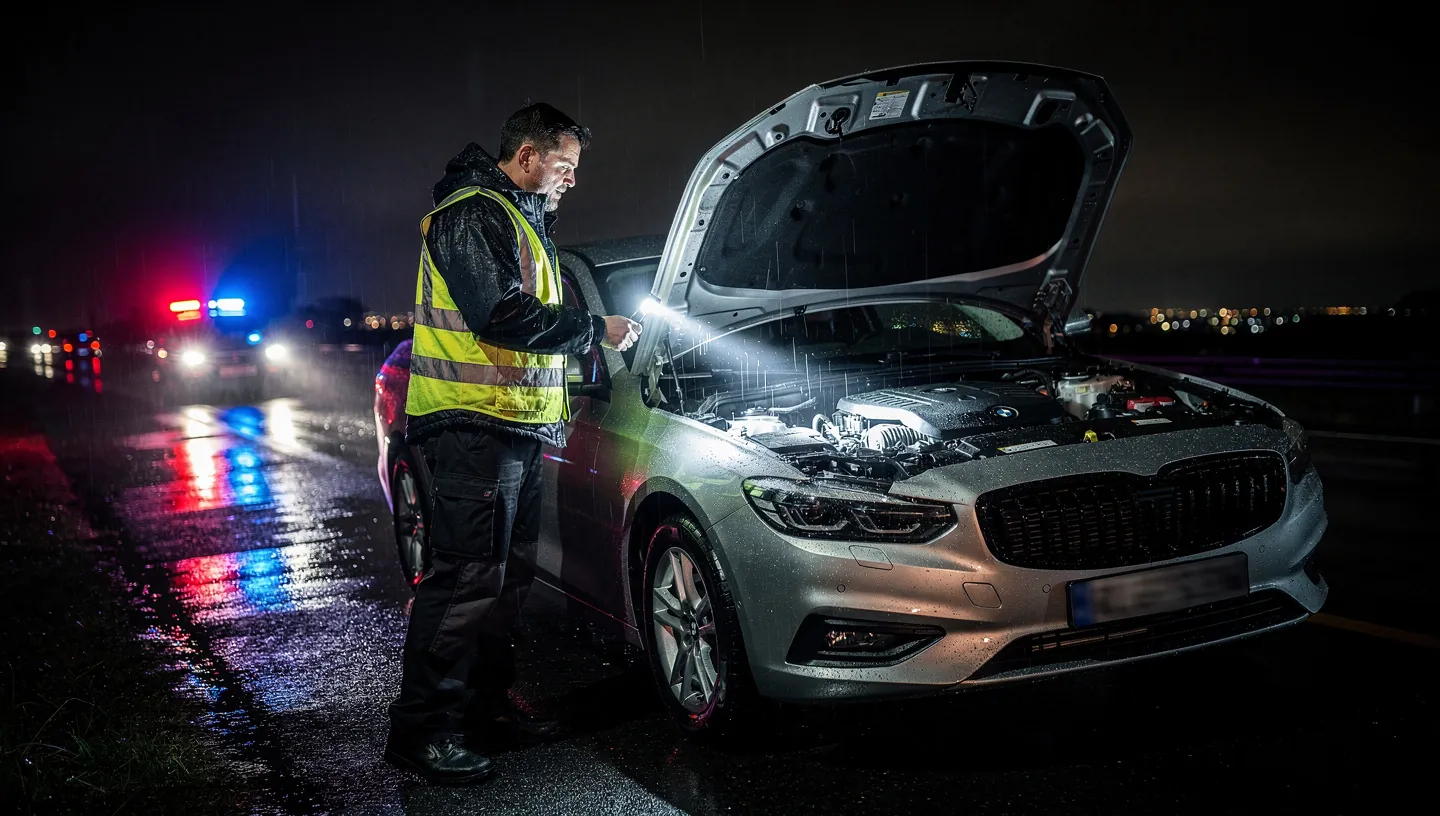
Few things are more stressful than being stranded on the side of the road with a car that refuses to start. Your first instinct might be to call your insurance company — but if you’re expecting standard auto insurance to cover the repair bill, you’re likely in for a frustrating surprise. Standard auto insurance policies do not cover mechanical breakdowns, engine failures, or the gradual wear and tear that causes most vehicle failures. Coverage for those situations requires a separate, optional product most drivers have never heard of.
The reason for this gap is fundamental: auto insurance is designed to protect you against sudden, unexpected events like accidents, theft, and weather damage — not against the natural aging of mechanical components. If your transmission fails because it’s worn out after 120,000 miles, that’s not an insurable “peril” under a standard policy. It’s maintenance. And maintenance is entirely your responsibility under every standard liability, collision, or comprehensive policy on the market.

The good news is that a solution exists. Mechanical Breakdown Insurance (MBI) is an optional add-on — sometimes called an endorsement — that bridges exactly this gap. It functions similarly to an extended warranty but is issued by an insurance company, making it more flexible, often cheaper, and sometimes transferable to a new owner. With MBI premiums running approximately $100 per year compared to out-of-pocket transmission replacements costing $3,000–$5,000, the math tends to speak for itself.
As we move into 2025–2026, new developments are making this conversation even more critical. No-deductible MBI options are emerging from select providers, and the explosive growth of electric vehicles has created a new class of coverage gaps around high-voltage batteries and proprietary EV drivetrains. Whether you’re driving a 10-year-old sedan or a brand-new EV, understanding what your policy does and doesn’t cover could save you thousands of dollars when you need it most.
Key Takeaways
- Standard insurance (liability, comprehensive, collision) does not cover mechanical failures, wear and tear, or routine maintenance — these exclusions are universal across all standard auto policies.
- Mechanical Breakdown Insurance (MBI) is the primary solution for covering unexpected mechanical repairs after your factory warranty expires.
- MBI is generally cheaper and more flexible than traditional extended warranties, costing roughly $100 per year versus a $2,500+ lump-sum upfront payment.
- Claim denials are frequently triggered by poor maintenance records — keeping detailed digital logs of every oil change and service interval is essential to a successful claim.
- EV owners face unique and serious coverage gaps regarding high-voltage batteries and proprietary components that standard MBI policies may not cover.
The Short Answer: Why Standard Insurance Doesn’t Cover Breakdowns
Standard auto insurance was never designed to cover mechanical failures. Liability, collision, and comprehensive policies are built around a single concept: protecting you financially from sudden, external events you didn’t cause through negligence. A worn-out engine, a failed fuel pump, or a cracked timing belt are the predictable result of driving a mechanical machine — not an insurable accident.
Insurance companies draw a clear legal and contractual distinction between accidental damage and mechanical deterioration. The former is unpredictable and insurable. The latter is considered a foreseeable cost of vehicle ownership, no different than buying gas. When you understand this distinction, the coverage gap stops feeling like a loophole and starts feeling like a design feature — just one that doesn’t benefit drivers who aren’t prepared for it.
Routine maintenance — oil changes, tire rotations, brake pad replacements, fluid top-offs — is categorically excluded from all auto insurance policies without exception. If you fail to change your oil and your engine seizes, no insurer will cover it. Similarly, wear and tear, defined as the natural deterioration of components over time and mileage, is a non-covered peril. Belts, hoses, gaskets, and brake pads degrade on a predictable schedule, and that predictability is exactly why they can’t be insured under standard policies.
The Three Main Policy Types and Their Limits
Understanding what each standard policy type actually covers helps clarify why none of them extend to vehicle breakdowns:
- Liability Coverage: Pays for damage to other people’s property and their medical injuries when you’re at fault in an accident. It has nothing to do with your vehicle’s condition or mechanical state.
- Collision Coverage: Pays for damage to your car when it physically collides with another object — another vehicle, a guardrail, or a tree. A blown engine from mechanical failure is not a collision event, even if the car comes to a sudden stop.
- Comprehensive Coverage: Covers non-collision events like theft, vandalism, fire, flooding, and hitting an animal. A sudden mechanical failure — even a dramatic one like an engine seizing — is not a weather event, not a theft, and not vandalism. It doesn’t qualify.
The through-line is clear: all three coverage types protect against external events, not internal mechanical decay. If it’s not caused by an accident, a criminal act, or a natural disaster, standard insurance almost certainly doesn’t cover it.
When Coverage Actually Applies (Accident-Related Breakdowns)
There is one scenario where your standard insurance policy will cover a breakdown: when the mechanical damage is directly caused by a covered accident. If a collision destroys your engine block, or a flood event causes an electrical short circuit, the resulting mechanical damage can be covered — because the root cause is a covered peril, not mechanical neglect.
This is an important nuance that confuses many policyholders. The triggering event must be covered, and the mechanical damage must be a direct, traceable result of that event. For example:
- Covered: You hit a deer at highway speed, and the impact damages your radiator and engine block. Your comprehensive coverage applies because hitting an animal is a covered peril.
- Covered: Another driver runs a red light and collides with your vehicle, causing transmission damage. Your collision coverage applies to the mechanical damage caused by the crash.
- Not Covered: Your engine overheats and fails because a hose hasn’t been replaced in years. Even if the failure is sudden and dramatic, the root cause is maintenance neglect, not a covered event.
- Not Covered: Your alternator fails spontaneously while driving. This is a mechanical failure with no accident trigger, and no standard policy covers it.
The distinction often comes down to what investigators call the “proximate cause” — the actual root cause of the damage. Insurers will investigate claims carefully, and if they can trace the damage to pre-existing wear or lack of maintenance rather than the accident itself, they may deny the related mechanical components even on an otherwise valid collision claim.
Understanding Roadside Assistance Add-ons
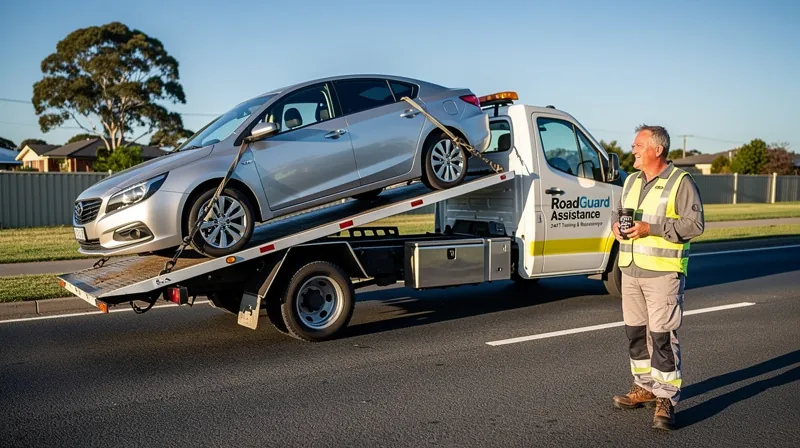
Many drivers confuse Roadside Assistance with breakdown repair coverage — they are fundamentally different products. Roadside assistance is an emergency logistics service, not a repair insurance policy. It gets your car to a shop; it does not pay the shop.
Standard roadside assistance add-ons typically cover:
- Towing to the nearest qualified repair facility
- Jump-starts for dead batteries
- Flat tire changes (spare installation)
- Lockout assistance
- Emergency fuel delivery
Roadside assistance does not pay for the mechanical repair or the replacement of any parts. Once your car arrives at the repair shop, roadside assistance’s job is done. The repair bill — which could be anywhere from a few hundred to several thousand dollars — is entirely your responsibility unless you have MBI or another form of repair coverage in place.
The Solution: Mechanical Breakdown Insurance (MBI) Deep Dive
Mechanical Breakdown Insurance (MBI) is the specific insurance product designed to fill the coverage gap left by standard auto policies. It’s an optional endorsement that kicks in when original vehicle components fail due to mechanical defect or breakdown — not accident, not wear items, but genuine mechanical failures of covered systems after the manufacturer’s warranty expires.
MBI is issued and regulated as an insurance product, which gives it several advantages over traditional dealer-sold extended warranties. It’s subject to state insurance regulations, which means the insurer is legally obligated to honor valid claims. Premiums are typically paid monthly or annually — approximately $100 per year — rather than requiring a large lump-sum payment upfront. This pay-as-you-go structure means you’re not financing a warranty you may never fully use.
Think of MBI as a bridge between the end of your factory warranty and the end of your vehicle’s useful life. It covers the components most likely to fail expensively once the manufacturer stops covering them — the systems where a single repair bill can exceed years of MBI premiums in one visit to the mechanic.
What Is Covered by MBI?
MBI policies vary by provider and tier, but most standard plans cover the following major mechanical systems:
- Engine components: Crankshafts, pistons, camshafts, cylinder heads, and related internal engine parts
- Transmission systems: Both automatic and manual transmission internals, torque converters, and transfer cases
- Drive axles and differentials: Front and rear axle assemblies, CV joints, and driveshafts
- Fuel delivery systems: Fuel pumps, fuel injectors, and pressure regulators
- Electrical systems: Alternators, starter motors, and wiring harnesses
- Air conditioning systems: Compressors, condensers, and evaporators
- Steering and suspension: Power steering pumps, rack-and-pinion assemblies, and control arms
Premium “Platinum” tier MBI plans expand this list significantly, adding coverage for high-tech components like advanced driver assistance systems (ADAS), infotainment systems, turbochargers, and in some cases, electric vehicle drive systems. If you own a vehicle loaded with technology, the step up to a Platinum plan is worth evaluating carefully — the gap between a basic plan and a Platinum plan could be the difference between a $100 deductible repair and a $4,000 out-of-pocket electronics failure.
What Is Excluded from MBI?
Knowing what MBI doesn’t cover is just as important as knowing what it does. Universal exclusions across virtually all MBI policies include:
- Routine maintenance and scheduled services: Oil changes, tire rotations, filter replacements, and fluid services
- Wear and tear components: Brake pads, rotors, belts, hoses, spark plugs, and wiper blades
- Cosmetic damage: Paint, upholstery, trim, and glass (unless a separate endorsement applies)
- Overheating damage when deemed to be the result of maintenance neglect (e.g., a known coolant leak left unaddressed)
- Pre-existing conditions at the time the policy is written
- Accidents and collision damage (these fall under standard auto insurance coverage)
- Modifications and aftermarket parts that caused or contributed to the failure
MBI vs. Extended Warranties vs. Roadside Assistance
MBI, extended warranties, and roadside assistance are three distinct products that are often confused — and sometimes sold as the same thing by dealers. Understanding their differences protects you from paying for the wrong product or buying redundant coverage you don’t need.
The most important distinction is between MBI and an extended warranty. On the surface they sound identical — both cover mechanical repairs after the factory warranty ends. But the structural and financial differences are significant enough to make MBI the preferred option for most drivers who buy outside of a dealership.
The Cost-Benefit Analysis
Here’s how the three options compare on the dimensions that matter most:
- Extended Warranties (Dealer): Average cost of $1,500–$3,000+ paid upfront or financed into your car loan. Often restricted to dealer-authorized service centers. Typically non-transferable or difficult to transfer. Mileage limits can be rigid and punitive.
- Mechanical Breakdown Insurance (MBI): Approximately $100 per year, paid as a recurring premium. Accepted at most licensed repair shops. Generally transferable to a subsequent owner, which can increase resale value. Regulated by state insurance departments, adding a layer of consumer protection.
- Roadside Assistance: Typically $50–$100 per year as a standalone add-on, often bundled free with MBI or AAA memberships. Covers emergency logistics (towing, jump-starts) only — not repairs.
The financial case for MBI over a traditional extended warranty is compelling. Financing a $2,500 extended warranty into a car loan at 7% interest adds nearly $350 in interest charges alone — and that’s before considering the restrictive service network and limited transferability. MBI’s annual premium model means you pay only for the years you actually need coverage, and you’re not locked into a dealer’s service department for repairs.
It’s also worth noting that many MBI policies include roadside assistance as a bundled benefit, effectively making the standalone roadside add-on redundant. When evaluating MBI options, confirm whether roadside assistance is included — it’s often the feature that makes a basic plan feel like a premium one.
Claim Denial Scenarios: How to Prevent a ‘No’
The single most common reason MBI and extended warranty claims are denied is “improper maintenance” — and it’s almost entirely preventable. Insurers have the contractual right to deny claims if they can demonstrate that the vehicle wasn’t maintained according to the manufacturer’s recommended service schedule, and they exercise that right regularly.
Consider this scenario: your transmission fails at 95,000 miles. You file an MBI claim. The insurer asks for your maintenance records. You have a few paper receipts from two years ago, but nothing current. The insurer’s adjuster notes that the manufacturer recommends a transmission fluid service every 30,000 miles, and there’s no evidence this was performed. Claim denied — even if the failure had nothing to do with fluid levels.
This isn’t an edge case. Maintenance-related denials are one of the most frequently cited complaints in insurance and extended warranty disputes. The good news: they are completely avoidable with a small amount of organizational discipline.
How to Keep Your Records Bulletproof
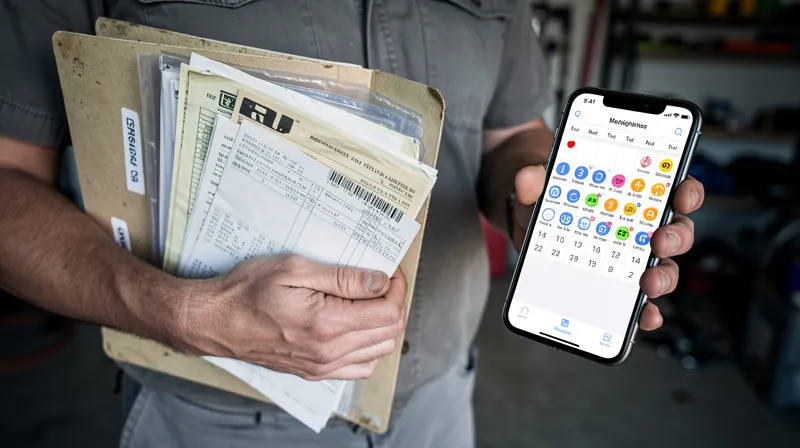
Building a maintenance record that an insurer can’t challenge requires consistency and a digital-first approach:
- Maintain a digital maintenance log from day one. Apps like CARFAX Car Care, Fuelly, or even a simple Google Sheet with dates, mileage, and service descriptions are sufficient. Timestamp every entry.
- Keep all physical receipts and scan them immediately. Photographing receipts the day you receive them and uploading to cloud storage takes 30 seconds and creates a permanent, timestamped record.
- Follow the manufacturer’s service schedule precisely. Don’t substitute — if the manual says change the transmission fluid at 30,000 miles, do it at 30,000 miles. Deviation gives an insurer an opening to deny.
- Don’t ignore warning lights. A check engine light that’s been on for 6 months before a failure is compelling evidence of neglect. Address warning indicators promptly and document that you did.
- Notify your insurer of known issues before they become failures. Some policies require prompt notification of potential mechanical problems. Waiting until a minor issue becomes a catastrophic failure can void coverage.
Before filing any car insurance claim related to mechanical issues, compile your complete service history and review it against the manufacturer’s recommended schedule. If there are gaps, be prepared to explain them. Proactive documentation is your best defense against a denial.
EV and Hybrid Breakdown Coverage: The New Frontier
Electric vehicle owners face a coverage landscape that standard MBI policies were never designed to navigate. The high-voltage battery packs, proprietary software systems, and specialized drive motors in modern EVs create repair scenarios that can easily exceed $10,000 — and many standard MBI policies simply don’t cover them.
The core problem is that traditional MBI language was written with internal combustion engines in mind. When a policy says it covers “electrical systems,” it typically means the alternator and starter motor of a gas-powered vehicle — not a 400-volt battery management system or an integrated electric motor controller. EV owners who assume their standard MBI covers the whole vehicle are often shocked when they discover the battery pack is specifically excluded.
The numbers are alarming: EV battery replacement costs currently range from $5,000 to $20,000 depending on the vehicle, with some luxury EV battery packs exceeding $25,000. For context, that’s more than many used cars are worth outright. A single battery failure without coverage could be financially catastrophic.
Navigating EV Warranty Gaps
The federal government requires manufacturers to provide a minimum 8-year/100,000-mile warranty on EV battery packs — a strong starting point. But once that warranty expires, EV owners are on their own unless they have appropriate coverage in place. Key considerations include:
- Read your MBI policy language carefully. Look specifically for exclusions related to “high-voltage systems,” “propulsion batteries,” or “electric drivetrains.” These are the telltale signs that your EV’s most expensive components aren’t covered.
- Ask about specialized EV MBI add-ons. Some insurers now offer EV-specific mechanical breakdown riders that explicitly cover battery packs, charging systems, regenerative braking components, and electric motors. These are worth the additional premium.
- Check hybrid coverage separately. Hybrid vehicles have both an ICE drivetrain and an electric drivetrain, doubling the complexity. Ensure your policy covers both systems comprehensively.
- Monitor degradation thresholds. Some EV warranty and MBI policies only cover the battery if it degrades below a specified capacity threshold (e.g., below 70% of original capacity). Understand the threshold in your policy before you need to use it.
As EV adoption accelerates through 2025 and 2026, the insurance market is rapidly developing more sophisticated EV-specific MBI products. If your current MBI policy was written before you purchased an EV, it almost certainly needs to be updated or replaced with an EV-aware policy.
Is MBI Worth It? A Cost-Benefit Analysis
For most drivers with vehicles approaching or past the end of their factory warranty, the financial math strongly favors MBI over self-insuring against mechanical failures. The question isn’t whether mechanical failures are possible — it’s whether a single significant repair would exceed years of accumulated MBI premiums. For the most common catastrophic failures, the answer is almost always yes.
Consider the realistic repair cost landscape for vehicles over five years old:
- Transmission replacement: $3,000–$5,000 for most vehicles; $6,000+ for luxury models
- Engine replacement or rebuild: $5,000–$10,000 depending on the vehicle
- Fuel pump and injector system: $800–$2,000
- AC compressor: $600–$1,200
- Power steering rack: $1,200–$2,000
- Alternator: $400–$800
At $100 per year, you’d need to pay MBI premiums for 30–50 years to equal the cost of a single engine replacement. Even accounting for a deductible of $100–$250 per claim, the break-even point arrives the first time any major component fails. One transmission failure pays for decades of MBI premiums.
Who Should Buy MBI?
MBI is not for everyone. Here’s an honest assessment of who benefits most:
- Drivers with vehicles approaching the end of factory warranty (typically 3 years/36,000 miles for basic coverage, 5 years/60,000 miles for powertrain): The moment your factory warranty expires, your exposure to out-of-pocket repair costs begins. MBI should be in place before that date, not after the first failure.
- High-mileage drivers: The more miles you put on a vehicle, the faster components wear and the higher the probability of expensive mechanical failures. If you commute long distances, the risk profile strongly justifies MBI.
- Fleet owners and small businesses: Multiple vehicles multiplies the risk. MBI across a fleet provides predictable, manageable costs versus unpredictable large repair bills that can disrupt operations.
- Drivers planning to sell: Transferable MBI coverage is a genuine resale value differentiator. A private buyer knows that a car with active MBI coverage is less of a financial risk, and many will pay a premium for that assurance.
- Drivers in high-cost repair markets: Labor rates vary enormously by region. In major metropolitan areas, where shop labor rates can exceed $150–$200 per hour, the same repair can cost 40–60% more than in rural markets. MBI’s coverage doesn’t fluctuate by geography.
MBI may be less critical for drivers of new vehicles still under comprehensive factory coverage, or for those who self-insure by maintaining a dedicated emergency repair fund of $5,000 or more. But for the vast majority of drivers who don’t have that kind of liquid savings earmarked specifically for auto repairs, MBI is one of the most cost-effective financial protection products available — and one of the most underutilized.
Frequently Asked Questions
Can you claim on insurance for breakdowns?
You generally cannot claim on standard auto insurance for a breakdown caused by mechanical failure or wear and tear. However, if the breakdown was caused by a covered event — such as a collision or hitting an animal — the resulting mechanical damage may be covered. To have coverage for standard mechanical breakdowns, you need a separate Mechanical Breakdown Insurance (MBI) policy.
Is it better to have a $500 deductible or $1,000?
A $500 deductible results in higher annual premiums but lower out-of-pocket costs when you file a claim, while a $1,000 deductible lowers your premium but requires more cash on hand after an incident. The right choice depends on your emergency savings and claim frequency — if you rarely file claims and have solid savings, a $1,000 deductible saves money over time. For MBI specifically, deductibles are often much lower ($100–$250), making them less of a decisive factor than with standard auto policies.
Does CarShield pay 100% of repairs?
CarShield does not pay 100% of all repair costs — most plans include a deductible per visit, and coverage depends heavily on the specific plan tier you select. Lower-tier plans cover only major powertrain components, while higher-tier “comprehensive” plans cover a broader range of systems. Always read the specific exclusion list carefully, as wear items, pre-existing conditions, and maintenance-related failures are typically not covered under any CarShield plan.
Is a blown engine covered by insurance?
A blown engine is covered by standard insurance only if it was caused directly by a covered event, such as a flood (comprehensive) or a collision (collision coverage). If the engine failed due to mechanical breakdown, overheating from neglect, or normal wear and tear, standard insurance will not cover it. Mechanical Breakdown Insurance (MBI) is the appropriate product for engine failure protection outside of accident scenarios.
What is the difference between a car warranty and car insurance?
A car warranty is a manufacturer’s or dealer’s promise to repair specific defects or failures within a defined period, and it’s included with vehicle purchase or sold as an extended product. Car insurance is a regulated financial product that protects against unpredictable events like accidents, theft, and weather damage. MBI bridges the gap by combining warranty-like repair coverage with the regulatory protections and flexibility of an insurance product.
How much does roadside assistance cost?
Standalone roadside assistance typically costs $50–$100 per year through auto insurers or $60–$100 per year through membership programs like AAA. Many MBI policies include roadside assistance as a bundled benefit at no additional charge, making standalone policies potentially redundant. The cost is generally modest, but it’s worth confirming coverage details — specifically towing distance limits and the number of service calls permitted per year.
Does comprehensive insurance cover mechanical failure?
No — comprehensive insurance does not cover mechanical failure, even sudden or catastrophic failures that occur without an accident. Comprehensive coverage applies to non-collision external events like theft, vandalism, fire, flooding, and animal strikes. A spontaneous mechanical failure of any component, regardless of how unexpected, is classified as a mechanical breakdown and is excluded from comprehensive coverage.
Can I add breakdown coverage to my car insurance?
Yes — many major auto insurers offer Mechanical Breakdown Insurance (MBI) as an optional endorsement that can be added to an existing policy. The availability and cost vary by insurer, vehicle age, and mileage; some providers restrict MBI to vehicles under a certain age (typically under 15 years) or mileage threshold. Contact your current insurer to ask specifically about MBI endorsements, and compare offerings from at least two or three providers before purchasing.
Why would my mechanical breakdown insurance claim be denied?
The most common reasons for MBI claim denial include insufficient or missing maintenance records, evidence that the failure was caused by neglect (such as ignoring a warning light), and the failed component being classified as a “wear item” excluded from coverage. Pre-existing conditions at the time the policy was purchased are also frequently cited as denial grounds. Maintaining meticulous service records and addressing mechanical warning signs promptly are the most effective strategies to protect against denial.
Is MBI transferable to the next owner?
In most cases, yes — one of the key advantages of MBI over traditional extended warranties is that it is transferable to a subsequent vehicle owner, often for a small transfer fee. This transferability is a genuine selling point when listing a vehicle for private sale, as it reduces the perceived risk for the buyer. Always confirm the specific transfer terms with your insurer before advertising the coverage as a selling feature, as transfer eligibility may depend on remaining policy term and vehicle mileage.