
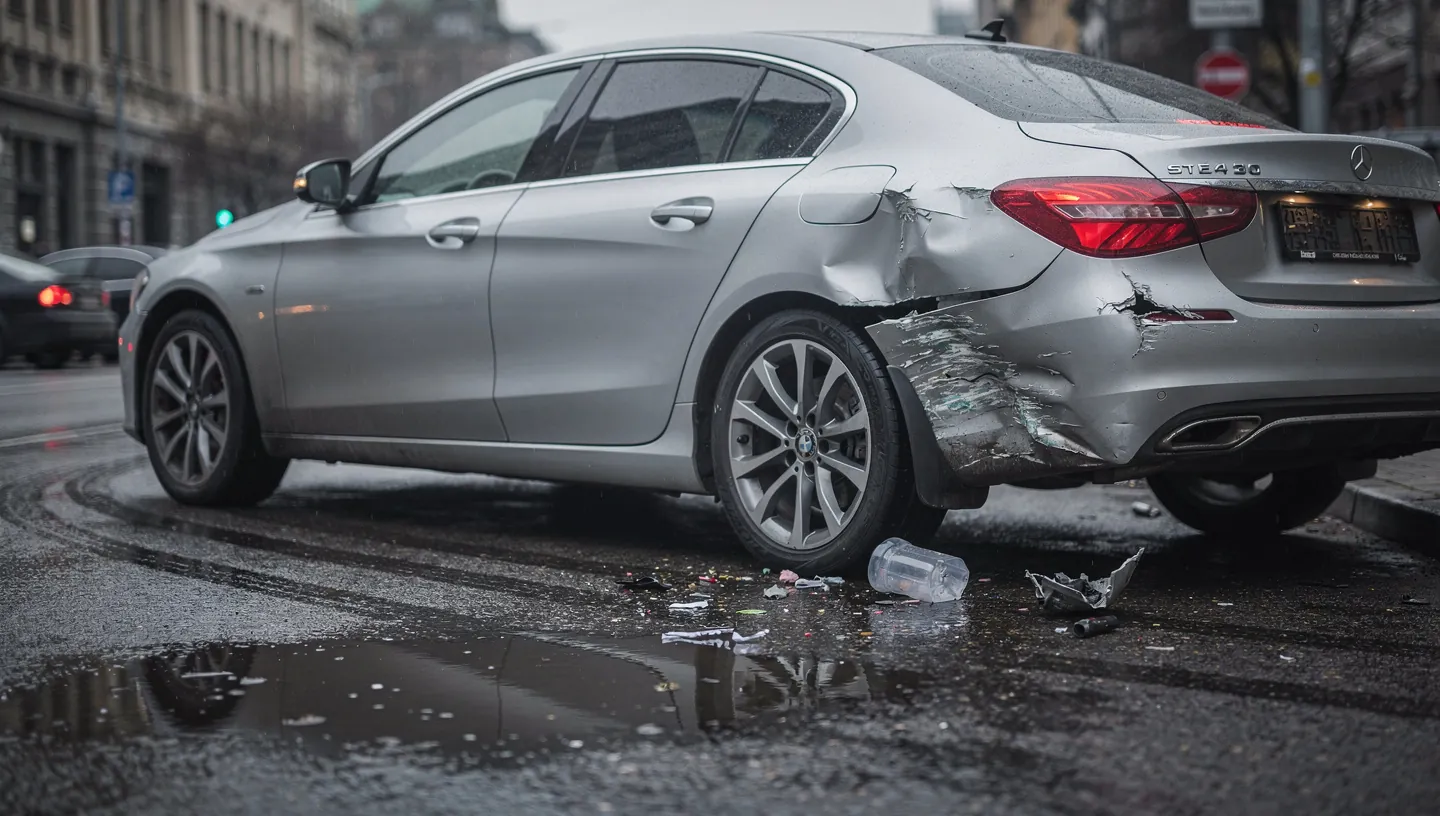
The short answer is no — your liability insurance does not cover damage to your own car if someone hits you. This is one of the most common misunderstandings in auto insurance, and it can leave drivers blindsided at the worst possible moment. Understanding exactly why requires knowing what liability insurance is actually designed to do.
Liability insurance is “outbound” coverage. It exists to pay for damages and injuries you cause to other people — not to protect your own vehicle or your own body. When you’re the victim of an accident, an entirely different set of coverages comes into play, and knowing the difference before you need it can save you thousands of dollars.
If someone hits your car, the primary source of payment for your repairs should be the at-fault driver’s liability policy. But what happens when that driver has no insurance, flees the scene, or carries limits too low to cover your damages? That’s where your own collision coverage or uninsured motorist (UM) coverage steps in — assuming you have it. The rules governing all of this vary significantly by state, particularly in no-fault states and in states with mandatory UM requirements.
This guide breaks down every layer of the process — from who pays first to how you can recover your deductible through subrogation — so you’re never caught off guard after a car accident claim.
Key Takeaways
- Your liability insurance does not cover damage to your own vehicle. It only covers damage or injuries you cause to others.
- If someone hits you, their liability insurance is the first line of payment for your repairs and medical bills.
- If the other driver is uninsured or flees the scene, your collision coverage or uninsured motorist (UM) coverage kicks in.
- You can often recover your deductible through a legal process called subrogation if the at-fault driver is later identified.
- State laws vary significantly, particularly around requirements for Uninsured Motorist Property Damage (UMPD) and no-fault medical coverage.
Why Liability Insurance Doesn’t Cover Your Car
Liability insurance is defined as a financial responsibility policy that covers harm you cause to others — not harm caused to you. By design, it only activates when you are the at-fault party in an accident. If you’re the victim, your own liability policy sits completely dormant and plays no role in your recovery.
Think of it this way: liability coverage protects your wallet from lawsuits and claims filed against you, not the metal on your car. Your insurer’s contractual obligation under a liability policy runs to third parties — the other driver, their passengers, pedestrians — not to you personally.

Understanding the “Outbound” Concept
A simple analogy makes this concrete. Imagine your liability policy is a shield you carry that faces outward. When you cause an accident, that shield absorbs the financial blow directed at you from the other party. But when someone crashes into you, the blow is coming from the opposite direction — your outward-facing shield does nothing.
- Being hit by another driver does not activate your liability policy.
- Your policy is a contract between your insurer and you to pay third parties, not yourself.
- The “inbound” protections for your own vehicle — collision, comprehensive — are separate, optional coverages that must be purchased in addition to liability.
Many drivers assume that because they’re insured, they’re covered no matter what. The truth is that a bare-minimum liability-only policy leaves your own car completely unprotected the moment another driver causes an accident.
What Liability Actually Covers
Liability insurance is split into two distinct components, and neither one is designed to benefit the policyholder directly:
- Property Damage Liability (PDL): Covers the cost to repair or replace the other driver’s vehicle or any property you damage — fences, mailboxes, storefronts. Your PDL limit is the cap your insurer will pay to those third parties.
- Bodily Injury Liability (BIL): Covers medical bills, lost wages, and pain and suffering for people injured in an accident you caused. Again, this money flows outward — to the injured party, not to you.
When you read your policy’s liability limits — say, 25/50/25 — those numbers represent the maximum your insurer will pay on your behalf to others. They are not a fund you can draw from when you are the victim.
The At-Fault Driver’s Responsibility
When someone else hits your car, their liability insurance is the first and primary source of payment for your vehicle repairs and any medical bills. If the at-fault driver carries adequate coverage, you should pay nothing out of pocket — no deductible, no gap in recovery.
The process begins when you (or your insurer) file a third-party claim against the at-fault driver’s insurance company. Their insurer assigns an adjuster, assesses your damages, and issues payment up to the driver’s policy limits. Correctly identifying the driver and collecting their insurance information at the scene is critical to making this process work smoothly.
When Their Policy Pays in Full
Consider a common scenario: you’re stopped at a red light and another driver rear-ends you. They have a standard liability policy with sufficient limits. Here’s how the resolution typically unfolds:
- You file a claim with their insurer as a third-party claimant.
- Their insurer accepts liability and issues payment for your vehicle repairs and any medical costs.
- You pay zero deductible because you are not filing a claim with your own insurer.
- If your insurer paid anything on your behalf first, they will pursue the at-fault driver’s insurer through subrogation to reclaim it.
This is the cleanest outcome. The system works exactly as intended when the at-fault driver has adequate coverage and their insurer accepts the claim without dispute.
The Gap: When Their Limits Are Insufficient
The reality is that millions of drivers carry only the state-mandated minimum liability limits — and those minimums are often dangerously low. If your repairs cost $15,000 but the at-fault driver’s property damage liability limit is $10,000, you face a $5,000 gap.
This is the scenario that separates drivers with smart coverage choices from those who are underprotected:
- Your own collision coverage can fill that gap, paying the remainder of the repair cost (minus your deductible).
- Alternatively, you may pursue the at-fault driver personally for the difference — though collecting from an individual with low insurance limits is rarely easy.
- Underinsured Motorist coverage (UIM), where available, is specifically designed to bridge this gap.
This is one of the most compelling reasons insurance professionals consistently recommend carrying higher liability limits than your state requires — because the same low-limit problem you create for others could just as easily be created for you.
Alternatives: Collision and Uninsured Motorist Coverage
When the at-fault driver can’t or won’t pay — because they’re uninsured, underinsured, or unknown — your own policy coverages become essential. The two most important are collision coverage and uninsured motorist coverage, and they serve distinctly different purposes.
Understanding which coverage to use in which situation isn’t just academic — choosing incorrectly can affect your premiums, your deductible, and how quickly you get paid. Here is a clear breakdown of how each works.
Collision Coverage: Your Safety Net
Collision coverage is the direct, no-questions-asked solution for repairing your own vehicle after any accident, regardless of fault. Its key characteristics:
- Pays regardless of who caused the accident — the other driver, you, or an unknown party.
- Always requires you to pay a deductible (commonly $500 to $1,000) before coverage activates.
- Applies whether the other driver is identified and insured, unidentified, or uninsured.
- Covers single-vehicle accidents, parking lot damage, and rollover incidents — scenarios where no “other driver” exists at all.
Collision coverage is optional in every state, but if you’re financing or leasing your vehicle, your lender almost certainly requires it. For owners of vehicles worth more than a few thousand dollars, the math usually supports carrying it.
Collision vs. UMPD: Which Should You Use?
This comparison trips up a lot of drivers. Here is the practical difference between Collision and Uninsured Motorist Property Damage (UMPD):
- UMPD is specifically designed for property damage caused by an uninsured or unidentified driver. It typically carries a lower deductible (often $200–$300) and, critically, using it usually does not count against you at renewal the way a collision claim might.
- Collision covers damage from any collision — insured driver, uninsured driver, or no other driver at all — but the deductible is typically higher.
- If a driver hits you and is confirmed uninsured, UMPD is often the smarter first choice where available, due to the lower deductible and reduced premium impact.
- In a hit-and-run where no driver is identified, many states require you to use UMPD (if you have it) or collision coverage.
For injuries, the parallel coverage is Uninsured Motorist Bodily Injury (UMBI), which covers your medical bills if an uninsured driver injures you. Medical Payments (MedPay) coverage is a simpler, less expensive alternative that pays regardless of fault but with lower limits and fewer benefits than Personal Injury Protection (PIP).
The Subrogation Recovery Process
Subrogation is the legal right of your insurance company to pursue the at-fault driver — or their insurer — to recover money your insurer paid on your behalf. In practical terms for you, it is the mechanism by which you can recover your deductible even after filing a claim with your own insurer.
This is one of the most misunderstood and underexplored parts of the car accident claims process. Many drivers assume that once they pay their deductible, that money is gone. It isn’t — at least not necessarily. Here’s a detailed look at how the process actually works.
How to Recover Your Deductible
Walk through a typical subrogation scenario step by step:
- The accident occurs. The other driver is at fault but is slow to cooperate, so you file a collision claim with your own insurer to get your car repaired quickly.
- You pay your deductible — say, $500 — and your insurer pays the repair shop the remaining balance (e.g., $4,500).
- Your insurer “steps into your shoes.” Having paid the claim, your insurer now has the legal right to pursue the at-fault driver’s liability insurer for the full $5,000.
- Your insurer files a subrogation demand with the at-fault driver’s insurer. In most cases involving clear-cut fault (like a rear-end collision), the other insurer settles without litigation.
- You receive your $500 deductible back. Once your insurer recovers the money, it reimburses your deductible — sometimes weeks, sometimes months after the accident.
It’s important to understand the limits of this process. If the at-fault driver is uninsured and has no attachable assets, your insurer may close the subrogation file without recovery, meaning your deductible is unlikely to be returned. The higher the driver’s assets and the clearer the liability, the better your odds of a successful recovery.
The Role of the At-Fault Driver
Subrogation is entirely handled by your insurer — you are not required to hire a lawyer or participate in litigation. Your insurer’s subrogation department manages the process independently, which is one of the underappreciated benefits of having a good insurer.
- Subrogation does not affect your relationship with the at-fault driver personally after the claim is filed.
- A successful subrogation outcome can prevent your premiums from rising — because when it’s clear you were not at fault, most insurers will not penalize your rate.
- Always cooperate fully with your insurer’s subrogation requests, including providing witness information, photos, and police reports, as these strengthen the recovery effort.
Pro tip: After filing a collision claim, explicitly ask your insurer whether they intend to pursue subrogation and request to be notified when your deductible is recovered. Not all insurers proactively communicate this step.
State-Specific Rules and Uninsured Motorist Requirements

Auto insurance law is not uniform across the United States. Each state sets its own mandatory minimums, defines coverage requirements differently, and decides whether certain protections — like uninsured motorist coverage — must be offered, can be rejected, or are entirely unavailable. The rules governing who pays what after an accident can be radically different depending on where you live.
Understanding your state’s framework is not optional — it directly determines what coverage you need to protect yourself adequately.
Navigating No-Fault vs. At-Fault States
In at-fault (tort) states — the majority of the U.S. — the driver who caused the accident is financially responsible, and their liability insurance pays. In no-fault states, the system works differently for injuries:
- In no-fault states, your own Personal Injury Protection (PIP) coverage pays your medical bills first, regardless of who caused the accident.
- No-fault applies only to bodily injury. Property damage to your car is still handled on an at-fault basis in virtually every no-fault state — meaning you still need the other driver’s liability or your own collision coverage to fix your vehicle.
- Florida requires a minimum of $10,000 in PIP coverage and has among the highest rates of uninsured drivers in the nation (~20%), making collision and UMPD coverage especially important.
- Michigan operates under one of the most complex no-fault systems, with unlimited medical coverage options, but also carries some of the highest premiums in the country.
Currently, twelve states use some form of no-fault system: Florida, Michigan, New Jersey, New York, Pennsylvania, Hawaii, Kansas, Kentucky, Massachusetts, Minnesota, North Dakota, and Utah. Drivers in these states should pay particular attention to their PIP limits and understand that their medical recovery process after an accident differs significantly from at-fault states.
State Mandates on Uninsured Motorist Coverage
This is where coverage requirements diverge most dramatically. Approximately 1 in 8 drivers in the U.S. is uninsured, according to industry estimates — making UM coverage one of the most practically important add-ons available.
- States where UMBI is mandatory: Illinois, Kansas, Maine, Maryland, Massachusetts, Minnesota, Missouri, New York, North Carolina, North Dakota, Oregon, South Carolina, South Dakota, Vermont, West Virginia, and Wisconsin, among others.
- UMPD (property damage) is far less commonly mandated and is not even available in some states. Where it is available, it is often optional and carries a lower deductible than collision.
- Several states require that your UM limits match your liability limits unless you sign a written waiver to accept lower UM limits. This is a consumer protection measure worth understanding before you sign anything.
- In states where UM coverage can be waived, drivers often do so to reduce premiums — a decision that can prove costly if they’re hit by one of the roughly 32 million uninsured drivers on U.S. roads.
The bottom line: review your state’s specific UM requirements and, regardless of what’s mandated, seriously consider purchasing UMBI and UMPD wherever they are available. The premium cost is modest compared to the financial exposure of an accident with an uninsured driver.
Handling Hit-and-Run Accidents
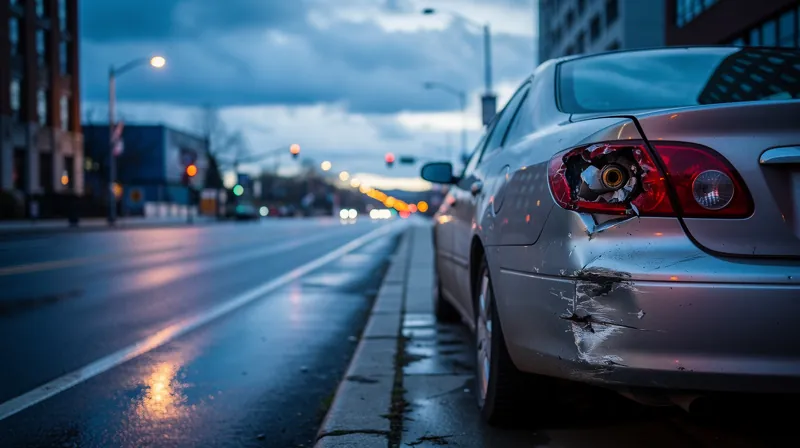
A hit-and-run accident is one of the most frustrating scenarios a driver can face — the person responsible for your damages has fled, leaving you to deal with the aftermath alone. Knowing exactly what to do in the minutes and hours after a hit-and-run can significantly affect your ability to file a successful claim and recover your costs.
Hit-and-run accidents account for approximately one in four vehicle accidents in urban areas. The likelihood of identifying the at-fault driver drops sharply after the first few minutes, making immediate action critical.
Steps to Take Immediately
- Call 911. A police report is not just helpful — it is often a mandatory requirement for filing a UMPD or uninsured motorist claim. Many insurers will deny a hit-and-run claim without an official police report. Report even minor damage.
- Document the scene immediately. Photograph all damage from multiple angles, capture any debris or paint transfer, and take wide shots of the surrounding area (traffic cameras, surveillance cameras on nearby buildings, skid marks).
- Search for witnesses. Anyone who saw the accident and the fleeing vehicle may be able to provide a partial license plate, vehicle description, or direction of travel. Collect their contact information before they leave.
- Look for surveillance cameras. Gas stations, ATMs, traffic intersections, and businesses often have footage that can identify the vehicle. Alert police to these possibilities immediately — footage is often overwritten within 24–72 hours.
- Contact your insurer promptly. Report the incident even if you haven’t decided which coverage to use. Most policies have timely-reporting requirements, and delay can complicate your claim.
Filing the Claim with Your Insurer
For a hit-and-run, you will file an “unidentified driver” claim — typically under your UMPD or collision coverage, depending on your state and policy. Key points to understand:
- You will almost certainly pay your deductible upfront. Unlike a third-party claim where the at-fault driver’s insurer pays directly, hit-and-run claims go through your own policy, triggering your deductible.
- If the hit-and-run driver is later identified — sometimes weeks or months later through police investigation — your insurer can pursue subrogation to recover your deductible.
- Physical contact requirements: Some states require actual physical contact between the unknown vehicle and your car to qualify for UMPD or UM coverage. A phantom vehicle that ran you off the road without contact may not qualify in those states — collision coverage would be the fallback.
- Filing a hit-and-run claim through collision coverage may affect your premiums at renewal, though many insurers treat “not-at-fault” claims more favorably. Confirm your insurer’s policy before filing.
Frequently Asked Questions
How does liability insurance work when it’s not your fault?
When an accident is not your fault, the at-fault driver’s liability insurance — not yours — is responsible for paying your damages and medical bills. Your own liability policy remains completely inactive in this scenario. You file a third-party claim directly with the at-fault driver’s insurer to recover your costs.
What does liability insurance on a car cover?
Liability insurance covers two things: damage or property you destroy in an accident you cause (Property Damage Liability), and injuries you cause to other people (Bodily Injury Liability). It does not cover your own vehicle, your own injuries, or any costs related to being the victim of another driver’s negligence. Think of it strictly as coverage for your legal and financial responsibility to others.
What will liability insurance not cover?
Liability insurance will not cover repairs to your own vehicle, your own medical bills after an accident, theft of your car, weather damage, or damage caused by an uninsured driver hitting you. It also won’t cover intentional damage or accidents that occur while using your vehicle for commercial purposes unless you have a commercial policy endorsement.
Does liability insurance cover a hit-and-run?
No — your liability insurance does not cover hit-and-run damage to your vehicle. For a hit-and-run, you must rely on your own Uninsured Motorist Property Damage (UMPD) coverage or collision coverage. A police report is typically required to file this type of claim, and you will likely need to pay your deductible upfront.
What is the difference between collision and liability insurance?
Collision insurance protects your own vehicle by paying for repairs after any accident, regardless of fault. Liability insurance protects other people by paying for damages you cause to them. They are fundamentally different in direction: liability flows outward (to others), while collision flows inward (to your own car). Most states require liability; collision is optional unless your lender mandates it.
How do I recover my deductible after an accident that wasn’t my fault?
You can recover your deductible through the subrogation process. After you file a collision claim and pay your deductible, your insurer pursues the at-fault driver or their insurer to reclaim the money they paid — including your deductible. Once they successfully recover the funds, they reimburse your deductible. Recovery timelines vary from weeks to months, and success depends on whether the at-fault driver is identified and has collectible assets or insurance.
What is uninsured motorist coverage?
Uninsured motorist (UM) coverage is a policy add-on that protects you when the driver who caused your accident has no liability insurance. It has two components: Uninsured Motorist Bodily Injury (UMBI), which pays your medical bills, and Uninsured Motorist Property Damage (UMPD), which pays for your vehicle repairs. It also typically applies to hit-and-run accidents where the driver cannot be identified.
Do I need full coverage if someone else hits me?
If someone else hits you and they have adequate liability insurance, you technically don’t need your own collision or full coverage to get your car repaired. However, “full coverage” (collision plus comprehensive) becomes essential when the other driver is uninsured, underinsured, or unknown. Given that roughly 1 in 8 drivers is uninsured, relying solely on the other driver’s insurance is a significant financial gamble.
Does liability insurance cover medical bills if someone hits me?
Your own liability insurance does not cover your medical bills when someone else hits you. If the other driver is at fault, their Bodily Injury Liability (BIL) coverage pays your medical expenses up to their policy limits. For your own medical protection — especially if the other driver is uninsured or in a no-fault state — you need Uninsured Motorist Bodily Injury (UMBI), MedPay, or Personal Injury Protection (PIP) on your own policy.
Can I sue the other driver personally for damages?
Yes, you can sue the at-fault driver personally for damages that exceed their insurance policy limits or if they have no insurance at all. However, collecting a judgment from an individual with no significant assets can be very difficult even after winning a lawsuit. This is why carrying adequate collision and UM coverage is the more reliable financial strategy — your insurer pays you immediately, then handles the legal fight through subrogation on your behalf.