
If you’ve just been in an accident or your car is heading into the shop for covered repairs, one of the first questions on your mind is: how long will insurance pay for a rental car? The short answer is that most policies cover rental cars for a maximum of 30 days while your vehicle is being repaired, subject to a daily dollar limit. Understanding the specifics of that coverage — and the exceptions that can dramatically shorten it — can save you hundreds of dollars in unexpected costs.
Coverage limits are almost always tiered. A typical policy might offer $30 per day up to a total of $900 per claim, meaning the duration and the dollar cap work together to define your benefit. Spend too much per day, and you’ll hit the dollar cap before the 30 days are up. Spend less, and the time limit becomes your constraint. Either way, knowing exactly where your policy stands before you need it is the smartest financial move you can make.
There’s an important exception that catches many drivers completely off guard: total loss situations follow an entirely different set of rules. Instead of days, your coverage window may be measured in hours — specifically, the hours between when your insurer notifies you of the total loss determination and when you’re expected to have arranged a replacement vehicle. We’ll cover that scenario in detail below.
Finally, it’s worth emphasizing upfront that rental reimbursement is an optional add-on, not a feature automatically bundled into every auto insurance policy. You must actively elect this coverage, and it requires you to already carry comprehensive and collision coverage on the same vehicle. Understanding these layers helps prevent the frustrating surprise of assuming you’re covered when you’re not.
Key Takeaways
- Standard coverage is usually capped at 30 days and $900 total per claim, whichever limit you hit first.
- You must carry comprehensive and collision coverage to qualify for rental reimbursement as an add-on.
- Total loss claims have a much shorter coverage window — often just hours after the insurer formally notifies you of the determination.
- Rental reimbursement coverage is inexpensive, typically costing between $2 and $15 per month to add to your policy.
- Using an insurer-approved repair facility can sometimes extend coverage beyond the standard 30-day maximum for complex repairs.
Standard Coverage Duration and the ’30/900′ Limit
Most auto insurance rental reimbursement policies cap coverage at 30 days per claim, with a simultaneous dollar cap of around $900 total. These two limits operate independently — your coverage ends the moment either threshold is reached. For the vast majority of claims, the repair itself wraps up well before both limits are exhausted.
The 30-day maximum duration is the industry’s standard baseline, but the daily rate attached to it matters just as much. A policy offering $30 per day mathematically produces a $900 aggregate cap (30 days × $30 = $900). Policies with higher daily limits — say, $50 per day — may set a separate, higher aggregate cap, or they may still cap total payouts at $900, effectively reducing your covered days to 18. Always read both numbers together.
Average repair times for collision damage typically run one to two weeks, according to industry data from the Collision Repair Education Foundation. This means the 30-day limit is genuinely sufficient for most claims. Where drivers run into trouble is with complex structural repairs, parts delays, or back-ordered components — situations where the shop timeline stretches well beyond the expected window.
Coverage begins when your vehicle enters the repair facility and the claim is opened. It ends on whichever comes first: the day repairs are completed, the 30th day of coverage, or the day you exhaust your dollar cap. If the shop finishes early, your rental coverage stops — you can’t bank unused days for future use.
How the Daily and Total Limits Work
The daily reimbursement cap is the maximum your insurer will pay per calendar day toward your rental. The aggregate per-loss cap is the ceiling on total payouts for a single covered event. These two numbers create the boundaries of your benefit — and the gap between them and real-world rental prices often creates an out-of-pocket responsibility for policyholders.
Here’s a practical example: If your daily limit is $30 and the rental agency charges $50 per day for a comparable vehicle, you are personally responsible for the $20-per-day difference. Over a two-week repair period, that adds up to $280 out of pocket — a meaningful expense that many drivers don’t anticipate. Upgrading to a larger vehicle or renting during peak-demand periods (holidays, summer travel season) can widen that gap further.
The “per-loss” structure means the $900 cap resets with each separate claim event, not each calendar year. If you file two claims in the same year — say, a hailstorm in spring and a rear-end collision in fall — you are entitled to up to $900 in rental reimbursement for each event, provided both claims are covered under your policy.
Repair Time vs. Coverage Duration
For most everyday collision repairs — a bumper replacement, panel work, or door damage — the repair timeline of one to two weeks aligns comfortably with the 30-day coverage window. The math works in most drivers’ favor. Problems arise when repairs involve specialty parts, frame straightening, or supply chain delays that push the shop timeline past the three-week mark.
It’s critical to understand that coverage ends when repairs are completed, not when the 30 days expire. If your car is ready in 10 days, your rental reimbursement stops on day 10 — regardless of how many covered days remain. The 30-day limit is a ceiling, not an entitlement to a full month of rental coverage.
The ’30/900′ Limit Breakdown (The Specifics)
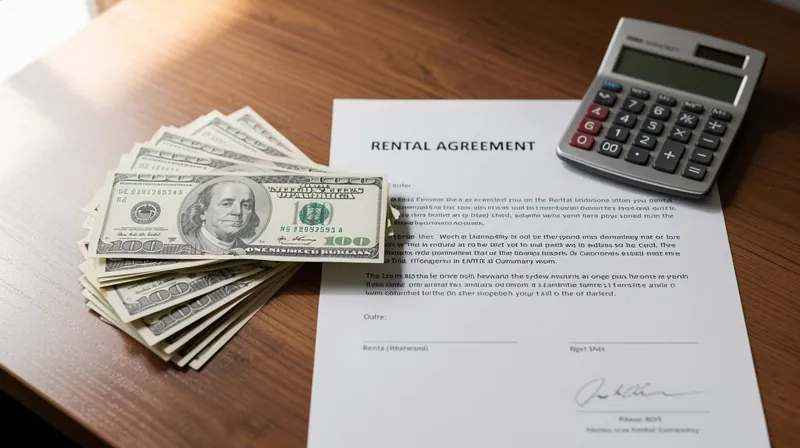
The $30-per-day / $900-total structure is the most commonly issued rental reimbursement tier in the U.S. auto insurance market. It works by applying the daily cap first on each individual rental day, and then counting those daily payouts against the aggregate cap until one limit or the other is exhausted. Understanding the mechanics prevents billing surprises at the end of a long repair.
Suppose your repair takes exactly 30 days and you rent a vehicle at exactly $30 per day. Your insurer pays the full $900 — the daily cap and the aggregate cap are both met simultaneously at the 30-day mark. Now suppose the same repair takes 20 days but you rented a vehicle at $45 per day. Your insurer pays $30/day for 20 days ($600 total), leaving $300 of headroom in your aggregate cap — but since repairs are done, the coverage closes. You paid $15/day out of pocket for 20 days, totaling $300 out of your own pocket.
This structure is industry standard, but insurers do vary. Some carriers offer tiered options at the time of purchase: $30/$900, $40/$1,200, or $50/$1,500 are common tiers. Upgrading to a higher tier typically costs only a few extra dollars per month on your premium, and it provides meaningfully better protection for drivers who commute long distances or rely heavily on their vehicle for work.
Why the $900 Cap Exists
The aggregate cap exists primarily to limit insurer exposure for low-severity claims where minor cosmetic repairs drag on in the shop. Without a dollar ceiling, a simple bumper repair with a three-month parts backlog could generate thousands of dollars in rental costs — well beyond the actual damage value. The $900 cap is a risk management tool that keeps premiums reasonable for all policyholders.
Critically, this cap applies per loss event, not per policy year. Each accident or covered event triggers its own $900 bucket. There is no annual rollover, and unused amounts from one claim cannot be applied to a future one. The loss event — the specific accident date — is what the insurer uses to bucket and track each claim’s rental reimbursement spend.
Total Loss Scenarios: Hours, Not Days

When your vehicle is declared a total loss, your rental car coverage does not continue for 30 days — it typically ends within hours of the insurer’s formal notification. This is one of the most misunderstood distinctions in auto insurance, and it catches thousands of drivers off guard every year. The logic is straightforward: once the insurer has determined there is no vehicle to repair, the justification for rental reimbursement during repairs disappears.
A total loss determination is made when the cost to repair the vehicle exceeds a threshold percentage of its actual cash value — commonly 70% to 80%, though this varies by state and insurer. Once that calculation is complete, the adjuster issues a formal total loss notification, and the rental reimbursement clock begins winding down immediately. Depending on your policy language, you may have a specific number of hours — often 24 to 48 — to return the rental before costs become your responsibility.
One additional nuance: if you choose to retain the salvage vehicle after a total loss settlement — meaning you accept a reduced payout and keep the wrecked car — rental reimbursement coverage typically does not apply at all. The insurer’s obligation is tied to the loss of use of your primary vehicle, and retaining the salvage is interpreted as choosing to keep your vehicle in a non-operational state.
The Notification Trigger
Coverage stops the moment your insurer formally notifies you that your vehicle has been declared a total loss — not when the car entered the shop, not when you suspect it might be totaled, but at the precise point of official notification. This is typically communicated via phone call followed by written confirmation, and the timestamp of that notification matters for billing purposes.
In practice, the total loss determination can happen surprisingly fast — sometimes within days of the vehicle being assessed by an adjuster, particularly for high-impact collisions with obvious structural damage. Do not assume you have weeks to arrange a replacement. The moment you receive that call, begin your vehicle search immediately. Every day you delay is a day of rental costs you may be paying out of pocket.
Finding a Replacement Vehicle
The urgency of the total loss notification means you should begin searching for a replacement vehicle the same day you receive notice. While your remaining rental reimbursement benefit (if any hours remain under the policy window) can be applied toward these days, the window closes quickly. Contact your insurer’s claims team to confirm exactly when coverage will lapse.
Some insurers allow a short grace period — typically 24 to 72 hours after notification — specifically to give you time to arrange transportation. Use this window strategically: confirm the settlement offer, explore dealership inventory, and plan your financing before the rental clock stops. Having a plan in place before the total loss call comes is the best protection of all.
Cost and Policy Requirements

Rental reimbursement coverage is an optional add-on that typically costs between $2 and $15 per month, depending on your insurer, your location, and the coverage tier you select. It is not automatically included in a standard auto insurance policy, and it cannot be purchased without also carrying comprehensive and collision coverage on the same vehicle.
The comprehensive and collision requirement exists because rental reimbursement is specifically designed to cover your transportation needs while a covered physical damage claim is being processed. If you only carry liability insurance, there is no covered physical damage claim to trigger rental reimbursement — and therefore, the add-on isn’t available to you.
It’s also worth noting what rental reimbursement does not cover. Routine maintenance situations — dropping your car off for an oil change, tire rotation, or scheduled service — do not qualify for rental reimbursement. The coverage is strictly tied to claims arising from a covered loss event: an accident, theft, hailstorm, flood, or other peril named in your comprehensive or collision policy.
Is Rental Reimbursement Worth the Cost?
At $2 to $15 per month, rental reimbursement coverage is one of the most cost-effective add-ons available in personal auto insurance. The math is compelling: even at the higher end ($15/month), you’ll pay $180 per year. A single week-long rental at current market rates — averaging roughly $130 to $200 per week for a mid-size sedan — already approaches or exceeds a full year’s premium cost for this add-on.
Consider a realistic long-term scenario: you drive for 15 years without a major accident, then you’re involved in a covered collision requiring two weeks of repairs. Your rental costs approximately $910 for that two-week period (at $65/day, a typical current market rate). At $10/month, you’ve paid $1,800 in premiums over 15 years — but without coverage, that one repair event would have cost you $910 out of pocket in rental fees alone. With coverage, that $910 is largely reimbursed.
For most drivers, the peace of mind and financial protection make rental reimbursement a clear value proposition. The only scenario where it might not make sense is if you have a second vehicle readily available and would genuinely never need a rental during a repair period.
Deductibles and Out-of-Pocket Expenses
The rental reimbursement add-on itself carries no deductible — you are reimbursed from the first dollar, up to your daily and aggregate limits. However, the underlying comprehensive or collision claim that triggered your need for a rental does carry a deductible, and that deductible must be satisfied as part of the claims process.
This distinction confuses many policyholders. To clarify: your deductible applies to the vehicle repair cost, not to the rental reimbursement benefit. If your collision deductible is $500 and your repair costs $3,000, you pay $500 toward the repair and the insurer covers the remaining $2,500. Separately, your rental reimbursement benefit kicks in to cover the rental car costs up to your daily and aggregate limits — with no additional deductible required.
The out-of-pocket exposure most drivers face comes not from a rental deductible, but from the gap between the daily rental limit and actual rental market prices. If your policy pays $30/day and the cheapest available vehicle in your area costs $55/day, you absorb the $25 difference each day. In high-demand markets or during travel seasons, this gap can be substantial. Choosing a higher coverage tier at policy renewal is the most practical way to close this gap proactively.
Understanding Deductible Nuances
The rental reimbursement policy and the underlying physical damage claim are treated as two separate financial obligations. Your deductible is applied to the repair bill, reducing the insurer’s payment for the vehicle damage. The rental reimbursement add-on then operates independently, paying for your transportation with no second deductible required.
One practical consideration: if your repair costs are close to your deductible amount — for example, a $600 repair with a $500 deductible — you may choose not to file a claim at all, since the net insurer payout is minimal and filing could affect your future premiums. In this case, rental reimbursement would also not apply, since there’s no active covered claim to trigger it. Always weigh the full cost implications before deciding whether to file.
Negotiating and Maximizing Coverage

Drivers who use insurer-approved or preferred repair facilities often have access to extended rental coverage beyond the standard 30-day limit. Insurance companies frequently maintain direct relationships — called “direct repair programs” — with vetted shops. Using these facilities can unlock additional protections, including coverage extensions when repairs run long due to parts delays outside the shop’s control.
If your repair is projected to exceed the 30-day window, proactive communication with your claims adjuster is essential. Do not wait until the 30 days are up to raise the issue. Contact your adjuster at the two-week mark, request an updated repair timeline from the shop, and formally ask whether a coverage extension is available for your specific situation. Many insurers have discretion to extend coverage in documented hardship cases.
Some carriers now offer extended rental coverage riders as a separate add-on beyond the standard reimbursement benefit. These riders may extend coverage to 45 or 60 days and carry a modest additional premium. If you drive an older or specialty vehicle with longer typical repair timelines — or if you live in an area with known parts supply challenges — this type of rider may be worth considering at your next policy renewal.
Using Approved Facilities
Insurance direct repair program (DRP) shops are vetted facilities that have agreed to specific service, pricing, and timeline standards with the insurer. In exchange, insurers may offer policyholders who use these shops additional benefits — including extended rental coverage periods and streamlined claims handling. It’s a trade-off: you cede some shop-selection freedom in exchange for enhanced coverage protections.
Using an independent shop not in the insurer’s network doesn’t eliminate your rental coverage — but it may mean you forfeit the opportunity for extensions beyond the standard 30-day cap. If your independent shop encounters a delay, you’re relying entirely on negotiation with your adjuster, with no pre-agreed framework for extensions. Always ask your insurer which shops in your area participate in their DRP before dropping off your vehicle.
Document everything throughout the repair process. Request written repair timelines from the shop at drop-off and weekly updates thereafter. Written documentation of repair delays supports any extension request you make to your adjuster and demonstrates good faith on your part. Adjusters are more likely to authorize extensions when presented with clear, documented evidence of unavoidable delays.
When the At-Fault Driver’s Insurance Pays for Your Rental
If another driver caused the accident, their liability insurance — not your rental reimbursement add-on — is responsible for your rental car costs. This is an important distinction. You don’t need to have rental reimbursement coverage on your own policy if the at-fault driver’s insurer accepts liability. Their property damage liability coverage includes your loss of use, which encompasses rental car expenses.
In practice, however, disputes over liability can create delays. If the at-fault driver’s insurer is slow to accept responsibility, you may need to use your own rental reimbursement coverage as a bridge, then seek reimbursement from the at-fault insurer later. Your own insurer can often subrogation the costs — recovering what they paid on your behalf from the responsible party’s carrier. This is another reason having rental reimbursement on your own policy is valuable even when you’re not at fault.
When using the at-fault driver’s insurance for your rental, there is typically no dollar-per-day cap imposed by the at-fault insurer — their obligation is to restore you to your pre-accident position, which may include a comparable vehicle class to your own. Document your vehicle’s make, model, and features carefully, as these details support a request for a comparable rental rather than a basic economy car.
Frequently Asked Questions
How long will insurance pay for a rental car after total loss?
After a total loss determination, insurance typically covers your rental car for only a very short period — often 24 to 72 hours after the formal notification. This is dramatically shorter than the 30-day window that applies during active repairs. Once your insurer notifies you that your vehicle is a total loss, you should begin arranging a replacement vehicle immediately to avoid incurring rental costs that fall outside your coverage window.
Will insurance reimburse me for a rental car?
Yes, if you have rental reimbursement coverage added to your policy and a covered claim is active, your insurer will reimburse you for rental car costs up to your daily and aggregate limits. This coverage must be elected as an optional add-on and requires you to also carry comprehensive and collision coverage. Without this add-on, your standard auto policy will not cover rental car expenses arising from your own vehicle’s repair.
What is the longest an insurance claim can take?
Insurance claims legally must be acknowledged within 10 to 15 days in most states, but the full settlement process can legally take 30 to 45 days in straightforward cases — and significantly longer for complex or disputed claims. For rental reimbursement purposes, the timeline that matters is the repair duration, which typically runs one to two weeks. However, litigation, subrogation, or disputed liability claims can extend the overall claims process for months, during which your rental coverage limits may become a significant financial concern.
How much does insurance usually cover for a rental car?
Most standard rental reimbursement policies cover $30 to $50 per day, with an aggregate cap of $900 to $1,500 per claim. The most common tier is $30/day up to $900 total — the so-called “30/900” limit. Some insurers offer higher tiers for a modest premium increase, and it’s often worth upgrading given current rental car market rates, which regularly exceed $50 to $70 per day for mid-size vehicles.
What is the ’30/900′ limit for rental coverage?
The ’30/900′ limit means your insurer will pay a maximum of $30 per day for up to 30 days, capped at $900 total per covered claim event. These two limits work together: your coverage ends when repairs are complete, when 30 days have passed, or when you’ve received $900 in reimbursements — whichever comes first. If your daily rental rate exceeds $30, you are responsible for paying the difference out of pocket each day.
Do I need comprehensive coverage to get rental reimbursement?
Yes — rental reimbursement coverage requires you to carry both comprehensive and collision coverage on the same vehicle. This is because rental reimbursement is specifically triggered by covered physical damage claims, which are processed under comprehensive and collision coverage. If you carry only liability insurance, no covered physical damage claim can be filed, and rental reimbursement coverage cannot be added to your policy.
Can I rent a luxury car with standard coverage?
Your standard rental reimbursement coverage will pay up to your daily limit regardless of the vehicle class you choose, but any amount above that limit is your responsibility. If your daily limit is $30 and you rent a luxury vehicle for $150/day, you’ll pay $120 per day out of pocket. Most insurers do not restrict you from renting a luxury vehicle — they simply cap their reimbursement at the policy limit. Renting a vehicle comparable in class to your own repaired car is the most cost-effective approach.
What happens if my repair takes longer than 30 days?
If your repair exceeds 30 days, your rental reimbursement coverage stops at the 30-day mark and all subsequent rental costs become your out-of-pocket responsibility — unless you’ve negotiated an extension with your insurer. To maximize your chances of an extension, communicate proactively with your adjuster, document repair delays from the shop in writing, and ask specifically about extended coverage programs. Using an insurer-approved repair facility also improves your chances of obtaining an extension for documented, unavoidable delays.
Does rental reimbursement have a deductible?
No — the rental reimbursement add-on itself does not carry a deductible. You are reimbursed from the first dollar spent on a covered rental, up to your daily and aggregate limits. However, the underlying physical damage claim — the collision or comprehensive claim that made the rental necessary — does carry a deductible that you must pay as part of the vehicle repair process. These are two separate financial obligations that operate independently.
Is rental reimbursement coverage automatic?
No — rental reimbursement coverage is not automatic and must be specifically elected as an optional add-on when purchasing or renewing your policy. Many drivers mistakenly assume it’s included in their policy, only to discover after an accident that they have no rental coverage. Review your declarations page to confirm whether rental reimbursement is listed, and contact your insurer immediately to add it if it’s missing.
Can I use rental reimbursement for maintenance?
No — rental reimbursement coverage only applies when your vehicle is unavailable due to a covered insurance claim, such as an accident, theft, or weather event. Routine maintenance appointments like oil changes, tire rotations, or scheduled service do not qualify as covered loss events, so no rental reimbursement is triggered. If you need a loaner vehicle during routine maintenance, you’ll need to arrange that separately through the dealership or service center, often at no charge for warranty-covered work.
Does my auto insurance cover me while driving a rental car?
Yes, in most cases your personal auto insurance policy extends liability, comprehensive, and collision coverage to a rental car you are driving temporarily within the United States. This means you may not need to purchase the rental company’s supplemental coverage if your own policy limits are adequate. However, rental reimbursement coverage — which pays for the rental while your own car is repaired — is a separate and distinct benefit from the liability protection your policy extends to you while driving a rental.