

Driving is a privilege, not a right — and with that privilege comes a set of legal and financial responsibilities that exist to protect everyone on the road. If you have ever wondered why do you have to have insurance on a car, the short answer is this: because one serious accident can generate costs that most families simply cannot absorb on their own.
The concept of mandatory auto insurance is not arbitrary government overreach. It is a system built over a century of legal precedent, economic modeling, and hard-won lessons from the catastrophic financial fallout of uninsured crashes. From protecting accident victims to stabilizing the insurance market itself, the reasons run deeper than most drivers realize.
In this guide, we break down the legal, financial, and social foundations of mandatory auto insurance — from state statutes and DMV enforcement to the mechanics of risk pooling and the often-overlooked equity burdens placed on low-income drivers. We also cover the real consequences of driving uninsured and how 2025–2026 economic trends are reshaping the landscape of auto insurance laws.
Key Takeaways
- 49 out of 50 states require drivers to carry liability insurance or proof of financial responsibility as a condition of vehicle registration.
- Insurance protects you from personal financial ruin by spreading the massive cost of accidents across a large pool of drivers.
- Driving uninsured can trigger license suspension, vehicle impoundment, SR-22 filings, and even jail time depending on your state.
- Minimum coverage laws can create a “poverty penalty,” consuming 10–15% of a low-income driver’s income in high-cost areas.
- New Hampshire and Virginia have unique self-insurance options, but both carry significant financial risk for the driver.
- Insurance mandates prevent adverse selection — a market failure where only high-risk drivers buy coverage, destabilizing the entire system.
- Proof of insurance is checked at vehicle registration, during traffic stops, and after accidents; failing to produce it carries immediate legal penalties.
The Legal Mandate: Why States Require Coverage
Almost every state in the U.S. legally requires drivers to carry a minimum level of liability insurance before a vehicle can be registered and legally operated on public roads. These state laws exist not merely as a revenue mechanism, but as a codified social contract — a guarantee that if you cause harm with your vehicle, the victim will be compensated.
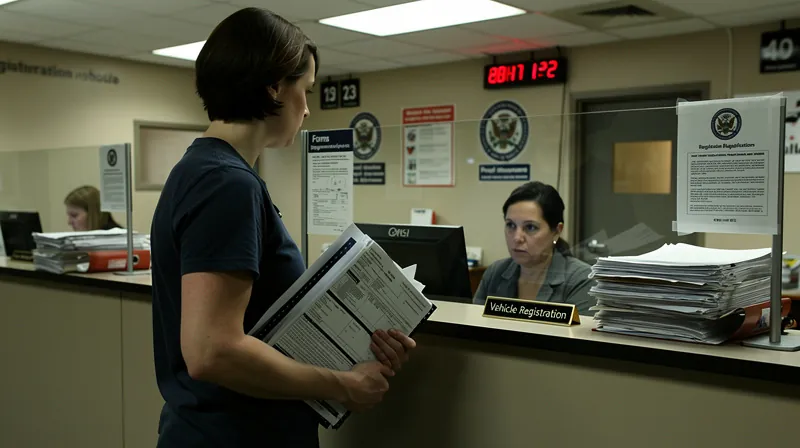
The roots of these mandates trace back to the post-1920s automobile boom, when car ownership exploded but legal frameworks had not yet caught up. As traffic fatalities and property damage claims surged, states began recognizing that leaving financial recovery to chance was untenable. Massachusetts became the first state to require automobile liability insurance in 1927, and others followed over the following decades as the economic evidence became overwhelming.
The Role of State Laws and the DMV
The Department of Motor Vehicles (DMV) functions as the primary enforcement arm of auto insurance mandates. In most states, you cannot receive a license plate or complete your annual vehicle registration renewal without submitting proof of insurance. The specific minimum limits vary by state, but the structure is consistent.
For example, California requires at least $15,000 per person and $30,000 per accident for bodily injury, plus $5,000 for property damage. Texas mandates a minimum of $30,000/$60,000/$25,000. These numbers — expressed as liability limits — define the floor of your legal financial obligation as a driver.
- Vehicle registration: Proof of insurance is required at the time of initial registration and often at renewal.
- Traffic stops: Officers can request proof of coverage on the spot.
- Post-accident reporting: Insurers are often notified directly by the state after reported accidents.
Financial Responsibility Laws Explained
Financial responsibility laws are the legal backbone behind the insurance mandate. Their core principle is simple: if you operate a machine capable of causing serious harm, you must be able to pay for that harm. Insurance is the state-approved mechanism to fulfill this obligation.
Rather than waiting until after an accident to determine whether a driver can pay, these laws require proof of financial capacity before you ever start the engine. This proactive structure ensures that victims are not left chasing an uninsured driver through expensive civil litigation — often without ever seeing a dollar of recovery.
Financial Protection: Spreading the Risk
The average cost of an at-fault automobile accident ranges from $20,000 to over $50,000 when you factor in medical bills, lost wages, vehicle repairs, and legal fees. Most American households simply do not have that kind of liquid capital available — which is precisely why insurance exists as a mandatory financial buffer.

This is not just about protecting the person you hit. It is equally about protecting yourself from a judgment that could garnish your wages, drain your savings, and follow you financially for years. The entire architecture of mandatory insurance is built on the principle that catastrophic risk should be distributed, not concentrated on individuals.
The Mechanics of Risk Spreading
Insurance operates on the principle of risk pooling: millions of drivers pay relatively small premiums into a shared fund, and that fund is used to pay for the significant losses experienced by the few who have accidents in any given year. Without this pooling mechanism, each driver would need to personally reserve tens of thousands of dollars to cover a potential worst-case scenario.
Here is where the adverse selection problem becomes critical. If insurance were purely voluntary, the drivers most likely to buy it would be those who already know they are high-risk — reckless drivers, those with poor vision, or those driving in high-traffic urban areas. Safe drivers might reasonably decide to skip it. This imbalance would force insurers to raise insurance premiums dramatically to cover the disproportionately risky pool of voluntary customers, eventually making coverage unaffordable and collapsing the market entirely.
Mandates solve this problem by forcing both low-risk and high-risk drivers into the pool, keeping the average premium manageable and the system solvent. This is a macroeconomic necessity, not just a legal formality.
The Poverty Penalty: A Hidden Equity Issue
One of the most underdiscussed aspects of mandatory insurance is what economists call the “poverty penalty.” In high-cost urban areas — where accident rates, theft, and weather risks drive up premiums — minimum coverage can consume 10–15% of a low-income driver’s gross annual income. This creates a deeply inequitable burden that disproportionately affects the communities who most depend on a car to maintain employment.
The consequences become cyclical and harsh:
- A driver in a low-income zip code faces premiums that are unaffordable on a minimum-wage salary.
- Unable to pay, they drive uninsured to get to work — the only option for maintaining their livelihood.
- If caught, they face fines, license suspension, and potential vehicle impoundment — all of which make employment even harder to maintain.
- To reinstate their license, they must file an SR-22, which labels them as high-risk and pushes their premiums even higher.
Some states have tried to address this through low-income insurance programs (California’s CLCA program being the most notable example), but these solutions remain patchwork and underfunded relative to the scale of the problem.
The High Cost of Driving Uninsured
Driving without insurance is not a victimless shortcut — it exposes you to a cascading series of legal, financial, and personal consequences that can be far more expensive than any premium you were trying to avoid. The penalties for driving uninsured exist specifically to deter this behavior and protect the broader public.
Immediate Penalties: Fines and License Suspension
The moment you are caught driving without valid insurance — whether at a traffic stop, after an accident, or during a registration audit — the consequences begin immediately. Traffic fines for a first offense typically range from $100 to $500, but repeat offenses can exceed $1,000 or more depending on the state.
Beyond fines, the most disruptive immediate penalty is license suspension. Most states will suspend your driving privileges upon conviction, which creates an immediate logistical crisis for anyone who depends on a vehicle for work or family obligations. Many states also authorize vehicle impoundment, meaning your car can be physically towed and held — at your expense — until the situation is resolved.
In more severe cases, particularly for repeat offenders or in states with stricter statutes, driving without insurance can result in misdemeanor criminal charges and even short-term jail time.
SR-22 Filing and the ‘High-Risk’ Label
An SR-22 filing is a certificate of financial responsibility required by the state to reinstate a suspended license after an insurance-related violation. It is not a separate type of insurance — it is a form your insurer files with the state confirming that you are carrying the legally required minimum coverage.
The real cost of an SR-22 is not the filing fee itself (typically $15–$50) but the dramatic increase in your insurance premium that accompanies it. Insurers treat an SR-22 requirement as a signal that you are a high-risk driver, and they price your policy accordingly — often increasing annual premiums by 50% to 100% or more. Most states require you to maintain the SR-22 filing for three years, meaning this “high-risk” label and its associated costs follow you for a significant period.
The civil liability dimension is equally serious. If you are uninsured and cause an accident, the injured party has the legal right to sue you personally for all damages — medical bills, lost wages, property repair, and pain and suffering. A civil judgment against you can result in wage garnishment and liens on your assets.
Decoding Minimum Coverage: What You Are Required to Buy
State-mandated minimum coverage is built around liability insurance, which protects other people — not you — when you are at fault in an accident. Understanding exactly what you are buying, and what gaps remain in minimum coverage, is essential for making informed decisions about your policy.
Liability Insurance Explained
Liability insurance has two core components that virtually every state requires:
| Coverage Type | What It Covers | Example Scenario |
|---|---|---|
| Bodily Injury Liability | Medical costs, lost wages, and legal fees for people you injure | You run a red light and injure another driver; their ER bills are covered |
| Property Damage Liability | Repairs to another person’s vehicle, fence, building, or other property | You sideswipe a parked car; their repair costs are covered |
It is critical to understand that liability insurance does not pay for your own injuries or vehicle damage. For that, you would need collision coverage (for your car) and either health insurance or Personal Injury Protection (PIP) for your medical bills.
Uninsured Motorist Protection
Uninsured motorist coverage (UM/UIM) is one of the most practically important coverages available, and several states mandate it as part of the minimum package. Approximately 14% of U.S. drivers are uninsured, according to the Insurance Research Council, meaning roughly 1 in 7 drivers on the road has no coverage at all.
If an uninsured driver causes an accident that injures you or damages your vehicle, your own UM coverage steps in to pay your medical bills, lost wages, and repair costs. Without it, you would be left pursuing civil action against someone who — by definition — lacks the financial resources to cover their legal obligations. In states where UM is not mandatory, it is still strongly advisable to purchase it given the statistical reality of uninsured drivers on public roads.
Exceptions and the ‘Self-Insurance’ Loophole
While 49 states require traditional insurance, New Hampshire and Virginia offer alternative pathways that allow drivers to legally operate without purchasing a conventional auto insurance policy — though both options come with significant strings attached and substantial personal financial risk.
New Hampshire’s Choice-Based System
New Hampshire is the only state with no law that actually mandates automobile insurance purchase. However, this does not mean drivers escape financial responsibility. The state’s financial responsibility law requires that any driver who causes an accident must be able to pay for all resulting damages — and if you cannot, your license will be suspended.
To legally opt out of traditional insurance, a New Hampshire driver must post a financial responsibility bond or cash deposit with the state — currently set at $125,000. This is a significant sum that most individuals cannot practically access, which explains why over 90% of New Hampshire drivers voluntarily purchase standard insurance policies despite having no legal obligation to do so. The theoretical freedom to self-insure is effectively available only to high-net-worth individuals.
Virginia’s Bond Requirement
Virginia takes a slightly different approach. Until recent reforms, drivers could legally operate without insurance by paying an annual $500 uninsured motor vehicle fee to the state. This fee does not provide any actual insurance protection — it simply allows you to drive legally while uninsured. If you cause an accident, you remain personally liable for all damages.
As of July 2024, Virginia eliminated this fee option and now mandates that all drivers carry minimum liability coverage. The old self-insurance pathway remains instructive as an example of how states have historically tried to balance personal freedom with public protection — and why pure fee-based approaches tend to fail the people they were meant to help.
Both states still allow large corporations and fleet operators to self-insure through formal bonding programs, but these require substantial financial disclosures and state approval — a very different proposition from simply skipping a retail insurance policy.
The Buying Process: When Does Insurance Start?
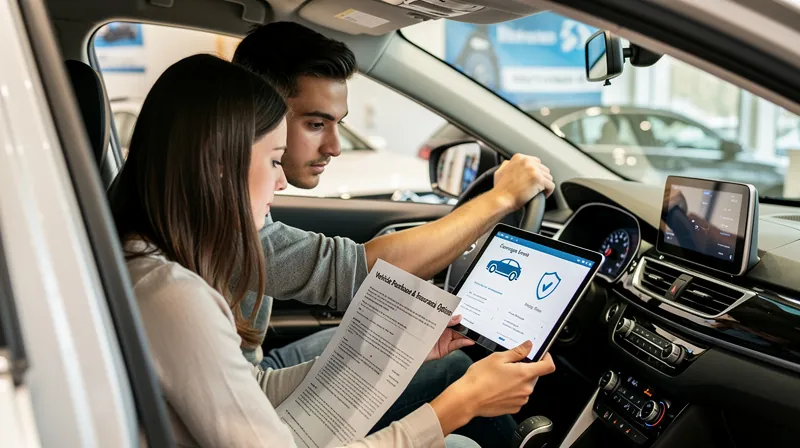
A common and costly misconception is that you have time to figure out insurance after purchasing a vehicle. In reality, you must be insured before you drive the car off the lot — the legal obligation begins the moment you take possession of the vehicle and operate it on a public road.
Before You Buy a Car
Insurance follows the car, not the driver — this is one of the most important principles in auto insurance law. If you are purchasing a new vehicle, contact your insurer before finalizing the sale to add the vehicle to your policy. Most insurers allow you to do this by phone or app within minutes.
If you are driving someone else’s vehicle, the legal picture changes somewhat. In most states, a friend or family member driving your car with your permission is covered under your policy’s permissive use clause. However, regular use by a non-listed driver can create coverage complications, and some policies explicitly require all regular drivers to be listed. A non-owner auto insurance policy is available for individuals who frequently drive borrowed or rented cars but do not own a vehicle themselves.
Lender Requirements vs. Personal Needs
If you finance or lease a vehicle, the lender or leasing company has a significant say in your insurance requirements — and they will always require more than the state minimum. Lenders require full coverage, meaning both collision and comprehensive insurance, to protect their financial interest in the vehicle. This is not optional; it is a contractual condition of your loan agreement.
- Collision coverage pays for damage to your vehicle from an accident, regardless of fault.
- Comprehensive coverage pays for non-collision damage — theft, fire, flooding, hail, and animal strikes.
- Lenders may also require a specific maximum deductible (often $500 or $1,000) and will typically require you to list them as a lienholder on the policy.
Once you have paid off your vehicle loan, you gain the freedom to drop collision and comprehensive coverage if you choose. For older vehicles with low market value, this can represent meaningful savings — though it also means bearing the full cost of repairs yourself if the vehicle is damaged.
The Economics of 2025–2026: Rates, Surcharges, and Trends
After several years of sharp increases driven by supply chain disruptions, inflation in auto parts, and rising medical costs, insurance premiums showed measurable improvement in 2025 — with the national average for full coverage dropping approximately 6% to around $2,144 per year. Understanding the economic forces behind these fluctuations helps explain why mandates and markets interact the way they do.
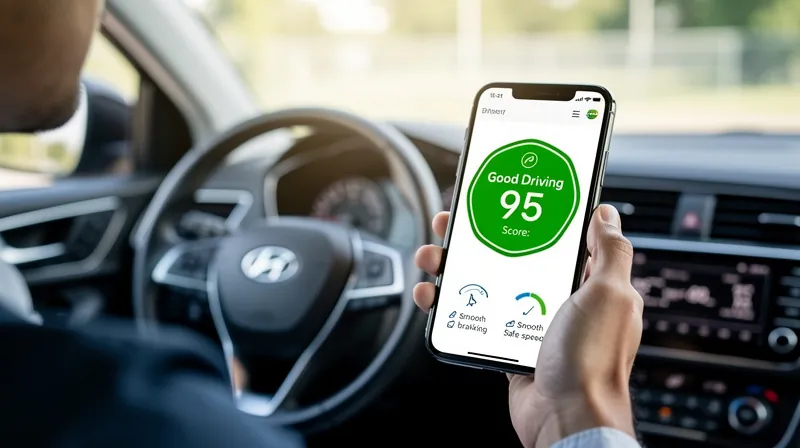
2025–2026 Rate Fluctuations
The 2025 rate decline was driven primarily by insurer profitability recovery. After years of paying out more in claims than they collected in premiums, major insurers restructured their models, raised rates aggressively in 2022–2023, and began seeing stabilization in claims costs. The result was a more competitive market that passed modest savings on to consumers.
Looking ahead to 2026, industry analysts project modest increases of 1–4% in most states, driven by ongoing inflation in medical costs and auto parts, combined with climate-related claims in weather-prone regions. Some states — notably Vermont and parts of the Midwest — may see slight decreases. Urban markets in Florida, California, and Louisiana continue to face above-average pressure due to litigation frequency and weather exposure.
| Year | National Avg. Full Coverage | Key Driver |
|---|---|---|
| 2023 | ~$2,340 | Inflation, parts shortages, rising claims |
| 2024 | ~$2,278 | Rate stabilization, insurer restructuring |
| 2025 | ~$2,144 | Profitability recovery, competitive market |
| 2026 (projected) | ~$2,190–$2,230 | Modest inflation, climate claims, stabilization |
Behavioral Economics: Optimism Bias
Optimism bias is a well-documented cognitive phenomenon in which individuals systematically underestimate their own probability of experiencing a negative event relative to others. In the context of driving, this means the vast majority of drivers genuinely believe they are safer than average — statistically impossible by definition, yet nearly universal in self-assessment.
This psychological reality is a key justification for insurance mandates. If insurance were purely voluntary and based on rational self-interest, a large percentage of drivers would conclude they are unlikely to have an accident and skip coverage. Mandates counteract this cognitive bias by ensuring that every driver’s risk is pooled, regardless of how safe they believe themselves to be. The mathematics of loss socialization requires participation from the low-risk majority to subsidize the real — if statistically rare — catastrophic losses of the minority.
How Enforcement Works: What to Expect at a Traffic Stop
Law enforcement agencies have become increasingly sophisticated in their ability to verify insurance status in real time, making the old strategy of carrying a lapsed insurance card increasingly futile. Modern enforcement operates on multiple simultaneous levels — at the roadside, in the database, and through annual registration audits.
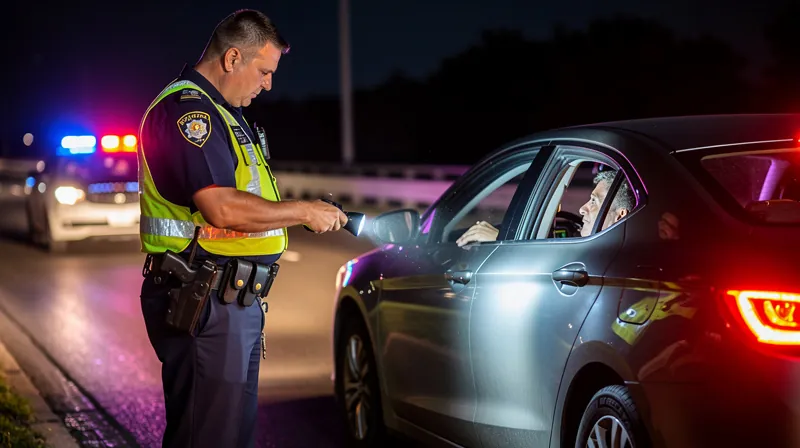
When a police officer initiates a traffic stop, they typically run your license plate through their patrol car’s computer system before even approaching your vehicle. This query accesses state DMV records and, in many cases, real-time insurance databases — including the National Motor Vehicle Title Information System (NMVTIS) and state-specific insurance verification systems that insurers are required to update continuously. Officers can often confirm whether your vehicle is currently insured before you roll down your window.
If a discrepancy exists — such as a lapsed policy that the insurer has already reported to the state — the officer will likely ask for proof of insurance. Failing to produce a valid, current proof of insurance card (physical or digital) typically results in:
- Issuance of a citation requiring court appearance or fine payment
- Potential immediate license suspension in states with zero-tolerance statutes
- Vehicle impoundment until proof of valid coverage can be provided
- A requirement to appear in court and present current proof of insurance to have charges reduced or dismissed
Beyond traffic stops, many states now conduct annual DMV insurance audits, cross-referencing registered vehicles against active insurance policies reported by carriers. If your registration shows a coverage gap, the DMV will mail a notice requiring proof of insurance — and failure to respond triggers automatic license and registration suspension. This passive enforcement layer means that even drivers who have never been pulled over can face consequences for coverage lapses.
Frequently Asked Questions
Why are we forced to have car insurance?
Car insurance is mandatory because driving on public roads creates a substantial risk of harm to other people, and the law requires that you have the financial means to compensate those you injure or whose property you damage. Without a mandate, many drivers — especially lower-risk individuals — would opt out, leading to market instability, higher premiums for those who do buy coverage, and millions of accident victims left without compensation. The mandate is ultimately a mechanism to ensure that the cost of accidents is shared fairly across all drivers, not concentrated on unlucky victims.
Do cops know if you’re uninsured?
Yes, in most states police officers can verify your insurance status in real time through patrol car computer systems connected to state DMV records and insurance verification databases. Many insurers are legally required to report policy cancellations or lapses directly to the state, meaning officers often know before they approach your vehicle whether your coverage is active. Presenting a physical insurance card for a lapsed policy is therefore increasingly ineffective as a way to avoid detection.
What’s the fine in Ohio for driving without insurance?
In Ohio, driving without proof of insurance results in a first-offense fine of up to $100, but the more significant consequences are a 90-day license suspension and a requirement to pay a $100 reinstatement fee plus file an SR-22. Subsequent offenses carry steeper fines, longer suspension periods, and potential vehicle impoundment. Ohio also uses an automated insurance verification system, meaning lapses are flagged even without a traffic stop.
Can my girlfriend drive my car if she isn’t on my insurance?
In most states, your girlfriend can legally drive your car under your insurance policy’s “permissive use” provision, which extends coverage to occasional drivers with the owner’s permission. However, if she drives your car regularly, most insurers require that she be listed as a driver on your policy — failure to do so could result in a claim being denied or your premium being surcharged retroactively. Check your specific policy language, as “permissive use” definitions vary by insurer and state.
What is a financial responsibility bond?
A financial responsibility bond is a surety bond purchased from a licensed bonding company that a driver deposits with the state as proof they can cover the cost of damages if they cause an accident — essentially serving as an alternative to traditional insurance. In states like New Hampshire, the bond amount required is typically $125,000, which is far beyond what most individuals can afford, making traditional insurance the practical choice for nearly all drivers. The bond protects third parties in the event of an accident but does not provide any protection for the bond holder’s own vehicle or medical costs.
How much does uninsured motorist coverage cost?
Uninsured motorist coverage is typically one of the most affordable add-ons available, often costing between $50 and $150 per year for standard limits, depending on your state, driving history, and coverage amount. Given that approximately 14% of drivers are uninsured, it represents exceptional value — providing protection against a scenario that is statistically common. In states where it is not required, it is one of the most recommended optional coverages by consumer advocates.
What is an SR-22 form and how long do I need it?
An SR-22 is not an insurance policy — it is a certificate filed by your insurer with the state confirming that you are carrying the legally required minimum liability coverage, typically required after a serious violation such as driving uninsured, a DUI, or multiple traffic offenses. Most states require you to maintain the SR-22 filing for three years from the date of reinstatement, during which any lapse in coverage triggers automatic license re-suspension. The filing fee itself is modest ($15–$50), but the associated increase in insurance premiums is the real financial burden.
Can you get car insurance without a license?
Yes, it is possible to obtain car insurance without a driver’s license, though it is more difficult and more expensive than standard coverage. Common situations include vehicle owners who do not drive themselves but need to insure a car for a licensed family member or caregiver who drives them. Insurers will typically require a licensed primary driver to be listed on the policy, and rates will reflect the risk profile of whoever is actually operating the vehicle.
Does insurance cover rental cars?
Your personal auto insurance policy typically extends its liability, collision, and comprehensive coverage to rental vehicles in the United States, meaning you may not need to purchase the rental company’s expensive daily coverage add-on. However, rental reimbursement is a specific optional add-on that covers the cost of renting a car while your own vehicle is being repaired after a covered claim — these are two different things. Always verify your specific policy terms before declining rental coverage, and note that coverage for international rentals varies significantly.
What is the minimum liability insurance in Texas?
Texas requires all drivers to carry minimum bodily injury liability coverage of $30,000 per person and $60,000 per accident, plus $25,000 in property damage liability — commonly written as 30/60/25. This is the legal floor, but given that medical costs frequently exceed these amounts in serious accidents, most insurance professionals recommend carrying significantly higher limits. Texas does not mandate uninsured motorist coverage, though it must be offered to you and is strongly recommended given the state’s high uninsured driver rate.
Why do insurance premiums change every year?
Insurance premiums are recalculated annually based on a combination of your personal driving record, changes in local claims data, inflation in medical and repair costs, weather-related loss trends, and the overall profitability of the insurer’s book of business in your state. Even if you have had no accidents or tickets, your premium can increase due to market-wide factors like rising litigation costs or extreme weather events in your region. Shopping for competing quotes at renewal is one of the most effective ways to counter these market-driven increases.
Is it illegal to drive without insurance in every state?
Driving without insurance is illegal in 48 out of 50 states; New Hampshire and Virginia have historically been the exceptions, though Virginia eliminated its fee-based alternative to insurance in 2024. In all states — including New Hampshire — drivers remain personally and financially responsible for any damages they cause, so even where a traditional insurance mandate does not exist, the practical risk of driving uninsured is substantial. The legal framework varies, but the financial exposure is universal.