
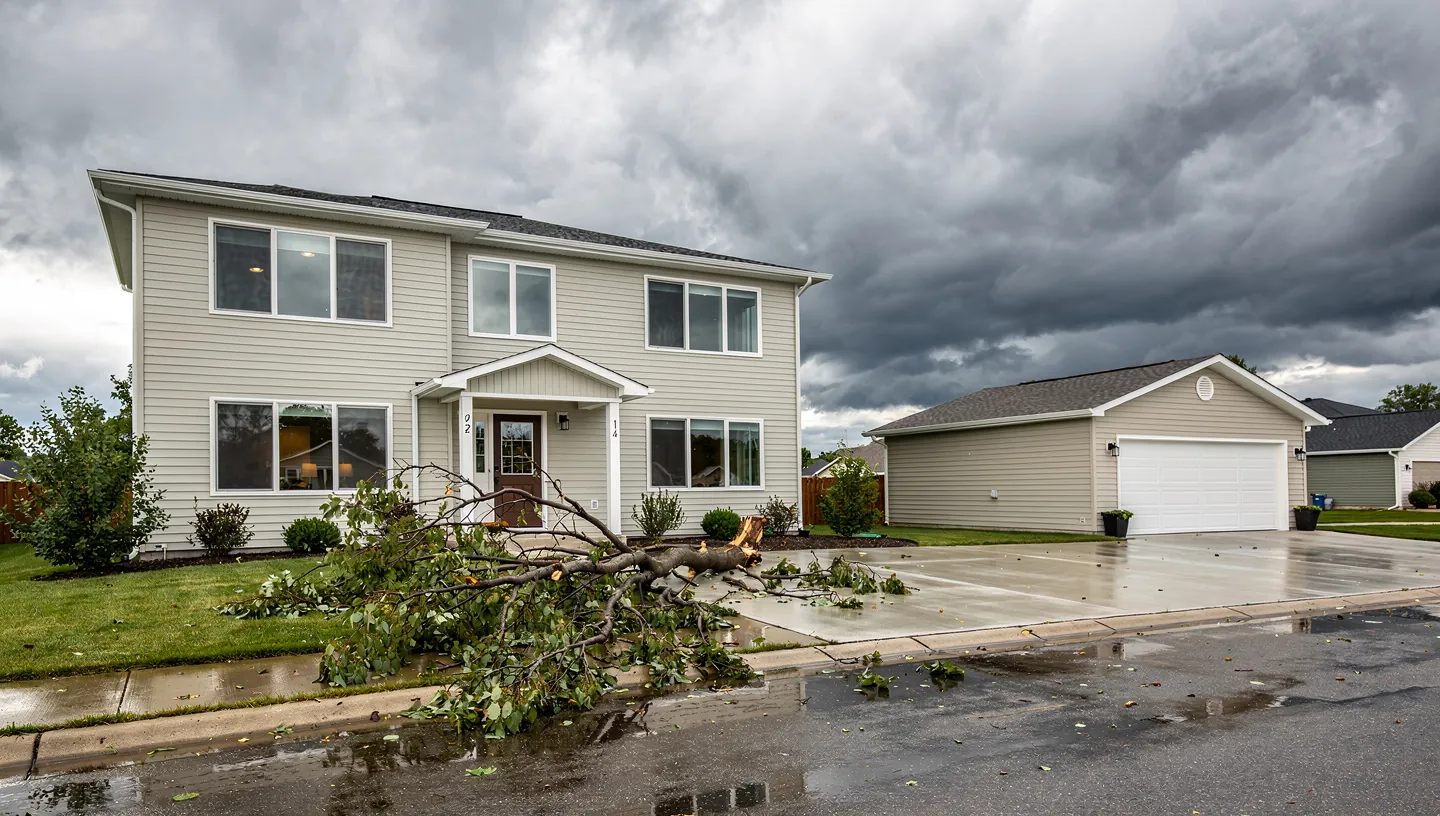
HO-3 home insurance is the industry standard for single-family homes in the United States — and understanding exactly how it works can mean the difference between a fully paid claim and an unexpected five-figure gap in coverage. The HO-3 policy combines open-perils protection for your home’s physical structure with named-perils protection for your personal belongings, creating a hybrid model that delivers meaningful coverage without the premium cost of more comprehensive forms.
That hybrid structure is also its most misunderstood feature. Your dwelling is protected broadly against nearly any cause of damage unless the policy explicitly excludes it. Your personal property, however, is covered only if the damage results from one of a specific list of causes. That single distinction drives most claim disputes — and understanding it before you need to file can save you thousands of dollars.
This guide covers every component of the Special Form homeowners policy: the six standard coverages (A through F), the critical difference between Actual Cash Value and Replacement Cost Value, a complete named-peril list, a direct HO-3 vs. HO-5 comparison, and a step-by-step claims walkthrough. Whether you’re a first-time buyer navigating a lender’s mortgage requirement or a longtime homeowner re-evaluating your policy, this is the authoritative resource you need.
Key Takeaways:
- HO-3 stands for Homeowners Policy Form 3 — the most widely used home insurance form in the U.S.
- It provides open-perils coverage for the structure (Coverages A and B) and named-perils coverage for personal property (Coverage C).
- Major exclusions include floods, earthquakes, and wear-and-tear — all requiring separate policies or endorsements.
- Choosing between Actual Cash Value (ACV) and Replacement Cost Value (RCV) for personal property significantly impacts your claim payout.
- HO-3 is typically the minimum standard required by mortgage lenders for single-family home financing.
What Is an HO-3 Policy? Understanding the Hybrid Model
An HO-3 policy — formally known as the Special Form — is the most common homeowners insurance policy in the United States. It protects owner-occupied, single-family residences using a two-tier coverage model: the home’s structure is insured on an open-perils basis, while personal belongings are insured on a named-perils basis. This balance keeps premiums manageable while still providing robust structural protection.
The designation “Homeowners Form 3” originates from standardized policy forms developed by the Insurance Services Office (ISO). While individual insurers may modify specific language or add endorsements, the fundamental structure of the HO-3 is consistent nationwide. It sits above the more restrictive HO-1 (Basic Form) and HO-2 (Broad Form) and below the HO-5 (Comprehensive Form), occupying the practical middle ground that serves most homeowners well.
Open-Perils vs. Named-Perils Explained
Open-perils coverage means your home’s structure is protected against any cause of damage unless the policy specifically excludes it. The burden shifts to the insurer: to deny a structural claim, they must point to a named exclusion. This covers a broad range of events — fire, wind, vandalism, burst pipes, and more — without requiring you to prove the damage came from a listed cause.
Named-perils coverage, which governs your personal property under an HO-3, works in the opposite direction. Your belongings are covered only if damaged by one of the 16 specific causes listed in your policy. If the cause isn’t on that list — for example, accidental breakage of a television or mysterious disappearance of a valuable item — the claim is denied. This asymmetry between how your structure and your contents are covered is the most important concept to internalize when evaluating your HO-3 policy.
- Open-perils (Structure): Covered for any cause unless explicitly excluded — broader protection by default.
- Named-perils (Personal Property): Covered only when the cause appears on the policy’s peril list — narrower, but still substantial for most common losses.
Why Lenders Require the HO-3
Most mortgage lenders require a minimum of an HO-3 policy as a condition of loan approval. The reason is straightforward: lenders hold a financial interest in the property itself, and they need confidence that their collateral — your home’s structure — is broadly protected. Basic HO-1 and HO-2 policies insure the dwelling on a named-perils basis with a limited list of covered causes, which most lenders consider insufficient protection for their investment.
The HO-3’s open-perils dwelling coverage addresses that concern directly. It also remains significantly more affordable than an HO-5, making it the practical standard for residential mortgage underwriting. If you are financing a home, your lender will almost certainly require you to maintain an HO-3 or equivalent policy for the life of the loan — and will often require proof of coverage at closing.
HO-3 Coverage Breakdown: A Through F
Every standard HO-3 policy includes six distinct coverage components — labeled A through F — each addressing a different dimension of your financial exposure as a homeowner. Understanding the scope and dollar limits of each is essential to determining whether your current policy leaves you exposed.
| Coverage | What It Covers | Typical Limit | Basis |
|---|---|---|---|
| A – Dwelling | Home structure, attached garage, built-in appliances | Full rebuild cost | Open-perils, RCV |
| B – Other Structures | Detached garage, fences, sheds | 10% of Coverage A | Open-perils |
| C – Personal Property | Furniture, electronics, clothing, appliances | 50–70% of Coverage A | Named-perils, ACV or RCV |
| D – Loss of Use (ALE) | Hotel, meals, temporary housing | 20–30% of Coverage A | Named-perils |
| E – Personal Liability | Legal costs and damages for bodily injury or property damage to others | $100,000–$500,000 | Occurrence-based |
| F – Medical Payments | Guest medical bills, regardless of fault | $1,000–$5,000 | No-fault |
Coverage A: Dwelling (Open-Perils)
Coverage A is the foundation of your HO-3 policy. It pays to repair or rebuild your home’s physical structure — walls, roof, flooring, foundation, attached garage, and built-in systems such as HVAC and plumbing — for any cause of loss not specifically excluded by the policy. This is what protects the largest financial asset most people will ever own.
By default, Coverage A is written at Replacement Cost Value (RCV), meaning your insurer pays what it actually costs to rebuild your home with comparable materials at today’s prices — with no depreciation deducted. If your 15-year-old roof is destroyed by wind, RCV pays for a brand-new roof. One critical point many homeowners miss: your Coverage A limit should reflect your home’s reconstruction cost, not its market value. These figures can differ substantially, and being underinsured on Coverage A creates a dangerous gap in the event of a total loss.
Coverage B: Other Structures
Coverage B extends open-perils protection to structures on your property that are not attached to the main dwelling — detached garages, garden sheds, fences, driveways, in-ground pools, and guest houses. The standard limit is 10% of your Coverage A limit. On a home insured for $400,000, that translates to $40,000 in other structures coverage.
For most homeowners, this default is adequate. If you have an unusually valuable detached structure — a large workshop, a custom carriage house, or an outbuilding with high-end equipment — discuss increasing this limit with your agent to avoid underinsurance on a structure that may cost significantly more than 10% of your dwelling value to replace.
Coverage C: Personal Property (Named-Perils)
Coverage C protects your personal belongings — furniture, clothing, electronics, and appliances — but only against damage caused by one of the 16 named perils listed in your policy. If your belongings are damaged by a cause that doesn’t appear on that list, the claim will be denied. This is the coverage tier where homeowners most often encounter unexpected surprises.

Actual Cash Value vs. Replacement Cost Value: A Deep Dive
How your personal property is valued at the time of a claim is one of the most consequential — and least understood — decisions in homeowners insurance. Coverage C can be written on either an Actual Cash Value (ACV) or Replacement Cost Value (RCV) basis, and the financial difference between the two is often staggering.
- Actual Cash Value (ACV): The insurer pays the depreciated value of the item at the time of loss. A five-year-old laptop that cost $1,200 new might be worth only $300–$400 in depreciated terms. You receive that reduced amount and absorb the rest out of pocket.
- Replacement Cost Value (RCV): The insurer pays what it costs to purchase a comparable new item today — no depreciation applied. That same laptop would be covered at the current retail cost of an equivalent model. RCV typically adds to your premium, but it can mean thousands of dollars more in a major loss.
Consider this scenario: a house fire destroys $50,000 worth of furniture, electronics, and clothing. With ACV coverage, depreciation applied across all items might reduce your payout to $25,000–$30,000, leaving a $20,000–$25,000 gap you must cover personally. With RCV coverage, your settlement approaches the full $50,000. For most homeowners, adding an RCV endorsement to personal property is worth the additional premium.
Additionally, most HO-3 policies impose sublimits on high-value items within Coverage C. Jewelry is commonly capped at $1,500; silverware, firearms, and electronics may have their own sublimits. If you own items exceeding these thresholds — art, collectibles, musical instruments, or fine jewelry — schedule them separately as a floater or rider to ensure they are fully covered.
Coverage D: Loss of Use (Additional Living Expenses)
Coverage D — also called Additional Living Expenses (ALE) — pays the costs of living elsewhere when a covered loss renders your home temporarily uninhabitable. Eligible expenses include hotel or short-term rental costs, restaurant meals above your normal food budget, laundry, pet boarding, and similar costs incurred because you cannot occupy your home. Expenses directly resulting from the displacement are covered; your normal baseline living costs are not.
Standard ALE limits run 20–30% of your Coverage A limit — on a $400,000 dwelling, that’s $80,000–$120,000. In most situations, this is sufficient. In high-cost-of-living markets or during major rebuilds that extend 12–18 months, however, this ceiling can be reached. Review your ALE limit against local short-term rental rates to confirm the coverage is adequate for your market.
Coverage E: Personal Liability
Coverage E protects you financially if you are found legally responsible for bodily injury or property damage to others. It applies to incidents both on and off your property in many circumstances — a neighbor bitten by your dog, a guest who slips on an icy walkway, or accidental damage you cause to someone else’s property. Your insurer pays both legal defense costs and any damages awarded, up to your policy limit.
Standard limits range from $100,000 to $500,000, with higher limits available at modest additional cost. Most financial advisors recommend a minimum of $300,000. Homeowners with significant assets should consider a separate umbrella liability policy, which extends coverage beyond the standard limit — often to $1 million or more — at relatively low additional cost. Liability claims can escalate quickly once attorneys and court proceedings are involved.
Coverage F: Medical Payments to Others
Coverage F is a no-fault goodwill coverage that pays minor medical expenses when a guest is injured on your property — regardless of whether you were negligent. Standard limits run $1,000 to $5,000. If a visitor trips on your porch steps and requires an ER visit, Coverage F can resolve that bill quickly, without the need for a liability determination or a formal lawsuit.
This coverage is intentionally modest. It is designed to resolve small medical claims promptly and prevent minor incidents from escalating into full liability claims under Coverage E. It does not apply to injuries sustained by residents of the household, and it does not require a finding of fault to trigger payment.
HO-3 vs. HO-5: Which Policy Is Right for You?
The HO-3 and HO-5 are the two most widely used homeowners insurance forms in the U.S. Their core difference comes down to a single variable: how personal property is covered. The HO-5 insures both the dwelling and personal belongings on an open-perils basis, while the HO-3 restricts personal property to named perils. That distinction drives most of the difference in premium, coverage breadth, and suitability for different homeowner profiles.
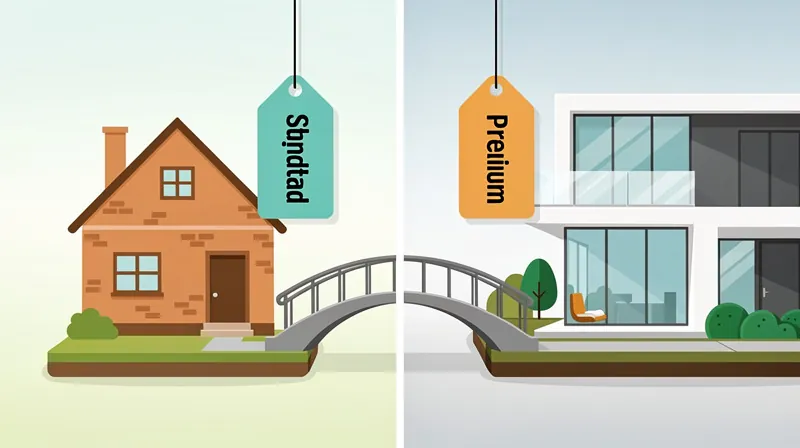
The Main Difference: Scope of Personal Property Protection
Under an HO-5 Comprehensive Form, personal property is protected against any cause of damage not explicitly excluded — the same open-perils standard applied to the dwelling. If your child accidentally shatters an expensive television, an HO-5 will likely cover it under accidental breakage; an HO-3 will not, because accidental breakage is not among the 16 named perils for personal property.
For homeowners with high-value electronics, art collections, expensive appliances, or furnishings, this broader personal property protection has real financial value. For homeowners with modest contents, the named-perils restriction of an HO-3 rarely results in a meaningful coverage gap — most significant losses are caused by perils that appear on the standard list regardless. The calculus shifts based on what you own and how it’s used.
Cost Comparison and Premium Impact
HO-5 policies typically cost 7–15% more annually than comparable HO-3 policies, though this varies by insurer, geography, and home characteristics. On a policy with a $2,000 annual HO-3 premium, the equivalent HO-5 might run $2,140–$2,300 — a difference of $140–$300 per year. Over a decade, that gap is meaningful, but so is the broader coverage if a significant personal property loss occurs.
| Feature | HO-3 (Special Form) | HO-5 (Comprehensive Form) |
|---|---|---|
| Dwelling Coverage | Open-perils | Open-perils |
| Personal Property Coverage | Named-perils (16 listed causes) | Open-perils (any cause not excluded) |
| Meets Lender Requirements | Yes | Yes |
| Relative Annual Premium | Lower | 7–15% higher |
| Accidental Breakage Covered | Generally No | Generally Yes |
| Mysterious Disappearance Covered | No | Often Yes |
| Best For | Standard homes with average-value contents | High-value homes with expensive contents |
Decision guidance: Choose an HO-3 if your home is of standard value, your personal property is modest, and you want to satisfy your lender’s requirements cost-effectively. Choose an HO-5 if your home is newer or high-value, you own significant personal property — electronics, art, jewelry, or high-end appliances — or you want comprehensive protection without relying on multiple riders and endorsements. If you fall between these profiles, the most cost-efficient path is often an HO-3 with an RCV endorsement for personal property plus individual scheduled riders for high-value items — delivering most of the HO-5’s protection at a lower premium.
HO-3 Exclusions and the Named Peril List
Knowing what your HO-3 policy does not cover is as important as knowing what it does. Claim denials are almost always rooted in exclusions, and most homeowners discover these gaps only after a loss has occurred. Two categories deserve careful attention: the named-perils list that governs personal property coverage and the standard exclusions that apply across the entire policy.

The 16 Named Perils for Personal Property
Under Coverage C, your personal belongings are protected only against the following causes of loss. This is the standard ISO named-perils list used in most HO-3 policies nationwide:
- Fire or lightning
- Windstorm or hail
- Explosion
- Riot or civil commotion
- Aircraft — damage caused by aircraft or objects falling from them
- Vehicles — damage caused by a vehicle colliding with your property
- Smoke — sudden and accidental discharge only
- Vandalism or malicious mischief
- Theft — including attempted theft
- Volcanic eruption
- Falling objects — such as tree limbs or debris
- Weight of ice, snow, or sleet
- Accidental discharge or overflow of water or steam from plumbing, HVAC systems, or household appliances
- Sudden and accidental tearing apart, cracking, burning, or bulging of a steam or hot water heating system
- Freezing of plumbing, HVAC systems, or household appliances
- Sudden and accidental damage from artificially generated electrical current — for example, a power surge damaging electronics
Notably absent from this list: accidental breakage, mysterious disappearance, and flood damage. These are among the most commonly requested personal property coverages and would be included under an HO-5’s open-perils framework — but they are not covered under a standard HO-3.
Major Exclusions
The following perils are excluded from both dwelling and personal property coverage in a standard HO-3 policy. These exclusions apply regardless of whether the damage is direct or consequential:
- Floods: Surface water, storm surge, and overflow from bodies of water are never covered under an HO-3. Separate coverage through the National Flood Insurance Program (NFIP) or a private flood insurer is required.
- Earthquakes: Ground movement of any kind requires a separate earthquake endorsement or standalone policy.
- Sinkholes: Excluded in most states. Florida is a notable exception, where specific sinkhole coverage laws apply.
- Neglect: Damage resulting from a homeowner’s failure to maintain the property is not covered.
- Intentional damage: Any damage you cause deliberately is excluded.
- War and nuclear hazard: Broad exclusions covering military action and radioactive contamination.
- Power failure: Loss caused by an off-premises utility interruption is typically excluded.
- Wear and tear: Gradual deterioration, aging, and maintenance-related damage are not covered — homeowners insurance is not a home warranty.
- Mold: Generally excluded unless mold results directly from a covered peril. Mold caused by a burst pipe claim may be covered; mold from chronic humidity or deferred maintenance is not.
- Earth movement: Mudslides, subsidence, and landslides are excluded regardless of cause.
Practical takeaway: If you live in a designated flood zone, a seismically active region, or a coastal area with significant hurricane exposure, your HO-3 alone is not sufficient. Budget for the appropriate supplemental policies and review your exclusions annually — particularly as your home’s value and local risk profile evolve.
How to File an HO-3 Claim: A Step-by-Step Guide
Filing a claim correctly — and promptly — directly determines how much you recover and how smoothly the process unfolds. The HO-3 claims process follows a predictable sequence, and homeowners who document thoroughly and communicate clearly consistently achieve better outcomes than those who act reactively.

Step-by-Step Filing Process
- Document the damage before any cleanup. Take comprehensive photos and videos of all damage from multiple angles — wide shots to establish context, close-ups to capture specific damage. This visual record is your primary evidence during the claims process and should be captured before any repairs, temporary fixes, or cleanup begin.
- Take reasonable steps to prevent further damage. Your policy requires you to mitigate additional loss after an incident. Cover a breached roof with a tarp, board broken windows, or shut off water to a burst pipe. Keep all receipts for emergency mitigation expenses — these costs are typically reimbursable under your claim.
- Notify your insurer promptly. Contact your insurance company as soon as possible after the event. Most policies include a timely-reporting requirement; delays can complicate or jeopardize a valid claim. Most insurers offer reporting options by phone, online portal, or mobile app.
- Prepare for the adjuster’s inspection. Your insurer will assign a claims adjuster to assess the damage in person. Be present for this visit with your documentation ready — photos, home inventory, receipts, and any prior repair records. Do not hesitate to walk the adjuster through all areas of damage; adjusters may miss items during a single visit.
- Obtain independent repair estimates. Get written estimates from licensed contractors for all repair work. If the adjuster’s estimate falls short of what contractors are quoting, you have the right to negotiate or invoke the appraisal clause in your policy to resolve the dispute through a neutral process.
- Review your settlement offer carefully before accepting. Confirm the offer covers all documented damage and reflects the correct valuation method for your policy — ACV or RCV. If you have RCV coverage, you may receive an initial ACV payment first, with the depreciation holdback released once repairs are completed and documented.
Documentation Essentials
The quality of your pre-loss documentation is the single most controllable factor in claims outcomes. Homeowners who maintain a current home inventory — a detailed record of personal property with purchase dates, costs, serial numbers, and photos — receive faster and more accurate settlements than those reconstructing losses from memory after the fact.
- Store your home inventory in a cloud-based location (Google Drive, Dropbox, or a dedicated home inventory app) so it remains accessible even if your home is destroyed.
- Retain digital copies of receipts and warranty documents for major purchases in a dedicated folder.
- Update your inventory annually and immediately after significant purchases.
- Document home upgrades and renovations with photos and contractor invoices — these affect your Coverage A replacement cost calculation.
- Keep all insurer correspondence in writing. After phone conversations, send a brief follow-up email summarizing what was discussed and agreed upon.
If your claim is denied or you believe the settlement is insufficient, you have structured options: request a written denial explanation, file a complaint with your state’s Department of Insurance, invoke the policy’s appraisal process, or hire a licensed public adjuster to advocate on your behalf. Understanding these options before you need them ensures you can act quickly and effectively if a dispute arises.
Frequently Asked Questions About HO-3 Home Insurance
What does HO-3 mean in insurance?
HO-3 stands for Homeowners Policy Form 3, a standardized insurance form developed by the Insurance Services Office (ISO). It is the most widely used homeowners insurance form in the United States, designed for owner-occupied single-family homes. The “3” designation distinguishes it from other ISO forms: HO-1 (Basic Form), HO-2 (Broad Form), and HO-5 (Comprehensive Form), each of which provides a different scope of coverage for the dwelling and personal property.
Is HO-3 insurance good?
Yes — for the majority of homeowners, an HO-3 policy provides strong coverage at a reasonable cost. It offers broad, open-perils protection for your home’s structure and meaningful named-perils coverage for personal property, meeting the needs of most standard residential risk profiles. The HO-3 may be insufficient for homeowners with high-value personal property, those in flood-prone or seismically active areas, or those who want the absolute broadest protection available — situations where upgrading to an HO-5 or adding supplemental policies is warranted.
What is excluded from an HO-3 policy?
Floods and earthquakes are the two most significant exclusions from an HO-3 policy. Additionally excluded are sinkholes, earth movement, wear and tear, neglect, intentional damage, war, and nuclear hazard. Mold is generally excluded unless it results directly from a covered peril such as a burst pipe. These exclusions apply to both the dwelling and personal property. Homeowners in high-risk areas should obtain separate flood insurance and earthquake coverage to address these gaps.
Which is better, HO-3 or HO-5?
The HO-5 is better if you have a high-value home, expensive personal property, or want the broadest available coverage without relying on endorsements. The HO-3 is better if you want strong structural protection at a lower premium and can address personal property gaps selectively with an RCV endorsement and scheduled riders. Neither form is universally superior — the right choice depends on your home’s value, the cost of your belongings, and how much premium you want to commit to broader coverage. For most standard homeowners, an HO-3 with strategic endorsements delivers the best value.
Does HO-3 cover floods and earthquakes?
No — a standard HO-3 policy does not cover flood damage or earthquake damage under any circumstances. Flood coverage requires a separate policy through the National Flood Insurance Program (NFIP) or a private flood insurer. Earthquake coverage requires a separate endorsement or standalone earthquake policy. If you live in a FEMA-designated flood zone or a seismically active region, these are essential supplements to your HO-3, not optional additions.
What is the difference between Actual Cash Value and Replacement Cost on an HO-3?
Actual Cash Value (ACV) pays the depreciated value of damaged property at the time of loss; Replacement Cost Value (RCV) pays what it costs to replace the item new at today’s prices. For example, a six-year-old couch worth $200 in ACV terms might cost $800 to replace today — ACV leaves you absorbing the $600 difference. Coverage A (dwelling) is typically provided at RCV by default. Coverage C (personal property) defaults to ACV on many policies unless you purchase an RCV endorsement, which is generally recommended given the significant difference in claim payouts.
How much personal property coverage do I need on an HO-3?
The standard guideline is to insure personal property at 50–70% of your dwelling coverage limit, but the most accurate method is to conduct a thorough home inventory. Walk through every room and estimate the replacement cost of everything you own — furniture, electronics, clothing, appliances, and valuables. Most homeowners significantly underestimate the total: a typical furnished home commonly holds $50,000–$150,000 in personal property at replacement cost. An up-to-date home inventory ensures your Coverage C limit reflects your actual exposure.
Can I switch from an HO-3 to an HO-5 policy?
Yes — switching from an HO-3 to an HO-5 is straightforward and can typically be done at renewal or mid-term through your current insurer. Some insurers require a home inspection before issuing an HO-5 on an older home. You can also request HO-5 quotes from competing carriers, as pricing and availability vary considerably across the market. An independent insurance agent can compare options across multiple insurers to identify the best combination of coverage and premium for your situation.
Does an HO-3 policy cover a detached garage?
Yes — a detached garage is covered under Coverage B (Other Structures) of an HO-3 policy, typically at a limit of 10% of your Coverage A dwelling amount. On a home insured for $350,000, that provides up to $35,000 in coverage for the detached garage. If your detached garage is unusually valuable — a custom-built structure housing expensive tools, equipment, or vehicles — consider increasing your Coverage B limit or insuring vehicles separately under an auto policy to avoid underinsurance.
What happens if my roof is damaged by a covered peril?
If your roof is damaged by a covered peril — such as wind, hail, or a falling object — Coverage A (Dwelling) pays for repairs or replacement under your HO-3 policy. With standard Replacement Cost Value coverage, your insurer pays to restore the damaged section at today’s labor and material costs without depreciation deduction. Be aware that many insurers in storm-prone regions apply a separate wind and hail deductible — often 1–5% of your Coverage A limit rather than your standard policy deductible — which can represent a substantial out-of-pocket cost on a large claim. Confirm your deductible structure with your agent before a storm season begins.