

Category Car Insurance

The Complete Guide to Car Insurance in 2026: Rates, Coverage, and Switching Strategies

The US auto insurance market has reached a staggering $409.87 billion valuation in 2026, with average premium rates reflecting a cumulative 29.6% increase since 2011. For the roughly 230 million licensed drivers navigating this landscape, the math is unforgiving: car insurance now consumes a larger share of household budgets than at any point in the past decade. Yet the picture isn’t uniformly bleak. While full coverage premiums have stabilized slightly after the turbulent correction of 2023–2024, minimum coverage costs and high-risk driver surcharges continue their upward climb.

Perhaps the most consequential shift in the market isn’t about rates at all — it’s about behavior. A powerful “fluid loyalty” trend has taken hold: 33% of auto insurance customers are willing to switch providers even when they’re satisfied with their current service. This represents a fundamental recalibration of how consumers relate to their insurers, driven by unprecedented price transparency and digital comparison tools. Add to this the growing complexity of insuring electric vehicles, the mainstreaming of telematics-based pricing, and dramatic regional rate disparities, and you have a market that rewards the informed and penalizes the passive.

This guide, built on 2026 market data, is designed to give you the strategic framework to make smarter car insurance decisions — whether you’re shopping for the first time, evaluating a switch, or trying to understand why your renewal notice looks so different this year.

Key Takeaways

  • Regional volatility is extreme: Premium rates can vary by 86% depending on your specific zip code, making location one of the single largest determinants of what you pay.
  • Switching providers is strategic, not disloyal: Even satisfied customers should shop for auto insurance quotes annually to lock in lower rates — the data shows it works.
  • EV insurance carries a hidden premium: Electric vehicles are often classified as high-risk due to repair complexity and expensive battery components, making EV insurance costlier than most buyers expect.
  • Telematics and bundling discounts are your best levers: Usage-based insurance can cut premiums by up to 30%, and bundling home and auto policies saves up to 20%.
  • Understanding liability vs. full coverage is non-negotiable: Carrying only state minimum limits can leave you financially exposed in any serious accident — a detailed understanding of policy limits is essential to avoid being underinsured.

2026 Market Insights: Volatility and Regional Shifts

The national average car insurance premium stands at $1,759 in 2026, but this figure masks enormous variation. Drivers in specific high-cost cities routinely pay above $6,000 annually, while those in rural and suburban zip codes may pay less than half the national average. The story of auto insurance in 2026 is fundamentally a story of where you live.

A city street scene at sunset with smoke on the horizon, a person looking at a smartphone map.

The Far West region leads in average costs at $1,665 annually, driven by a combination of high vehicle values, dense traffic patterns, and aggressive litigation environments. But no state illustrates the extremes quite like Michigan, where Detroit-area premium rates exceed four times the national average — a consequence of the state’s unique no-fault insurance structure and historically high uninsured motorist rates.

High-risk demographics face the steepest costs. Drivers with a DUI on their driving record or those with low credit scores can see premium hikes of up to 35% above standard rates. SR-22 filing requirements — mandatory for drivers with serious violations — compound these costs further, often for a period of three years or more.

The encouraging news: rate momentum slowed considerably in late 2024, and projections for standard-risk drivers in 2026 suggest increases of less than 1%. After years of double-digit spikes driven by supply chain disruptions and inflated repair costs, the market is approaching something closer to equilibrium — though “stable” and “affordable” remain two very different things.

The Rise of ‘Fluid Loyalty’

The insurance industry has long relied on customer inertia — the assumption that most policyholders will auto-renew rather than shop around. That assumption is crumbling. 30% of satisfied policyholders now plan to switch within 90 days, motivated almost entirely by price sensitivity rather than service complaints. This fluid loyalty trend represents a structural shift, not a temporary blip.

Digital-native younger drivers between ages 18 and 29 are leading the churn revolution, with a 56% likelihood of switching providers in any given policy period. They’ve grown up comparing prices on everything from streaming services to food delivery, and they treat auto insurance quotes the same way. Shopping activity has hit a record high, with 57% of all insurance customers actively seeking new quotes — a figure that would have been unthinkable a decade ago.

What this means strategically: loyalty discounts and tenure-based pricing are becoming less effective retention tools. Insurers are being forced to compete on price and digital experience, which ultimately benefits consumers who are willing to invest the time in comparison shopping.

Regional Rate Disparities Explained

The 86% variance between the cheapest and most expensive zip codes isn’t random. It’s driven by a complex interplay of state regulations, local claim frequency, litigation costs, weather patterns, and population density. Two drivers with identical profiles and vehicles can face wildly different premium rates simply by living 30 miles apart.

Major carriers are responding with nuanced pricing strategies. State Farm and Allstate have slightly lowered rates in some markets while simultaneously raising them in others, reflecting a micro-targeting approach to underwriting that treats each zip code as its own risk ecosystem.

Vehicle type also plays a role that surprises many consumers. Vans are currently the cheapest vehicle category to insure at $1,688 average annually, while sedans — counterintuitively — are the priciest at $2,275. This reflects claims data: sedans are involved in more accidents per mile driven, and their repair costs have risen sharply due to integrated safety technology that’s expensive to replace.

Coverage Deep Dive: Beyond the Basics

Liability coverage is legally mandatory in almost every state, but collision and comprehensive coverage are where real asset protection begins. Understanding the distinction between these coverage types — and knowing when each is necessary — is the difference between financial resilience and financial ruin after a serious accident.

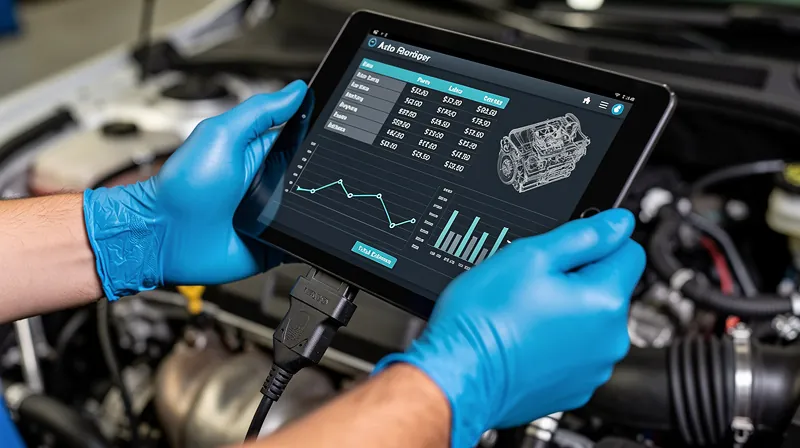
A mechanic using a tablet to check car diagnostics and repair costs.

Liability coverage pays for damage you cause to others. Every state sets minimum requirements, but these state minimum limits are often dangerously low. A typical state minimum of 25/50/25 ($25,000 per person bodily injury, $50,000 per accident, $25,000 property damage) can be exhausted in minutes at a modern emergency room. If your policy limits are exceeded, you’re personally liable for the remainder.

Collision coverage pays for damage to your own vehicle regardless of fault, while comprehensive coverage handles non-collision events: theft, hail, flooding, vandalism, and animal strikes. Together, they form what’s commonly called “full coverage.” For drivers with an auto loan or lease, both are typically required by the lender.

Beyond these core types, several supplementary coverages deserve attention:

  • Personal Injury Protection (PIP): Covers your medical expenses regardless of fault — mandatory in no-fault states and highly recommended elsewhere.
  • Uninsured/Underinsured Motorist coverage: Protects you when the at-fault driver has no insurance or insufficient policy limits. With roughly 14% of drivers uninsured nationally, this is not optional in practice.
  • Gap insurance: Covers the difference between your car’s actual cash value and what you owe on your loan or lease — critical for new vehicles that depreciate quickly.
  • Loan/lease payoff protection: Similar to gap insurance but structured as an add-on from your insurer rather than a separate product.
  • Roadside assistance: A low-cost add-on that covers towing, lockout service, and flat tire changes.

The EV Insurance Nuance

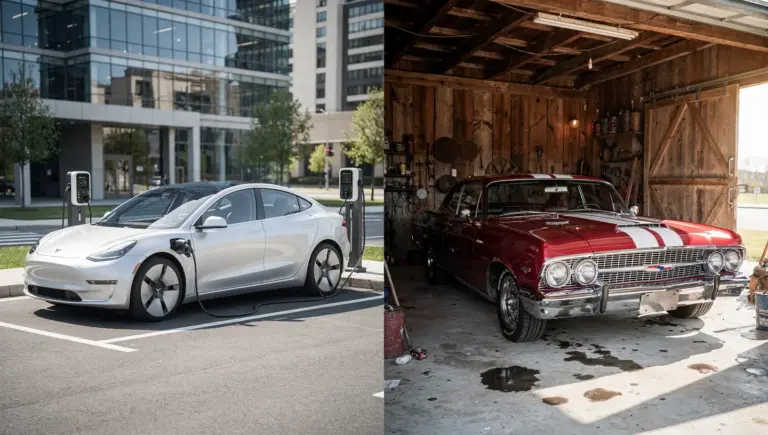
Electric vehicles present some of the most complex underwriting challenges in the modern car insurance market, and drivers are paying for that complexity. Despite the “green” branding and the assumption that newer technology equals lower risk, the reality is that many insurers now classify popular EV models — Tesla, Rivian, Lucid, and others — as high-risk vehicles. The reasons are structural and unlikely to change quickly.

The core issue is repair cost. EV batteries are integrated into the vehicle’s floor structure, meaning even a moderate undercarriage impact can require a full battery pack replacement costing $15,000 to $25,000 or more. Body panels on vehicles like the Tesla Model Y use large aluminum castings that can’t be panel-beaten — they must be replaced entirely. Certified EV repair technicians are scarce, and specialized parts often have long lead times, further inflating claim severity.

The “green insurance discount” is largely a myth. While some carriers offer nominal discounts for eco-friendly vehicles, these are overwhelmingly offset by the elevated claim costs. Hybrids already cost more to insure than comparable gas-powered vehicles due to their expensive battery components and dual-powertrain complexity. For full battery-electric vehicles, the gap is even wider.

Interestingly, Porsche-brand EVs offer some of the lowest insurance costs as a percentage of MSRP, primarily because Porsche’s repair network is well-established and their vehicles maintain higher resale values, reducing insurer exposure. For EV buyers, the insurance premium should be factored into total cost of ownership just as carefully as charging costs and range.

Choosing the Right Limits

State minimum liability limits are designed to get you legally on the road — not to protect your financial future. In an era when average hospital stays cost upward of $13,000 per day, a 25/50 bodily injury limit can be wiped out by a single passenger’s injuries. Financial advisors and insurance experts consistently recommend limits of at least 100/300/100 for most drivers.

Here’s a counterintuitive finding: increasing your liability limits is often more cost-effective than raising your deductible for lowering your overall risk-adjusted cost. Moving from 50/100/50 to 100/300/100 might add $50–$100 per year to your premium, while the protection differential is measured in hundreds of thousands of dollars.

Collision coverage is essential if you have an auto loan or lease, as lenders will require it. But even for drivers who own their vehicle outright, dropping collision coverage only makes financial sense if you can afford to replace the vehicle out of pocket. A useful rule of thumb: if your annual collision premium exceeds 10% of your car’s current value, it may be time to reconsider carrying it.

Strategic Switching: How to Leave Without the Headache

Switching car insurance providers is the single most effective way to lower your premiums, and in 2026, the process has never been easier. The data is unambiguous: drivers who shop and switch save an average of $300–$700 annually compared to those who auto-renew. Even loyal, satisfied customers should treat their renewal date as a shopping trigger.

A person reviewing a new car insurance contract on a laptop while an old paper document sits nearby.

The 33% of users who want to switch despite being satisfied with their current provider illustrate a crucial insight: satisfaction with claims handling or customer service doesn’t mean you’re getting a competitive rate. Carriers use complex pricing algorithms that factor in acquisition costs, retention modeling, and competitor positioning. Your renewal price may reflect what the carrier thinks you’ll tolerate, not what the market would charge you.

Before you begin the switching process, review your driving record for accuracy. Errors in state motor vehicle databases — incorrectly attributed tickets, accidents that weren’t your fault still listed as at-fault — can inflate your quotes across every carrier. Most states allow you to request your driving record online for free or a nominal fee.

The Step-by-Step Switching Process

The mechanics of switching car insurance are straightforward, but precision matters — especially ensuring zero coverage gaps. Here’s the exact process to follow:

  1. Shop around for auto insurance quotes using accurate data. Enter your real VIN, mileage, driving record, and coverage preferences. Use at least three to five comparison sources. Inaccurate data produces misleading quotes that won’t hold up at binding.
  2. Compare bundling discounts aggressively. If you have homeowner’s, renter’s, or other insurance policies, request bundled pricing. Bundling home and auto can save up to 20%, sometimes making a slightly more expensive auto policy cheaper in total when combined.
  3. Set your new policy start date before canceling the old one. This is the most critical step. Contact your current insurer to cancel after your new policy is active. Even a single day of lapsed coverage can trigger higher rates from your new carrier and create legal exposure.
  4. Review your new policy documents meticulously. Confirm exact start dates, coverage types, deductible amounts, and policy limits. Verify that all listed drivers and vehicles are correct. Print or save your new insurance ID cards immediately.

Pro tip: Time your switch to coincide with your current policy’s renewal date to avoid cancellation fees, which some carriers charge for mid-term cancellations. Most carriers prorate refunds, but the cleanest transition happens at renewal.

Maximizing Value: Discounts, Telematics, and Deductibles

The most effective tools for lowering your car insurance premium in 2026 are bundling, telematics enrollment, credit improvement, and strategic deductible selection — in that order. Each of these levers operates independently, meaning you can stack multiple discounts for compounding savings.

Bundling discounts remain the easiest win. Combining home and auto insurance with a single carrier can reduce your total premium by up to 20%. Some carriers extend bundling benefits to renter’s insurance, motorcycle policies, and even pet insurance. The key is to compare the bundled total against the sum of the best individual prices — bundling isn’t always the cheapest path if one carrier dramatically undercuts on a single policy.

Deductibles and premiums are inversely related: raising your deductible from $500 to $1,000 typically reduces your collision and comprehensive premiums by 15–25%. But this only makes financial sense if you can comfortably cover the higher deductible out of pocket. Setting a deductible you can’t afford defeats the purpose of having insurance.

Telematics and Usage-Based Insurance

Telematics — also called usage-based insurance (UBI) — uses smartphone apps or plug-in devices to track your actual driving behavior and price your policy accordingly. It represents the most significant pricing innovation in car insurance since credit-based scoring, and for safe drivers, it’s the fastest route to lower premiums.

Here’s how it works in practice: Apps track your speed, braking patterns, acceleration, cornering, phone usage while driving, and total mileage. This data feeds into a risk model that generates a personalized driving score. Drivers who score well can see premium reductions of up to 30%. Telematics programs have also been shown to reduce claims frequency by up to 20%, as the awareness of being monitored encourages safer behavior.

The process typically involves a “driving test” period of 30 to 90 days during which your behavior is assessed. During this evaluation window, your base rate usually applies. After the test period, your premium is adjusted — up or down — based on your score. Some carriers lock in your discount for the full policy term, while others reassess each renewal.

Telematics is particularly beneficial for two groups: younger drivers (18–29) who face age-based surcharges despite good driving habits, and anyone with a clean driving record who wants their premium to reflect their actual risk rather than demographic averages. The trade-off is privacy — you’re sharing detailed location and behavioral data with your insurer. For many drivers, the 20–30% savings justify that trade-off decisively.

The Credit Score Factor

In most states, your credit score is one of the top three factors determining your car insurance premium — alongside your driving record and zip code. Insurers have found a strong statistical correlation between low credit scores and higher claim frequency, and they price accordingly.

A poor credit score can increase your premium by over 20% compared to an excellent score. In some states, the credit score impact is even more pronounced, with drivers in the lowest credit tier paying nearly double what top-tier credit holders pay for identical coverage. Only California, Hawaii, Massachusetts, and Michigan have banned or significantly restricted the use of credit in insurance pricing.

Improving your credit score before shopping for auto insurance quotes is one of the smartest financial moves you can make. Paying down revolving debt, correcting errors on your credit report, and avoiding new credit applications in the months before shopping can meaningfully lower your quoted rates. It’s a long-game strategy, but the payoff compounds across every financial product you use — not just insurance.

The Claims Process: A Digital-First Roadmap

Modern car insurance claims are increasingly digital-first, with many insurers now offering end-to-end mobile claims processing that can resolve straightforward cases in days rather than weeks. Understanding the claims lifecycle before you need to use it is critical — the aftermath of an accident is the worst time to learn your insurer’s process.

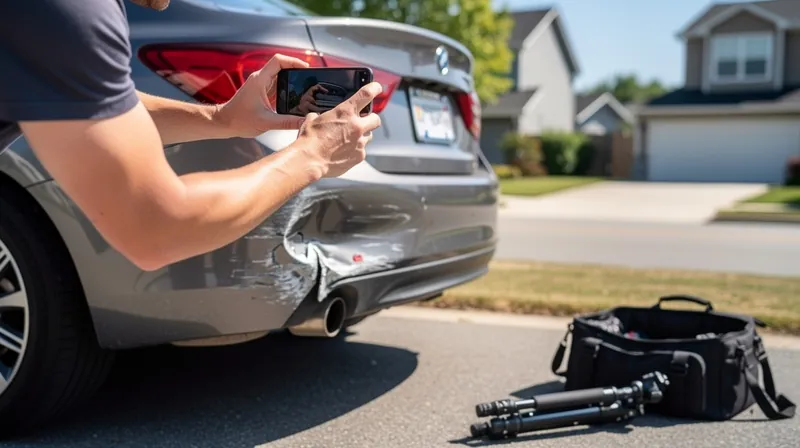
A person taking a photo of car bumper damage using a smartphone.

Submitting photos and documentation digitally speeds up settlements significantly. Carriers like GEICO, Progressive, and USAA have invested heavily in AI-powered damage assessment tools that can generate repair estimates from smartphone photos in minutes. For minor claims, some carriers now authorize repairs without an in-person adjuster visit.

Accident forgiveness is a feature worth understanding before you need it. Available from most major carriers as either an earned benefit or a paid add-on, accident forgiveness prevents your premium from increasing after your first at-fault accident. The value of this feature is substantial — a single at-fault accident can raise premiums by 20–40% for three to five years without it.

For drivers with DUIs or serious traffic violations, SR-22 filing enters the picture. An SR-22 isn’t a type of insurance — it’s a certificate that your insurer files with the state to prove you carry at least the minimum required coverage. It’s typically required for three years and significantly increases your premium during that period. Not all carriers offer SR-22 filing, so drivers in this situation may have limited provider options.

Navigating the Claims Lifecycle

A well-executed claims process starts at the scene of the accident, not when you call your insurer. The quality of documentation you gather in the first 15 minutes dramatically influences the speed and fairness of your settlement. Here’s the exact sequence to follow:

  1. Document the scene immediately. Take wide-angle photos of all vehicles involved, close-ups of all damage, photos of the intersection or road conditions, and pictures of license plates and insurance cards. Record a brief video narrating what happened. Gather names and contact information from any witnesses. If police respond, get the report number.
  2. Report the claim immediately via the insurer’s mobile app or phone line. Most carriers have 24/7 claims intake. The sooner you report, the sooner an adjuster is assigned. Upload all photos and documentation during this initial report — don’t wait for a follow-up request.
  3. An adjuster will contact you, typically within 24–48 hours, to assess damage and authorize repairs. For straightforward claims, this may happen via photo review. For complex or high-value claims, an in-person inspection may be required. The adjuster will also determine fault allocation, which affects whether your collision coverage or the other driver’s liability coverage pays.
  4. Review the settlement offer carefully before accepting. Ensure it covers all repairs, rental car costs (if you have rental reimbursement coverage), medical expenses, and any diminished value to your vehicle. You have the right to negotiate. If you disagree with the offer, request a re-inspection or obtain an independent repair estimate.

Keep every piece of communication in writing. Email confirmations, adjuster notes, repair authorizations, and settlement documents should all be saved. In disputed claims, documentation is your most powerful tool.

Frequently Asked Questions

Who is the cheapest car insurance?

USAA consistently offers the lowest rates for eligible military members and their families, while GEICO and State Farm compete for the cheapest rates among the general public. However, the cheapest carrier for you depends entirely on your specific profile — your driving record, zip code, vehicle, and credit score all influence which company offers the lowest quote. Always compare at least five providers to find your personal lowest rate.

What is the cheapest full coverage car insurance in NC?

In North Carolina, Erie Insurance and GEICO tend to offer the most competitive full coverage rates, with average annual premiums running between $1,200 and $1,500 for drivers with clean records. North Carolina uses a unique rate bureau system that moderates price variation between carriers. Still, bundling discounts and telematics enrollment can drive your NC premium even lower.

What is the cheapest car insurance in Texas?

Texas Auto Insurance Program Association (TAIPA) provides last-resort coverage, but for standard rates, USAA, GEICO, and Progressive typically offer the cheapest car insurance in Texas. Texas premiums average around $1,800 annually due to high uninsured motorist rates and severe weather claims. Drivers in rural areas of West Texas generally pay significantly less than those in Houston or Dallas.

How can I lower my car insurance premiums?

The most effective ways to lower your premium rates are switching providers annually, enrolling in a telematics program, bundling policies, increasing your deductible, and improving your credit score. Stacking these strategies can reduce your total premium by 30–50%. Additionally, maintaining a clean driving record and asking about all available discounts — including low-mileage, good student, and defensive driving course credits — ensures you’re not leaving savings on the table.

Is it worth switching car insurance companies?

Yes — switching car insurance companies is the single most effective way to reduce your premiums, with average savings of $300 to $700 per year. The fluid loyalty trend in 2026 shows that even satisfied customers benefit from shopping around, as renewal pricing often doesn’t reflect the best available rate. The key is ensuring continuous coverage with no lapse during the transition.

How does telematics car insurance work?

Telematics insurance uses a smartphone app or plug-in device to monitor your driving behavior — including speed, braking, mileage, and phone usage — and adjusts your premium based on your actual risk profile. After an initial evaluation period of 30–90 days, safe drivers can earn discounts of up to 30%. The technology also reduces overall claims frequency by approximately 20%, as drivers tend to adopt safer habits when they know their behavior is being tracked.

What is the difference between liability and full coverage?

Liability coverage pays for damage and injuries you cause to others and is the minimum required by law, while “full coverage” adds collision coverage and comprehensive coverage to also protect your own vehicle. Liability alone leaves your car unprotected in an accident, theft, or natural disaster. Full coverage is essential for anyone with an auto loan, a lease, or a vehicle they couldn’t afford to replace out of pocket.

Do electric vehicles cost more to insure?

Yes, electric vehicles typically cost 15–25% more to insure than comparable gas-powered models due to expensive battery replacement costs, specialized repair requirements, and scarcity of certified EV technicians. Many insurers classify popular EV models from Tesla, Rivian, and Lucid as high-risk. The so-called “green insurance discount” rarely offsets these elevated costs, making EV insurance a significant factor in total ownership expenses.

How does my credit score affect my car insurance rate?

In most states, a lower credit score directly correlates with higher car insurance premiums — sometimes increasing rates by more than 20%. Insurers use credit-based insurance scores as a proxy for risk, as statistical models show a relationship between credit behavior and claim likelihood. Only a handful of states, including California and Hawaii, prohibit or restrict the credit score impact on insurance pricing.

What should I do immediately after a car accident?

Immediately after a car accident, ensure everyone’s safety, call 911 if there are injuries, and then document the scene thoroughly with photos, videos, and witness contact information. Exchange insurance and contact details with all involved parties and obtain the police report number. Report the claim to your insurer as soon as possible — ideally within the hour — via their mobile app or claims hotline to accelerate the settlement process.

Are car insurance rates going down in 2026?

For standard-risk drivers, car insurance rates are projected to increase by less than 1% in 2026, representing a significant stabilization after years of sharp hikes. Market trends 2026 indicate that the inflationary pressures from supply chain disruptions and elevated repair costs have largely been absorbed into current pricing. However, high-risk drivers and those in volatile regions may still see meaningful increases.

What is SR-22 insurance and who needs it?

An SR-22 is not a type of insurance — it’s a certificate your insurer files with the state to verify you carry at least the required minimum coverage. SR-22 filing is typically required for drivers convicted of DUI/DWI, driving without insurance, or accumulating excessive traffic violations. The requirement usually lasts three years, during which your premiums will be significantly higher, and not all carriers offer SR-22 filing services.

What Is Excess in Car Insurance?

If you’ve ever stared at a car insurance policy wondering what “excess” actually means for your wallet, you’re not alone. Car insurance excess is the fixed amount you agree to pay out-of-pocket before your insurer steps in to cover the…