
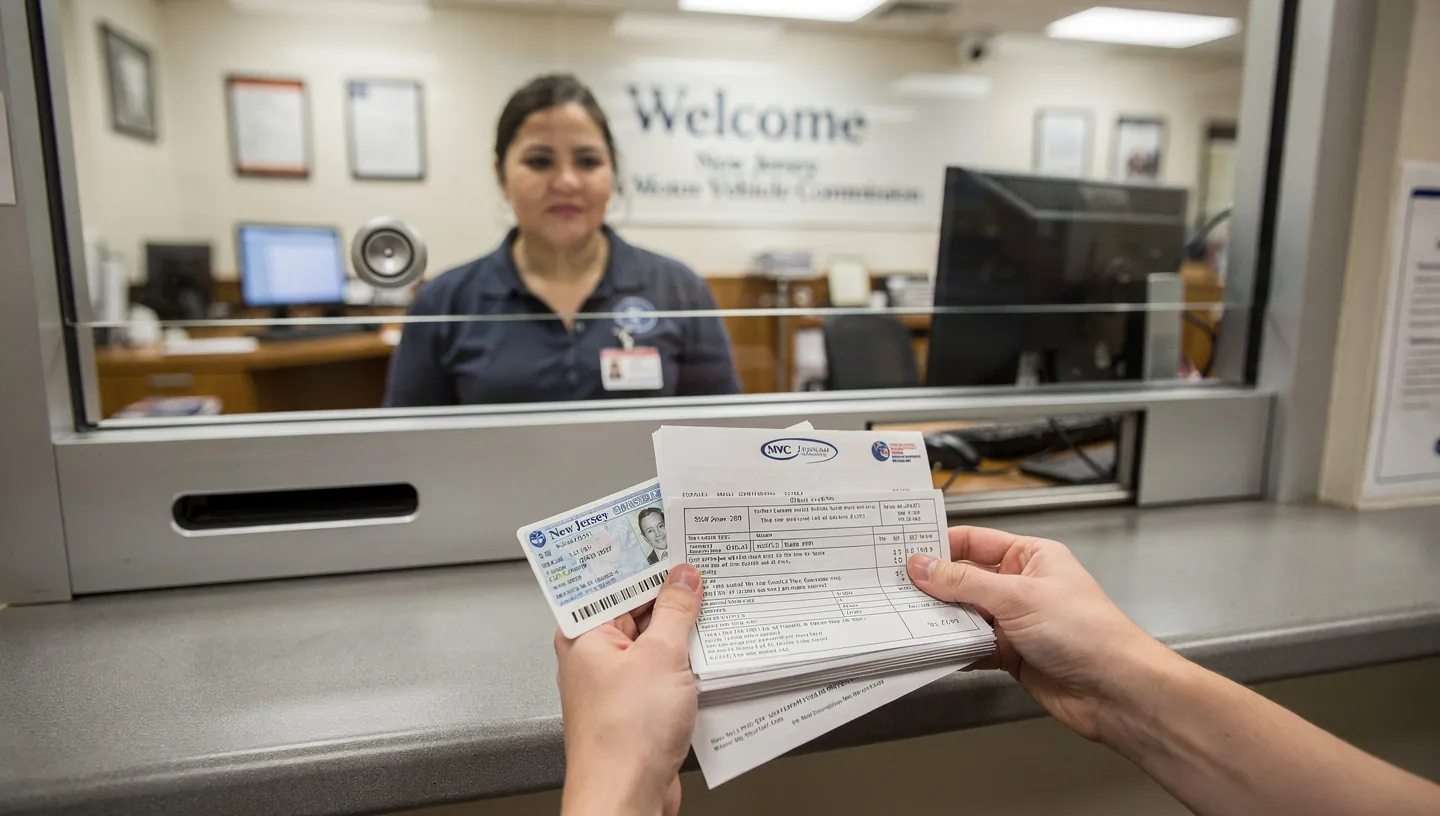
The answer is an unqualified yes: you must have active auto insurance before the New Jersey Motor Vehicle Commission (MVC) will issue or renew your vehicle registration. This is not a formality — it is a firm legal requirement enforced at the counter and verified electronically against insurer databases. Without a valid policy in place, your registration application will be denied on the spot.
What many drivers do not realize is that New Jersey’s insurance requirements are changing. Effective January 1, 2026, new minimum coverage limits mandated by P.L. 2022, c.87 will take effect, raising bodily injury liability thresholds significantly. If your current policy was purchased before these changes were widely communicated, there is a strong chance your coverage will no longer meet the new minimums — which means your renewal could be affected.
New Jersey also offers two distinct types of auto insurance policies: Basic and Standard. Both technically satisfy the registration requirement, but the protections they provide are dramatically different, particularly when it comes to your legal rights after an accident. Understanding this difference before you walk into the MVC can save you from costly surprises down the road.
Before your next MVC visit — whether for a new registration or a renewal — take a few minutes to review your current policy. The sections below will walk you through every requirement, every document you need, and every penalty you want to avoid.
Key Takeaways
- Active auto insurance is mandatory to register or renew a vehicle in New Jersey — no exceptions.
- Effective January 1, 2026, minimum bodily injury liability limits increase to $35,000 per person / $70,000 per accident under P.L. 2022, c.87.
- New Jersey requires specific coverages: Property Damage Liability, Personal Injury Protection (PIP), and Bodily Injury Liability (mandatory for Standard policies).
- You must present a valid New Jersey Insurance Identification Card — paper or electronic — at the MVC, and it must list the vehicle’s VIN.
- Driving without insurance results in fines between $500 and $1,000, a 3-month license suspension, and points on your driving record.
- Basic policies satisfy registration requirements but severely limit your right to sue for pain and suffering after an accident.
- Any lapse in coverage will block your registration process and must be resolved before the MVC can proceed.
The Short Answer: Is Insurance Mandatory for Registration?
Yes, auto insurance is mandatory for vehicle registration in New Jersey. The NJ Motor Vehicle Commission will not issue or renew a registration without confirmed proof of an active policy. This requirement applies to every vehicle — even those that are rarely or never driven on public roads.
The rationale is straightforward: New Jersey is a no-pay, no-play state, meaning the law is specifically designed to ensure that every registered vehicle on the road carries at least a baseline level of financial responsibility. The MVC enforces this through a combination of document review at the counter and real-time electronic database checks with insurers.
Importantly, the requirement does not distinguish between a daily commuter vehicle and a car parked in a garage. If it needs a registration tag in New Jersey, it needs insurance. The only narrow exception involves properly titled antique vehicles, which operate under separate rules — and even those have insurance requirements specific to their classification.
Verifying Insurance at the MVC
The MVC verifies your insurance in two ways: electronically through the insurer’s database, and manually by reviewing your physical or digital ID card. Even if the system shows your policy as active, you are still required to present your card to the clerk at the counter.
- The MVC has direct access to insurance company databases and can query your policy status in real time.
- Your paper Insurance Identification Card must still be presented — electronic verification supplements but does not replace this step.
- The card must list the Vehicle Identification Number (VIN) of the specific car you are registering. A generic policy card without the VIN is typically insufficient.
- If there is a discrepancy between the database record and your card (for example, a recent policy change not yet updated in the system), the clerk will ask for documentation from your insurer to resolve it.
The 2026 Coverage Increase: What You Need to Know
Starting January 1, 2026, New Jersey’s minimum auto insurance requirements will increase under P.L. 2022, c.87, signed into law in 2022 with a phased implementation timeline. This is one of the most significant changes to NJ minimum auto insurance requirements in decades, and most current policyholders are not yet aware that their existing coverage may fall below the new thresholds.

The law was designed to reflect the dramatic increase in medical costs, vehicle repair expenses, and legal judgments that have occurred since the previous limits were set. For drivers, this means that a policy purchased before 2026 that was once fully compliant may suddenly be out of compliance at renewal if the insurer does not automatically update the coverage limits. You should contact your insurer now to confirm that your policy will be updated before the effective date.
Important: Most competitors and outdated resources still cite the old $25,000/$50,000 bodily injury limits. Those figures are no longer accurate for policies issued or renewed after January 1, 2026. Verify your policy reflects the new minimums before your next MVC visit.
New Bodily Injury Limits ($35k/$70k)
The new minimum bodily injury liability limits are $35,000 per person and $70,000 per accident, up from the previous $25,000 per person and $50,000 per accident. This coverage pays for the medical bills, lost wages, and other damages of people you injure in an accident where you are at fault.
| Coverage Type | Previous Minimum | New Minimum (Jan 1, 2026) |
|---|---|---|
| Bodily Injury Liability (per person) | $25,000 | $35,000 |
| Bodily Injury Liability (per accident) | $50,000 | $70,000 |
| Uninsured/Underinsured Motorist (per person) | $25,000 | $35,000 |
| Uninsured/Underinsured Motorist (per accident) | $50,000 | $70,000 |
| Property Damage Liability | $25,000 | $25,000 (unchanged) |
| Personal Injury Protection (PIP) | $15,000 | $15,000 (unchanged) |
Critically, Uninsured Motorist (UM) and Underinsured Motorist (UIM) coverage must now match the new bodily injury limits. This is a paired requirement — you cannot carry the new $35k/$70k bodily injury limits without also carrying $35k/$70k in UM/UIM. Policies that only update one side of this equation will still be non-compliant. Make sure your insurer updates both simultaneously.
Property Damage and PIP Remain
Not every coverage category is changing. Property Damage Liability remains at a $25,000 minimum, covering damage you cause to another person’s vehicle or property. Personal Injury Protection (PIP) stays at $15,000 per person per accident, which covers your own medical expenses regardless of who was at fault in the collision.
PIP is a uniquely important coverage in New Jersey because the state operates under a no-fault insurance system. This means that after an accident, your own insurer pays for your medical bills first through PIP, regardless of fault. You only step outside the no-fault system to file a claim against the at-fault driver when your injuries meet a certain legal threshold — which is where the Basic vs. Standard policy distinction becomes critical.
Basic vs. Standard Policies: Which One to Choose?
Both Basic and Standard policies satisfy the NJ MVC registration requirement, but they offer fundamentally different levels of protection. The Standard policy is the default and strongly recommended option. The Basic policy is a low-cost alternative designed to meet the letter of the law, but it comes with serious trade-offs that many drivers only discover after an accident.

| Feature | Basic Policy | Standard Policy |
|---|---|---|
| Bodily Injury Liability | Optional ($10k/$10k if added) | Required ($35k/$70k after 2026) |
| Property Damage Liability | $5,000 | $25,000 minimum |
| PIP | $15,000 | $15,000 minimum |
| Uninsured Motorist Coverage | Not included | Required ($35k/$70k after 2026) |
| Right to Sue | Limited (verbal threshold) | Choice of Limited or Unlimited |
The Right to Sue Difference
The most consequential difference between Basic and Standard policies is the Right to Sue for pain and suffering. Basic policy holders are automatically assigned a limited right to sue, which means they can only pursue legal action against an at-fault driver if their injuries meet a strict verbal threshold — defined as permanent injury, significant disfigurement, dismemberment, loss of a fetus, or death.
- Under a Basic policy, if your injuries are serious but don’t meet that legal threshold — such as a severe whiplash, a herniated disc, or a long recovery — you cannot sue for pain and suffering, no matter how significant the impact on your life.
- Under a Standard policy, you choose between a limited right to sue (lower premium) or an unlimited right to sue (higher premium). The unlimited option lets you seek compensation for any injury, regardless of severity.
- This choice must be made at the time of policy purchase. You cannot switch retroactively after an accident occurs.
Why Drivers Are Moving to Standard
The shift away from Basic policies is accelerating as the true cost of accident-related medical care becomes apparent to more drivers. In New Jersey — one of the most expensive states for healthcare and legal services — a single serious accident can generate bills that far exceed what a Basic policy can cover.
The premium difference between Basic and Standard policies is often smaller than drivers expect, sometimes a matter of a few hundred dollars per year. When weighed against the potential out-of-pocket exposure of a major accident, the value proposition of a Standard policy is clear. Insurance industry data consistently shows that drivers who experience significant accidents and hold Basic policies frequently face financial hardship that a Standard policy would have prevented.
Many insurers operating in New Jersey are actively counseling clients to move to Standard coverage, particularly as the 2026 limit increases take effect. If you are currently on a Basic policy, now is the right time to request a quote comparison.
Proof of Insurance: Documents You Must Bring
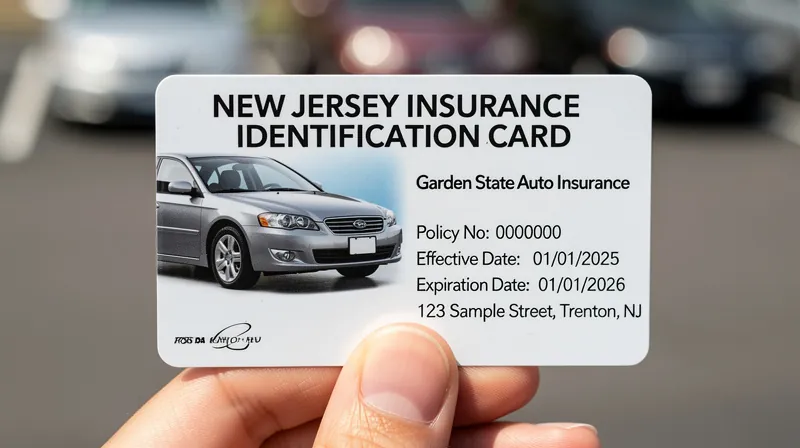
To register a vehicle at the NJ MVC, you must present a valid New Jersey Insurance Identification Card — either printed on paper or displayed digitally on a smartphone or other device. The card must be current, legible, and contain all required identifying information about your specific vehicle and policy.
An expired card — even one that expired only days before your visit — will not be accepted. If your policy recently renewed but you have not yet received the updated card, contact your insurer immediately. Most carriers can issue a same-day electronic version that you can print or display on your phone. Do not assume the clerk can verify renewal dates without a current card in hand.
Requirements for the Insurance ID Card
The New Jersey Insurance Identification Card must include all of the following information to be considered valid at the MVC:
- Policy number — the unique identifier assigned to your specific policy
- Effective and expiration dates — both must be clearly printed and current
- Name and address of the insurer — the licensed NJ carrier underwriting the policy
- Vehicle Identification Number (VIN) — the specific 17-character VIN of the vehicle being registered
- Your name as the named insured on the policy
A card that omits the VIN — such as a generic proof-of-coverage letter — is typically not acceptable as a standalone document. If your card lists multiple vehicles, ensure the VIN for the vehicle you are registering is clearly visible and matches the title or registration document you are presenting.
Electronic ID Cards and MVC
The NJ MVC officially accepts digital Insurance Identification Cards displayed on a smartphone, tablet, or other electronic device. This is now standard practice, and most major insurers offer digital card access through their mobile apps or customer portals.
- Displaying a digital card on your phone is fully acceptable at the MVC counter.
- Print a backup copy before your appointment — phone batteries die, apps malfunction, and service can be unreliable in some MVC locations.
- Even with electronic verification available to the clerk, you are still responsible for presenting the card yourself; the MVC will not retrieve it on your behalf.
- If you are relying on a digital card, make sure the screen does not lock or time out while the clerk is reviewing it.
Penalties for Non-Compliance
Driving without insurance in New Jersey carries severe financial and administrative penalties. The state takes uninsured driving seriously, and enforcement actions are not limited to the moment of a traffic stop — the MVC can flag uninsured vehicles through data matching and initiate suspension proceedings independently of any traffic encounter.
Beyond the immediate fines and license actions, the long-term consequences of driving uninsured extend to your ability to obtain affordable insurance in the future. Insurers in NJ classify a lapse in coverage as a high-risk indicator, which can result in significantly elevated premiums for three to five years after the fact. The penalties are steep in both the short and long term.
Fines and License Suspension
If you are caught driving without insurance — or if the MVC determines that your registration was obtained or maintained without valid coverage — the following penalties apply under New Jersey law:
- Fines of $300 to $1,000 for a first offense (civil penalty for uninsured operation)
- License suspension for up to one year (mandatory minimum of 3 months for first offense)
- Community service may be required in addition to or in lieu of fines
- Points added to your driving record, which affect future insurance rates
- A $250 annual surcharge for three years through the NJ Motor Vehicle Surcharge System (NJSVS)
- Required SR-22 filing (certificate of financial responsibility) upon license reinstatement
Consequences After an Accident
The consequences of being uninsured at the time of an accident are substantially more severe than a routine traffic stop penalty. When an uninsured driver causes an accident in New Jersey, the legal and financial exposure is nearly unlimited.
- Personal financial liability — you pay out-of-pocket for all damages, medical bills, and lost wages of anyone you injure, with no insurer to negotiate or cover costs on your behalf.
- Civil judgments and asset liens — if you cannot pay the damages, the injured party can obtain a court judgment against you, allowing the state to place liens on your personal assets, including your home, bank accounts, and wages.
- Insurance fraud charges — if you presented false documentation to the MVC or a law enforcement officer to appear insured when you were not, you may face criminal charges under NJ’s insurance fraud statutes, which carry penalties of up to 10 years in prison and $150,000 in fines depending on the severity.
What If You Have an Insurance Lapse During Registration?
An insurance lapse — any period during which your vehicle lacks active coverage — will immediately block your registration process at the MVC. The system does not distinguish between a lapse of one day and a lapse of six months; any gap in coverage is treated as a disqualifying condition until it is resolved. You must restore active coverage before the MVC will proceed with your registration.

Lapses happen for a variety of reasons: missed premium payments, policy cancellations due to non-renewal, or administrative errors. Regardless of the cause, the resolution path is the same. Acting quickly is essential because the longer the lapse continues, the higher your risk exposure and the more difficult it may be to find a carrier willing to reinstate or issue a new policy at a standard rate.
The Registration Window
New residents moving to New Jersey have 60 days from their date of residency to register their vehicle with the NJ MVC. This window is a firm deadline — driving with out-of-state plates beyond 60 days is a violation that can result in its own fines and penalties.
- If your insurance lapses during this 60-day registration window, the clock does not pause. The window continues to run even while your coverage is inactive.
- A lapse during the registration window means the MVC will deny your application when you arrive, regardless of how much time remains in the 60-day period.
- You must restore coverage first, then visit the MVC with proof. If the lapse caused you to miss the 60-day deadline, you may face additional late registration fees.
- Out-of-state insurance policies are not accepted for NJ registration purposes. You must have a New Jersey policy in place before you can register.
How to Fix a Lapse
Resolving an insurance lapse before registration is a straightforward process, but it must be completed in the correct order. Following these steps will get you back on track with minimal delay:
- Contact an insurer immediately — call your previous carrier to reinstate if possible, or obtain a new policy from a carrier licensed in NJ. Do not wait. Every additional day of lapse increases your risk and may affect your rates.
- Obtain a new Insurance ID Card — once the policy is active, request an immediate card. Most carriers can email or text a digital card within minutes of binding coverage.
- Gather all required MVC documents — title, valid ID, proof of address, and the new insurance card.
- Visit the MVC — present all documents. If you are past the 60-day new resident window, be prepared to pay a late registration fee in addition to the standard registration costs.
- Document the lapse for your records — keep copies of any communications with your insurer about the lapse and reinstatement. You may need these if the MVC has questions about the gap period.
New Residents and Out-of-State Vehicles
New residents of New Jersey must register their vehicles with the NJ MVC within 60 days of establishing residency. This is a legal requirement, not a suggestion. Driving on out-of-state plates beyond that window constitutes a registration violation, and law enforcement can and does issue citations for it — particularly during routine traffic stops.
The registration process for out-of-state vehicles involves additional steps beyond what a current NJ resident faces. You will need to transfer the title into New Jersey, pass a NJ vehicle inspection (for vehicles not previously registered in NJ), and provide proof of a New Jersey auto insurance policy. Your prior state’s insurance, even if it was valid and active, is not accepted for NJ registration purposes.
Title Transfer and Insurance
The title transfer and insurance requirement must be handled in the correct sequence to avoid delays at the MVC.
- Insurance must be in place before you arrive — you cannot transfer the title or register the vehicle and then purchase insurance afterward. The active NJ policy must exist at the time of your MVC visit.
- Your new NJ insurer will need the vehicle’s VIN, make, model, and year to issue the policy. Have your out-of-state title and registration handy when you call.
- Out-of-state insurance is not accepted for registration purposes in New Jersey, even if it provides equivalent or greater coverage than NJ minimums. A New Jersey-licensed carrier must underwrite the policy.
- If you are purchasing a vehicle from a private seller in another state, arrange your NJ insurance policy before the sale closes and before you drive the vehicle into New Jersey. Driving an unregistered and uninsured vehicle across state lines creates liability exposure in multiple jurisdictions.
Frequently Asked Questions
What do I need to register my car in NJ?
To register a car in New Jersey, you need a valid NJ Insurance Identification Card with an active policy, the vehicle’s title, a completed registration application, valid photo ID, proof of NJ residency, and payment for registration fees. If the vehicle is from out of state, it must also pass a NJ vehicle inspection before the registration can be completed.
Do I need to insure a car before I register it?
Yes, you must insure your car before you can register it in New Jersey. The NJ MVC will not process a registration application — new or renewal — without confirmed proof of an active auto insurance policy. You cannot register first and purchase insurance afterward.
Can you insure a car in NJ that is not registered to you?
Yes, New Jersey does allow you to insure a vehicle not registered in your name, but the circumstances matter. Insurers typically require you to demonstrate an “insurable interest” in the vehicle — meaning you have a financial stake in it, such as being the primary driver or a co-owner. A policy taken out on a vehicle you have no legal connection to may be denied or voided.
How much does it cost to register a vehicle in NJ?
NJ vehicle registration fees are calculated based on the vehicle’s weight and model year. Fees typically range from $35 to $84 for standard passenger vehicles, though larger or heavier vehicles may cost more. Additional fees apply for title transfers, late registration, and emissions inspection. Check the NJ MVC’s current fee schedule for the most precise figures, as fees are periodically adjusted.
What happens if I drive without insurance in New Jersey?
Driving without insurance in New Jersey results in fines of $300 to $1,000, a mandatory license suspension of at least three months, possible community service, and an annual surcharge of $250 for three years through the NJ surcharge system. If you cause an accident while uninsured, you face unlimited personal financial liability for all damages and injuries you cause, and potentially criminal fraud charges if you falsified insurance documentation.
Is there a grace period for car insurance in NJ?
New Jersey does not provide a statutory grace period for uninsured driving. While some insurance policies include a short grace period (often 10 to 30 days) for missed premium payments before the policy is formally cancelled, this is a policy-level provision, not a state law. During any period in which your policy is technically lapsed, even briefly, you are legally uninsured and subject to all applicable penalties.
Can I register a car in NJ with a suspended license?
In most cases, no. A person with a suspended license is generally not permitted to register a vehicle in their name in New Jersey. The MVC links registration and driver records, and an active suspension typically flags the account. There are limited exceptions — such as registering a vehicle for a household member — but these require specific documentation and are reviewed on a case-by-case basis.
Do I need insurance to register a car in NJ if I’m just storing it?
Yes, even a vehicle that is not being driven must carry active insurance to maintain its registration in New Jersey. There is no “storage exemption” for registered vehicles. If you genuinely intend to store a vehicle indefinitely without driving it, the appropriate step is to surrender the registration and plates to the MVC — doing so legally removes the insurance requirement for that vehicle during the storage period.
What is the difference between Basic and Standard auto insurance in NJ?
A Basic policy is a low-cost option with minimal coverage, including PIP and limited property damage liability, but it restricts your right to sue for pain and suffering to only the most catastrophic injuries under the verbal threshold. A Standard policy provides full coverage including bodily injury liability, uninsured motorist coverage, and a choice between limited or unlimited rights to sue. Both satisfy the registration requirement, but Standard policies provide far greater real-world protection.
When do the new 2026 insurance requirements take effect?
The new minimum coverage requirements take effect on January 1, 2026, under P.L. 2022, c.87. As of that date, the minimum bodily injury liability limits increase from $25,000/$50,000 to $35,000/$70,000, and Uninsured/Underinsured Motorist coverage must match those same limits. Policies issued or renewed on or after January 1, 2026 must comply. Contact your insurer before year-end 2025 to confirm your policy will be updated.