
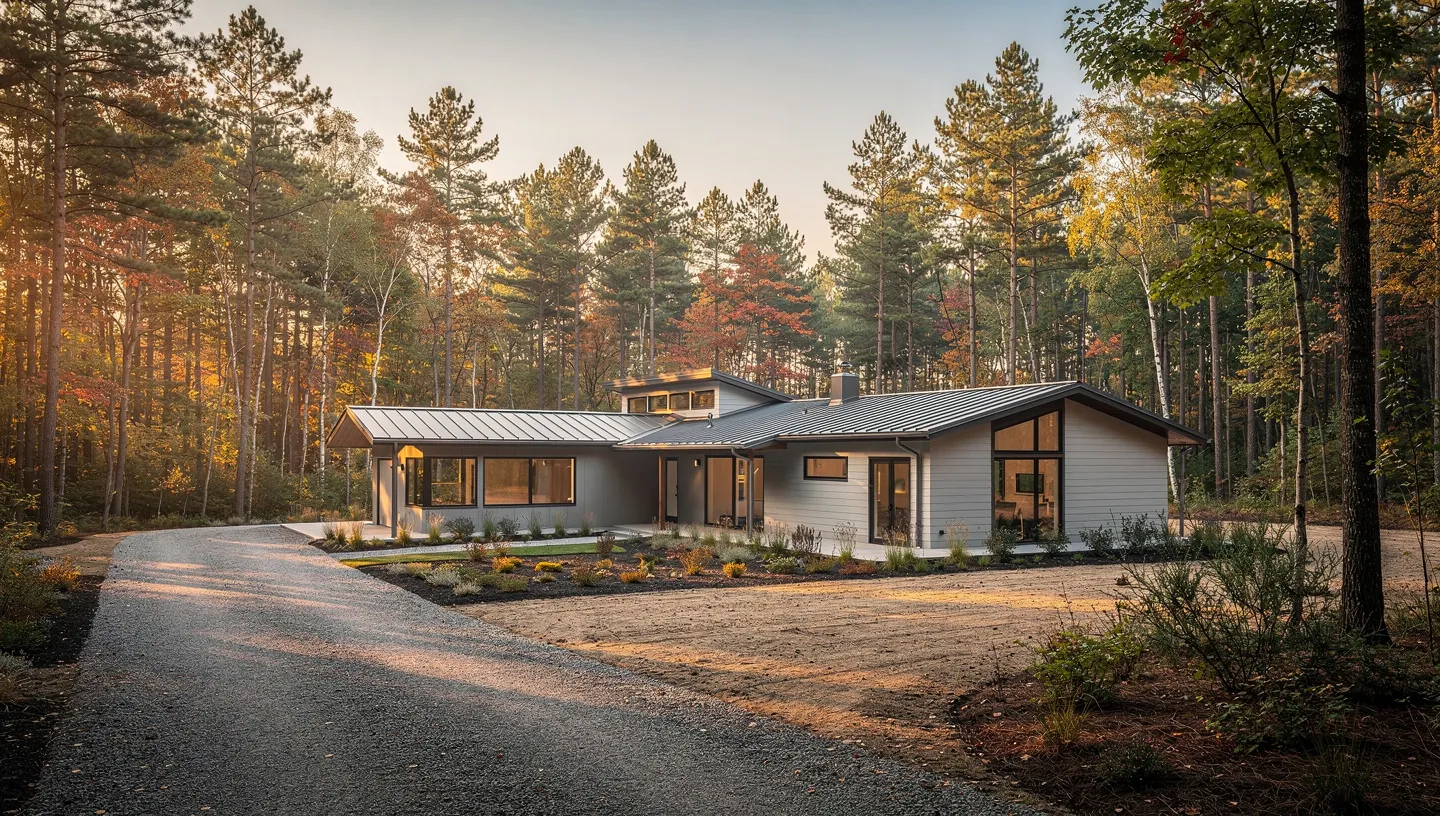
Standard homeowners insurance policies typically include wildfire as a named peril, meaning forest fire damage to your home and belongings is covered under most HO-3 policies. For millions of Americans, this protection is a critical financial lifeline. But the landscape has grown significantly more complicated — and for homeowners in high-risk zones, the rules are changing fast.
Recent wildfire seasons have triggered widespread insurer withdrawals from fire-prone markets, particularly in California, leaving hundreds of thousands of homeowners scrambling for alternatives. A troubling new trend has emerged: homeowners who survive a fire, rebuild to modern fire-safe standards, and still receive non-renewal notices from their carriers. This “rebound risk” is one of the most urgent and under-discussed challenges in homeowners insurance today.
California’s 2026 legislative updates — including SB 1076 and a moratorium banning cancellations in fire zones — are reshaping how insurers handle wildfire claims and policy renewals. Understanding your policy’s covered perils, exclusions, mitigation requirements, and legal protections is no longer optional. It is essential.
Key Takeaways
- Yes, standard policies cover forest fire damage to your structure and belongings as a named peril under a standard HO-3 policy.
- Coverage has important caps and exclusions — debris removal, for example, is typically capped at 10% of your dwelling coverage limit.
- Insurer withdrawals have driven a surge in FAIR Plan enrollment, with enrollment roughly doubling in two years across high-risk California markets.
- A 2026 California moratorium bans cancellations in designated fire zones, and SB 1076 mandates coverage for fire-hardened homes starting in 2028.
- Post-rebuild denial risks are real — upgrading to fire-safe materials does not automatically protect you from future non-renewal.
Does Standard Homeowners Insurance Cover Forest Fires?
Yes — standard homeowners insurance covers forest fires. Most HO-3 policies list wildfire as a named peril, providing wildfire coverage for direct fire damage to your dwelling, attached structures, and personal property. Coverage also typically extends to Additional Living Expenses (ALE) if a fire forces you to temporarily vacate your home.
The details, however, matter enormously. Deductibles for fire claims can be higher than for other perils, especially in designated high-risk zones. Some insurers apply a separate wildfire deductible expressed as a percentage of dwelling coverage — for example, 1–5% rather than a flat dollar amount. On a $500,000 home, a 2% wildfire deductible means you absorb the first $10,000 of loss before your policy responds.
Coverage also means restoring your home to its pre-loss condition, not necessarily one that meets current building codes. If local codes require upgraded materials or structural changes during a rebuild, you will need a separate ordinance or law coverage endorsement — a gap many homeowners discover only after filing a claim.
Structure and Personal Property Coverage
Your dwelling coverage (Coverage A) pays to repair or rebuild the physical structure of your home after a forest fire, up to your policy’s coverage limit. That limit should reflect the full replacement cost value (RCV) — the actual cost to rebuild at today’s labor and material prices, not the market value of your home.
- Replacement Cost Value (RCV): Pays to rebuild or replace with new materials, with no depreciation deducted.
- Actual Cash Value (ACV): Pays the depreciated value of damaged property — often significantly less than what replacement actually costs.
- Scheduled personal property endorsements are necessary for high-value items such as jewelry, fine art, or collectibles, which standard policies cap at low sub-limits.
Underinsurance is a widespread and dangerous problem in wildfire-prone areas. Rebuilding costs have surged due to post-disaster demand, supply chain pressures, and stricter local building codes. Reviewing your dwelling coverage limit annually — ideally with a professional appraisal — is a step many homeowners neglect until it is too late.
Additional Living Expenses (ALE) and Debris Removal
If a wildfire renders your home uninhabitable, ALE coverage (Coverage D) pays for reasonable temporary housing, meals, storage, and other costs above your normal living expenses — until your home is repaired or the ALE limit is exhausted, whichever comes first.
- ALE is typically capped at 20–30% of your dwelling coverage limit, though this varies by policy.
- Debris removal is often capped at 10% of your dwelling coverage — a limit that can fall well short of full lot clearing costs after a major wildfire.
- Smoke damage to personal property is generally covered if it results from a covered wildfire peril, but thorough documentation is essential (addressed in detail below).
A critical step many homeowners overlook: keep every receipt for temporary housing, meals, and displacement-related expenses from day one. Insurers require documentation to reimburse ALE costs, and gaps in records can delay or reduce your payout.
Defensible Space and Home Hardening: Why Mitigation Matters
Defensible space and home hardening are no longer just best practices — they are increasingly formal requirements that directly affect your ability to obtain and keep homeowners insurance in wildfire-prone areas. Insurers now use aerial imagery, satellite data, and third-party risk scores to evaluate your property’s mitigation status before issuing or renewing a policy.

Research consistently shows that homes with adequate defensible space and fire-resistant materials survive wildfires at significantly higher rates. This data directly shapes insurer underwriting decisions. Failing to meet mitigation standards can result in policy non-renewal, higher premiums, or outright denial of coverage — making fire mitigation a financial imperative, not just a safety preference.
The 30–100 Foot Defensible Space Zone
California’s CalFire program and most insurer guidelines divide defensible space into two zones based on distance from the structure:
- Zone 1 (0–30 feet) — the “Lean, Clean, and Green” zone: Remove all dead vegetation, dry leaves, combustible materials, and wood piles. Keep plants closely mowed and well-watered. Non-combustible hardscaping such as gravel or stone pathways is ideal in this zone.
- Zone 2 (30–100 feet) — the “Reduce Fuel” zone: Trim lower tree branches to at least 6–10 feet above ground. Space trees to interrupt canopy continuity and prevent fire from laddering upward. Remove dead branches and dry shrubs throughout this zone.
These zones function as a firebreak — slowing the advance of flames and reducing ember accumulation around the structure. Many insurers now require photographic or third-party verification of defensible space compliance as part of the underwriting process.
Insurer Requirements for Home Hardening
Beyond vegetation management, home hardening involves upgrading the physical materials and construction of the home to resist ember intrusion and direct flame contact. Common insurer requirements include:
- Class-A roofing materials: Asphalt shingles, metal, tile, and concrete all carry the highest fire-resistance rating. Wood shakes are typically disqualifying in high-risk areas.
- Ember-resistant vents: Standard attic and eave vents allow embers to enter and ignite interior spaces. Fine-mesh ember-resistant replacements significantly reduce this risk.
- Fire-resistant siding and decking: Cement board, stucco, and fiber cement siding are preferred. Wood decking should be replaced with composite or masonry materials where possible.
- Sealed eaves and soffits: Enclosed eaves prevent ember accumulation at the roof-to-wall junction — one of the most vulnerable areas of any home.
California’s “Safer from Wildfires” program defines a tiered standard for home hardening that is directly referenced in SB 1076. Achieving compliance with this program is the benchmark most California insurers now use when evaluating homes for forest fire protection and coverage eligibility.
The Post-Rebuild Crisis: When Coverage Disappears After a Successful Claim
One of the most alarming and underreported trends in wildfire insurance is what happens after homeowners survive a fire, file a successful claim, and rebuild to the latest fire-safe standards — only to receive a non-renewal notice. This “rebound risk” is trapping a growing number of survivors in the FAIR Plan, California’s insurer of last resort, despite having done everything right.

The dynamic is this: while a homeowner may have invested tens of thousands of dollars in fire-safe materials and hardened landscaping, insurers are increasingly weighting location risk above individual home characteristics. A fully hardened home in a repeatedly burned zone may still be deemed uninsurable by private carriers — not because of anything the homeowner did wrong, but because the surrounding landscape remains a persistent hazard.
Understanding the ‘Rebound Risk’
The 2025 Eaton and Palisades fires brought rebound risk into sharp focus. Thousands of homeowners began rebuilding with Class-A metal roofs, fire-resistant cladding, and upgraded ember protection — only to receive non-renewal notices within months of completing their rebuilds.
- Carriers cited persistent location risk — specifically, the history of repeated burning and the density of wildland-urban interface (WUI) development in these communities.
- Homeowners who met every hardening standard their prior policy required found themselves facing non-renewal regardless of compliance.
- This creates an inequitable dynamic: homeowners bear the full cost of fire mitigation but cannot leverage those investments to secure stable, affordable coverage.
- Industry analysts have described rebound risk as a systemic failure of the private insurance market to price individual risk accurately — when location risk overwhelms home characteristics in the actuarial model, the market effectively stops functioning for an entire class of homeowners.
Navigating the FAIR Plan as a Rebuilder
The California FAIR Plan is the state’s assigned-risk pool, designed as coverage of last resort for homeowners who cannot obtain insurance in the private market. Enrollment has roughly doubled in two years, driven almost entirely by insurer withdrawals from wildfire-prone markets. Rebuilders who end up on the FAIR Plan face several significant disadvantages:
- Higher premiums with narrower coverage: FAIR Plan policies typically cost more than comparable private market policies while offering more limited protection — including fewer endorsement options and stricter coverage caps.
- No guaranteed path back to private coverage: There is currently no mechanism guaranteeing a homeowner can return to a private carrier after a rebuild, even one completed to the highest fire-safe standards.
- Financial stability concerns: The scale of recent catastrophic wildfire losses has raised questions about the FAIR Plan’s long-term solvency — concerns that recent legislation is beginning to address (discussed in the next section).
For rebuilders currently relying on the FAIR Plan, pairing the policy with a difference-in-conditions (DIC) policy from a surplus lines carrier is a practical strategy to fill coverage gaps — particularly for liability, water damage, and theft that FAIR Plan policies typically exclude. Consulting an independent broker with WUI expertise is strongly recommended.
2026 Legislative Updates: SB 1076, the Moratorium, and FAIR Plan Reform
California has enacted some of the most significant homeowners insurance legislation in decades in response to the wildfire coverage crisis. Two developments stand out: a moratorium banning non-renewals in designated fire zones through 2026, and SB 1076 — a landmark law requiring insurers to cover homes meeting fire-hardening standards starting in 2028. Together, these laws represent a fundamental shift in the relationship between the state, insurers, and homeowners in high-risk zones.

These protections are not automatic. Homeowners must understand what each law covers, when it takes effect, and what compliance requirements apply. Knowing your rights under these statutes can be the difference between maintaining stable coverage and being pushed into the FAIR Plan.
The SB 1076 Mandate for Fire-Safe Homes
Starting January 1, 2028, SB 1076 prohibits California insurers from denying or non-renewing coverage solely because a home is located in a fire-risk area, provided the home meets specified hardening standards. This is arguably the most consequential wildfire insurance law enacted in California in a generation.
- Compliance standard: Eligibility is tied to the “Safer from Wildfires” program administered by CalFire and the California Department of Insurance, establishing a clear, tiered benchmark for home hardening.
- Enforcement penalty: Insurers that violate the mandate face a five-year ban from the California insurance market — a significant deterrent designed to ensure compliance.
- Applicability: The law applies to admitted carriers operating in California; surplus lines carriers are not subject to the same mandate.
- What it does not do: SB 1076 does not cap premiums or guarantee affordable rates — it guarantees only that a compliant home cannot be rejected on location risk alone.
For homeowners planning rebuilds or mitigation upgrades, aligning hardening projects with “Safer from Wildfires” tier requirements now — before 2028 — positions you to invoke SB 1076 protections as soon as they take effect.
The 2026 Moratorium and FAIR Plan Reform
Following the 2025 Eaton and Palisades fires, California implemented a one-year moratorium prohibiting insurers from canceling or non-renewing policies for properties in the affected fire zones. This moratorium extends through 2026 and protects both damaged and undamaged properties within the designated disaster areas.
- Scope: Any home within declared disaster area boundaries — even one that sustained no fire damage — is protected from cancellation or non-renewal during the moratorium period.
- Insurer obligations: Carriers must continue existing policies at existing terms and cannot use the wildfire event as a trigger for mid-term cancellation.
- FAIR Plan financial reform: Concurrent legislation addresses the FAIR Plan’s financial structure, including provisions to ensure the plan can meet its obligations after catastrophic loss years and improve its capacity to function as a genuine safety net rather than a nominal one.
- Transparency requirements: New laws require insurers to provide homeowners with clearer disclosure of the specific risk factors driving underwriting decisions — giving homeowners a concrete basis for understanding and addressing a non-renewal.
The moratorium is a temporary protection — it does not resolve the underlying market withdrawal dynamic. Homeowners in fire zones should use the moratorium period strategically: complete hardening upgrades, document compliance with “Safer from Wildfires” standards, and evaluate private market and surplus lines options before the moratorium expires.
Wildfire Policy Exclusions and Smoke Damage Claims
Understanding what your wildfire policy does not cover is as important as knowing what it does. Homeowners in fire-prone areas consistently report being surprised by exclusions at claim time — particularly around landscaping, earth movement, and smoke damage. Identifying these gaps before a loss allows you to purchase targeted endorsements or adjust your documentation strategy in advance.

Smoke damage has become a significant point of legal and regulatory contention. Following major wildfire events, insurers have faced litigation and regulatory scrutiny over the speed, accuracy, and adequacy of smoke damage assessments. Understanding how your policy handles smoke — and how to document it correctly — is increasingly critical even for homes that never face direct flame contact.
Common Exclusions in Wildfire Policies
Even a comprehensive HO-3 policy with wildfire coverage will contain insurance exclusions that can significantly affect your total recovery. The most important exclusions to know:
- Landscaping, trees, and plants: Most standard policies exclude or severely cap coverage for outdoor vegetation. Replacing mature trees and professional landscaping after a wildfire is typically an out-of-pocket expense.
- Earth movement: Wildfires destabilize hillside soil, and post-fire landslides and debris flows are a well-documented secondary hazard. Earth movement is excluded from standard homeowners policies — a separate policy or endorsement is required for this exposure.
- Negligence-related damage: If an insurer can demonstrate that a homeowner’s failure to maintain defensible space contributed to the severity of the loss, the claim can be partially or fully denied.
- Ordinance or law upgrades: Rebuilding to current code often requires upgrades beyond the pre-loss condition. Standard policies do not cover this additional cost — ordinance or law coverage must be added as an endorsement.
- Vehicles: Cars, boats, and recreational vehicles on your property are not covered under homeowners insurance; auto and specialty policies apply.
Reviewing your policy’s exclusions with a licensed broker or public adjuster before a loss — not after — is the most reliable way to identify and close coverage gaps. An annual policy review is especially important in markets experiencing rapid underwriting changes.
Smoke Damage Claims: Recent Developments
Wildfire smoke can affect homes miles from the fire perimeter, depositing fine particulate matter, ash, and toxic residue on surfaces, in HVAC systems, and throughout personal property. Despite this, smoke damage insurance claims have historically been among the most contested in wildfire scenarios. Recent major fires have brought several concerning patterns to light:
- Rapid initial denials: Some insurers have denied smoke damage claims quickly, citing the absence of visible structural damage, without conducting thorough interior assessments.
- Inadequate testing protocols: Effective smoke damage assessment requires air quality testing and surface sampling, not just visual inspection. Homeowners have successfully reversed initial denials by obtaining independent industrial hygienist reports.
- Sub-limit surprises: Some policies contain a smoke damage sub-limit on personal property that is separate from — and lower than — the overall personal property limit. Review your policy declarations carefully for this specific cap.
- Documentation is decisive: Photograph every affected room and item, retain air quality test results, and obtain written assessments from qualified remediation professionals before any cleaning begins. Cleaning prior to documentation can severely weaken a claim.
If your smoke damage claim is denied or underpaid, you have the right to invoke the appraisal provision in your policy, allowing each party to appoint an independent appraiser to resolve the dispute. Engaging a public adjuster with wildfire and smoke damage experience early in the process can substantially improve claim outcomes.
Frequently Asked Questions
Does home insurance cover wildfires?
Yes. Standard homeowners insurance covers wildfire damage to your dwelling and personal property, as wildfire is a named peril in most HO-3 policies. Coverage typically extends to the structure, belongings, and Additional Living Expenses if you must temporarily relocate. Coverage is subject to your policy’s deductibles, limits, and exclusions, so reviewing your specific policy terms is essential.
How much would fire insurance pay out on a $250,000 house?
If your home is insured for $250,000 at Replacement Cost Value, your policy would pay up to $250,000 to rebuild the structure, minus your deductible. The actual payout depends on your deductible amount (which may be a flat dollar figure or a percentage of your coverage limit), whether your coverage limit accurately reflects current rebuilding costs, and any applicable exclusions. Homeowners who are underinsured — meaning their coverage limit is below actual rebuild costs — may receive a payout that does not fully cover reconstruction.
Why would insurance not cover a house fire?
Insurance can deny a fire claim for several reasons: evidence of arson or intentional damage, negligence such as failure to maintain defensible space, misrepresentation on the policy application, a lapsed policy at the time of the fire, or damage originating from an excluded cause. Understanding your policy’s exclusions and maintaining your property to insurer standards is the most effective protection against a denied claim.
What should I do if I lost everything in a house fire?
Contact your insurance company immediately to open a claim — your policy’s filing clock may start from the date of the event. Secure temporary housing using your ALE coverage and begin documenting lost items using receipts, credit card statements, photographs, and social media as supporting evidence. Contact local emergency management or a nonprofit disaster relief organization for immediate assistance, and consider hiring a public adjuster to advocate on your behalf throughout the claims process.
What is the FAIR Plan and do I qualify?
The California FAIR (Fair Access to Insurance Requirements) Plan is a state-mandated assigned-risk pool providing basic fire insurance to homeowners who cannot obtain coverage in the private market. You qualify if at least one admitted carrier has declined to cover your property and your home meets basic condition standards. FAIR Plan policies typically cost more and offer more limited protection than private insurance — they are best used as a last resort or as a bridge while transitioning back to a private carrier.
Will my insurance be canceled if I rebuild fire-safe?
Rebuilding to fire-safe standards does not currently guarantee that your private carrier will renew your policy. This is the “rebound risk” phenomenon documented after the 2025 Eaton and Palisades fires, where carriers cited persistent location risk as grounds for non-renewal even for fully hardened homes. However, California’s SB 1076, effective January 1, 2028, will prohibit carriers from denying coverage to homes meeting “Safer from Wildfires” hardening standards, providing a legal avenue for affected homeowners going forward.
How does the new SB 1076 law affect me?
SB 1076 is a California law that, starting January 1, 2028, prohibits insurers from refusing to cover or non-renewing a home solely because of its location in a fire-risk area, provided the home meets the state’s hardening standards under the “Safer from Wildfires” program. Carriers that violate this mandate face a five-year ban from the California market. The most actionable step you can take now is to begin aligning home hardening projects with “Safer from Wildfires” tier requirements so you are positioned to invoke these protections when they take effect.
Does smoke damage from a wildfire ruin my furniture?
Wildfire smoke can cause serious and lasting damage to furniture by depositing fine particulate matter, soot, and toxic compounds that penetrate porous materials such as fabric, wood, and foam. Whether smoke-damaged furniture is restorable depends on the severity of exposure, the materials involved, and the speed of professional remediation — delays allow residue to set more deeply. Your homeowners insurance personal property coverage typically covers smoke damage from a covered wildfire peril, but document all damage thoroughly before attempting any cleaning.
What is defensible space and why is it important?
Defensible space is a buffer zone of cleared and modified vegetation around your home that slows the advance of wildfire and reduces ember accumulation — the primary mechanism by which homes ignite during wildfires. California mandates a 100-foot defensible space for homes in fire-hazard severity zones, divided into an immediate 0–30 foot zone and an extended 30–100 foot zone. Beyond safety, maintaining adequate defensible space is increasingly a prerequisite for obtaining and keeping homeowners insurance in high-risk areas, and failure to comply can be grounds for policy non-renewal.
Can I get insurance if I live in a high-risk zone?
Yes, coverage remains available in high-risk zones, though it has become more limited and expensive. If private admitted carriers decline coverage, the California FAIR Plan is available as a last resort, and surplus lines carriers may offer broader — though more costly — alternatives. Completing home hardening upgrades, maintaining defensible space, and working with an independent broker who specializes in wildfire-prone markets are the most effective strategies for accessing and retaining coverage in a high-risk zone.
What happens if my policy has a high deductible?
A high deductible means you absorb a greater share of the initial loss before your insurance coverage activates, directly reducing your net claim payout. In wildfire-prone areas, many policies now apply a separate wildfire deductible expressed as a percentage of dwelling coverage — on a $500,000 home with a 2% wildfire deductible, you would pay the first $10,000 out of pocket. Reviewing your deductible structure annually and maintaining an emergency fund sufficient to cover it is a sound financial practice for homeowners in high-risk zones.
Does homeowners insurance cover the cost of clearing debris?
Yes, most standard homeowners policies include debris removal coverage, but it is typically capped at 10% of your dwelling coverage limit. After a major wildfire, full lot clearing can cost $50,000 or more for a standard residential lot — which means the 10% cap may be insufficient. Some insurers offer extended debris removal endorsements, and in declared disaster areas, government-funded debris removal programs may also be available to supplement your insurance payout.