
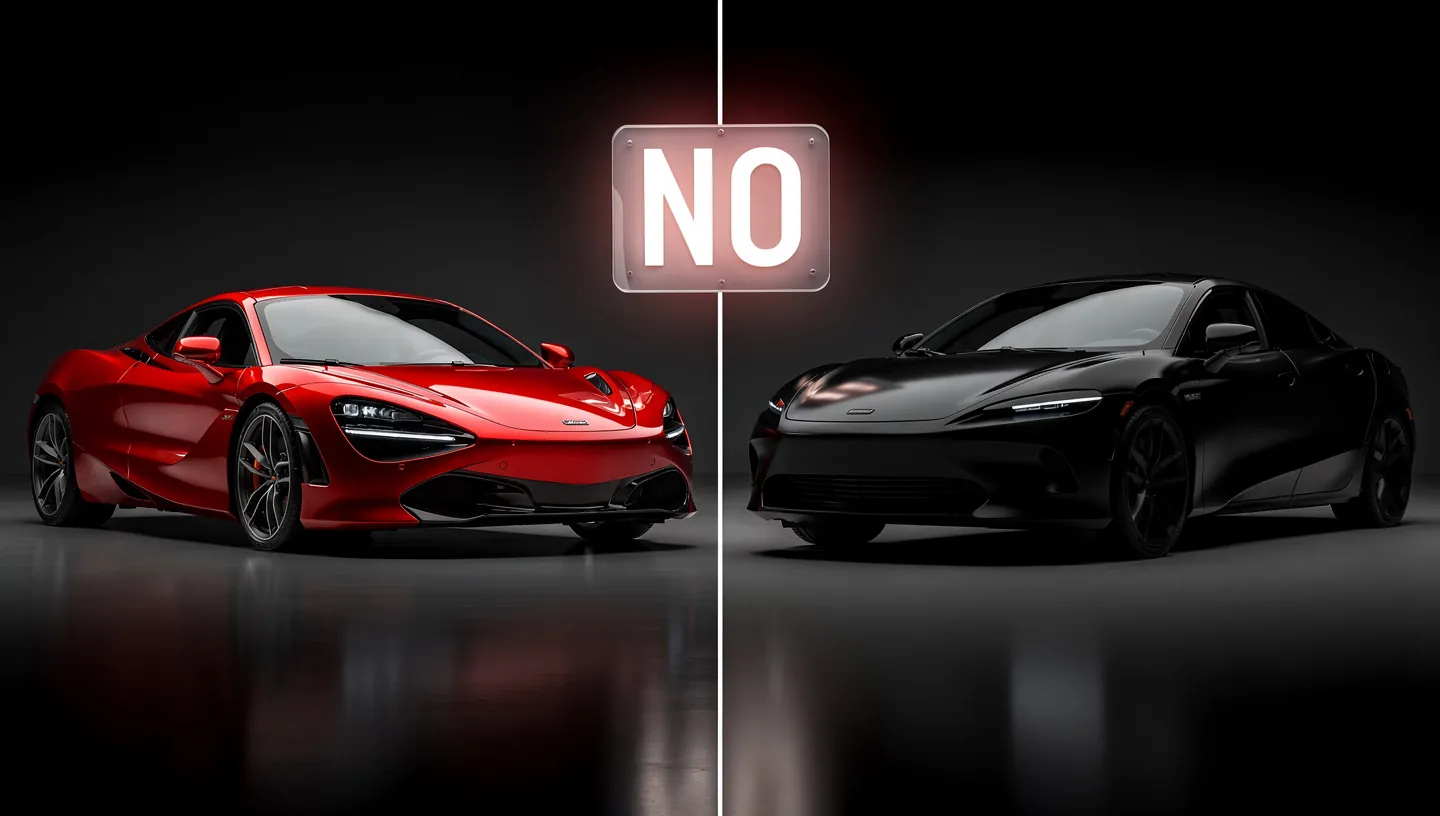
If you’ve ever hesitated before buying a red car because you feared a higher insurance bill, you’re not alone — but you’ve been misled. Car color does not directly affect auto insurance premiums. It’s one of the most enduring myths in personal finance, and it costs drivers real money by distracting them from the factors that actually matter.
A 2023 survey found that 44% of Americans aged 18–29 believe red cars cost more to insure, a statistic that reveals just how deeply this misconception runs. The truth is that when you call for car insurance quotes, no agent asks what color your vehicle is. The entire quoting system is built around objective, actuarial data — and paint simply isn’t part of the equation.
Insurers rely on hard data: your Vehicle Identification Number (VIN), your driving record, your ZIP code, and your vehicle’s safety features and theft rates. None of those data points include the factory color that rolled off the assembly line. Understanding this distinction can save you from making financially irrational decisions when shopping for your next vehicle.
There are two narrow exceptions worth knowing: custom paint jobs and aftermarket modifications can affect what you pay — not because of the color itself, but because of increased repair costs and the need for specialized coverage. We’ll break all of this down in detail below, so you can focus your energy on the choices that genuinely move the needle on your premiums.
Key Takeaways
- Car color is not a factor in determining insurance premiums — no insurer asks for it during the quoting process.
- Insurers use the Vehicle Identification Number (VIN) to assess risk, pulling crash test ratings, model-specific theft rates, and safety data — none of which include paint color.
- Custom paint jobs and aftermarket modifications can increase rates, but only because of higher repair costs — not because of the color chosen.
- Popular colors like black and white may slightly inflate a vehicle’s sticker price due to dealer demand, but this has no measurable impact on insurance premiums.
- The “cheapest color to insure” is a myth — focus on safety features, anti-theft devices, and maintaining a clean driving record to actually lower your rates.
The Red Car Myth: Debunking the Most Common Insurance Legend
The red car insurance myth is false. Insurance companies do not charge higher premiums for red vehicles. When you request a car insurance quote, carriers collect your name, address, driving history, and VIN — color is never entered into the system, and no pricing algorithm references paint in any form.

The persistence of this myth is remarkable given how easily it can be disproven. Call any major insurer — GEICO, State Farm, Progressive — and try to add your car’s color to the policy. You’ll find there’s no field for it. The entire infrastructure of auto insurance underwriting is designed around measurable, statistical risk factors, and color simply doesn’t survive that scrutiny.
Origins of the Red Car Superstition
The myth most likely originated from a legitimate correlation that was misread as causation. Red has historically been the color of choice for high-performance sports cars — think Ferrari, Dodge Viper, and countless muscle cars of the 1960s and 70s. These vehicles genuinely did cost more to insure, but because of their powerful engines, higher speeds, and expensive repair costs, not their paint.
Over decades, the association calcified into a folk belief: red car equals fast car equals reckless driver equals higher insurance. The logic sounds plausible on the surface, which is exactly why myths like this survive. Police anecdotal evidence, when systematically analyzed, does not support the idea that red cars are pulled over more frequently than vehicles of other colors. What officers are responding to is driver behavior, not paint.
Insurance companies, meanwhile, use statistical models built on millions of data points. These models account for gender, age, credit score (in states where it’s legal), driving history, and vehicle-specific loss data. Not a single actuarial table in standard underwriting references the exterior color of a vehicle.
Why the Myth Persists
Myths survive when they feel intuitively true and are repeatedly reinforced. Psychological availability bias plays a major role here — we notice the red sports car getting pulled over on the highway more readily than the silver sedan, because red demands attention by design. That memorable moment gets filed away as evidence for a pattern that doesn’t statistically exist.
Social media has amplified the problem. Articles asking “does car color affect insurance?” often hedge their answers or bury the truth beneath caveats, leaving readers with the vague impression that color must matter somehow. Misinterpretation of risk groups compounds this: young males are statistically more likely to drive aggressively and to purchase red performance vehicles — but insurers are pricing the driver profile, not the paint.
Hollywood hasn’t helped either. Decades of film and television have portrayed red cars as the vehicle of choice for villains, speeders, and thrill-seekers. That cultural imprint shapes consumer psychology in ways that outlast any factual correction. The myth, in short, is stickier than the truth — which makes articles like this one genuinely necessary.
What Actually Determines Your Auto Insurance Premiums?
Auto insurance premiums are determined by your driving record, the vehicle’s make and model, your location, your age, and your credit history. In 2026, the average American pays between $2,256 and $2,290 annually for full coverage — a figure shaped entirely by these measurable risk variables, with color playing no role whatsoever.
Understanding what genuinely moves your premium is the most actionable thing you can do as a consumer. Paint is out of your control anyway — but your driving record, your choice of vehicle model, and the safety features you select absolutely are. Here are the primary factors underwriters evaluate:
- Driving record: Accidents, DUIs, and speeding tickets are among the most significant premium drivers.
- Vehicle make and model: A Honda CR-V and a Dodge Challenger of identical colors will have very different insurance costs.
- Location: Urban ZIP codes with higher theft rates and accident frequencies generate higher premiums.
- Age and experience: Teen drivers pay dramatically more than experienced adults.
- Credit score: In most states, a lower credit score correlates with higher claims frequency and thus higher rates.
- Coverage level: Comprehensive, collision, and liability limits all directly adjust your premium.
- Annual mileage: Higher mileage means more exposure to risk.
The Role of the VIN
The Vehicle Identification Number is the single most important data point in auto insurance underwriting. This 17-character code encodes a vehicle’s make, model, model year, country of origin, engine type, and manufacturing sequence — giving insurers a precise picture of the exact car being insured without relying on self-reported information.
Critically, color is not encoded anywhere in the VIN. The National Highway Traffic Safety Administration (NHTSA) standardizes VIN structures across all manufacturers, and paint color has never been part of that specification. This means that even if an insurer wanted to factor in color, their primary data source makes it structurally impossible for automated systems to do so at scale.
When an insurer pulls your VIN, they instantly access:
- NHTSA crash test ratings specific to that vehicle trim level
- Insurance Institute for Highway Safety (IIHS) safety scores
- Historical theft rates for that make and model
- Average repair costs based on claims data from identical vehicles
- Recall history that might indicate systemic reliability issues
This is a data ecosystem built on objective, actuarially validated information. Paint color — a purely aesthetic attribute with no bearing on crash physics or repair complexity for standard finishes — simply has no place in that framework.
Safety Features and Theft Rates
Vehicles equipped with advanced safety systems consistently receive lower insurance risk ratings, which translate directly into lower premiums. Modern Advanced Driver Assistance Systems (ADAS) — including automatic emergency braking, lane departure warnings, and adaptive cruise control — have measurably reduced accident frequencies in models that carry them.
On the flip side, high-theft models drive up comprehensive coverage costs regardless of their color. The Hyundai Elantra and Kia Soul, for example, experienced dramatic spikes in theft claims in recent years due to a viral social media challenge exploiting a keyless ignition vulnerability. Every color of those vehicles saw premium increases — because the risk was model-specific, not paint-specific.
The most effective actions you can take to lower your premiums through security and safety:
- Install a GPS tracking device — many insurers offer discounts of 5–15% for verified anti-theft systems.
- Choose a vehicle with a top IIHS safety rating — “Top Safety Pick+” vehicles often qualify for rate discounts.
- Add a steering wheel club or alarm — visible deterrents reduce theft probability and can lower comprehensive rates.
- Opt into telematics programs (like Progressive’s Snapshot or Allstate’s Drivewise) that reward safe driving behavior with real-time discounts.
Custom Paint and Aftermarket Modifications
Custom paint jobs are the one scenario where color-adjacent decisions genuinely affect your insurance — not because of the hue, but because of the increased cost to repair or replicate specialty finishes. Standard auto policies are written to cover your vehicle as it was manufactured. The moment you deviate from factory specifications, you enter territory that requires additional coverage.
This is the nuance that most discussions of car color and insurance overlook entirely. A factory red car? No premium impact. A custom pearl-white metallic respray with hand-painted pinstriping? That’s a different conversation entirely — and it’s one you need to have with your insurer before you pay the body shop.
Understanding CPE Coverage Limits
Custom Parts and Equipment (CPE) coverage is the policy endorsement specifically designed to protect aftermarket modifications, including custom paint jobs. Without it, your standard collision or comprehensive claim will only reimburse you for the factory-standard equivalent — meaning a $12,000 custom paint job could be covered for exactly $0 beyond what a basic respray would cost.
Here’s how CPE coverage typically works in practice:
- Standard policy limits: Most base policies cap aftermarket parts coverage at around $1,000–$5,000. Some policies offer no CPE coverage at all without a specific endorsement.
- Supplemental CPE endorsements: You can purchase additional coverage to raise these limits. For high-end custom paint valued at $10,000–$20,000, expect to provide documentation including photos, receipts, and an independent appraisal.
- The claims process diverges significantly: A standard factory paint claim is automatic — your insurer knows the OEM cost per panel from historical data. A custom paint claim requires an adjuster to assess the work, potentially hire a specialist appraiser, and validate your documentation before any payment is issued.
- Declared vs. undeclared modifications: If you fail to disclose a custom paint job and later file a claim, your insurer can legally limit payment to factory replacement value — leaving you to absorb thousands of dollars in the difference.
The practical advice is simple: always declare custom paint before the policy renews, document everything with dated photographs and itemized receipts, and confirm in writing that your CPE limits are sufficient to cover the full replacement cost of the modification.
Impact of Vinyl Wraps and Exotic Finishes
Vinyl wraps present a unique insurance challenge because they are simultaneously less expensive than custom paint and more complex to insure properly. A full vehicle wrap can cost between $2,500 and $7,000 — far below a high-end custom paint job — but it still represents an aftermarket modification that standard policies typically don’t automatically cover.
From an insurance perspective, wraps and exotic finishes introduce several complications:
- Color-change wraps alter the vehicle’s appearance from its registered description, which can create complications if the wrap isn’t disclosed to your DMV and insurer simultaneously.
- Matte and satin finishes — whether painted or wrapped — cannot be repaired with touch-up paint the way gloss finishes can. A minor scratch may require replacing an entire panel’s finish, dramatically increasing repair costs.
- Exotic finishes like chrome, color-shifting pigments, or textured coatings require body shop specialists who may not be available in your area, creating both delay and higher labor costs in a claim.
- Insurance companies may classify vehicles with extensive modifications as higher risk overall, which can trigger a rate review beyond just the CPE endorsement cost.
The bottom line: a vinyl wrap is a smart cosmetic investment for many drivers, but it must be accompanied by a call to your insurer. Adding a CPE endorsement for a wrap typically adds only $30–$100 per year to your premium — a tiny cost relative to the protection it provides.
Indirect Effects: Color Demand and Vehicle Value
While color doesn’t affect insurance premiums directly, it does influence what you pay at the dealership — and in very specific scenarios, that purchase price can have a peripheral effect on your coverage decisions. This is the one area where an indirect connection between color and insurance exists, and it’s driven entirely by supply and demand economics, not actuarial risk.
Popular colors — white, black, gray, and silver — dominate global vehicle sales, consistently accounting for over 70% of new vehicle purchases worldwide. This overwhelming demand gives dealers pricing leverage that can inflate the effective transaction price, and that purchase price sets the baseline for certain insurance calculations.
Color Demand and Vehicle Pricing
High-demand colors allow dealerships to charge a premium of approximately 1–3% above MSRP, particularly during periods of tight inventory. A black SUV with an MSRP of $45,000 might realistically sell for $46,000–$46,350 in a competitive market simply because buyers are willing to pay more for the color they want. The inverse is also true: slower-moving colors may be discounted to move inventory.
Here’s where the tenuous insurance connection enters:
- If you finance a vehicle at a higher purchase price, your lender may require higher liability or gap insurance limits to protect their investment — an indirect effect of paying a color premium.
- A higher transaction price doesn’t directly raise your base premium, but it can affect the Actual Cash Value (ACV) calculation your insurer uses for a total loss — at least initially, before depreciation normalizes values across colors.
- Gap insurance becomes slightly more relevant when you overpay for a high-demand color, since the gap between what you owe and what the car is worth depreciates at the same rate regardless of color.
The key insight: the color tax you pay at the dealership is a dealer pricing phenomenon, not an insurance company decision. Your insurer doesn’t know — or care — that you paid $1,200 extra for a midnight black paint option.
Supply and Demand Economics
When a color falls out of fashion, manufacturers discontinue it — and that discontinuation can subtly affect the resale value and ultimately the Actual Cash Value used in total loss settlements. This is the most mathematically real (if still minor) way color can graze insurance outcomes.
Consider what happens when a color is discontinued:
- Resale value can decline for unpopular colors because the pool of interested buyers is smaller. A beige minivan from 2019 may depreciate faster than an identical white version, creating a slightly lower ACV in a total loss claim.
- However, premiums are calculated prospectively, not based on real-time resale values. Your insurer reassesses your vehicle’s value at renewal, not continuously — so short-term color-driven resale fluctuations rarely register in your premium.
- The “color tax” truly lands in your wallet at purchase, not at the insurer’s underwriting desk. Choosing an unfashionable color to save money at the dealership is a legitimate strategy for budget-conscious buyers — but it won’t lower your insurance rate.
Safety and Visibility: The Crash Data Connection
Research does show that darker-colored vehicles are involved in more crashes at dawn and dusk due to reduced visibility — but this safety data does not translate into higher insurance premiums. Insurers price based on the vehicle’s crashworthiness and historical claims data for that model, not on the visibility challenges that particular paint colors present to other drivers.
This creates an important distinction that drivers should understand: a safety reality exists around color and visibility, and a separate financial reality exists around color and insurance. They don’t overlap in the way many people assume, but understanding the safety data can still influence your purchasing decisions for non-financial reasons.
Visibility and Accident Risk
A peer-reviewed study found that black vehicles are approximately 47% more likely to be involved in fatal crashes during dawn and dusk conditions compared to white vehicles. The research, which analyzed crash data across multiple countries, attributes this to the reduced contrast between dark vehicles and low-light road environments — not to any behavioral difference in drivers who choose dark colors.
Additional visibility-related findings from crash research:
- White and yellow vehicles consistently show the lowest involvement rates in low-light crashes, as they provide maximum contrast against road surfaces and surrounding environments.
- Silver and gray vehicles — the two most popular colors in many markets — perform moderately in visibility studies, particularly in rain or fog where gray blends with atmospheric conditions.
- Red vehicles, despite their association with aggression and speed, do not show elevated crash rates relative to their population share in the data.
- The effect is most pronounced at dawn, dusk, and in adverse weather — conditions where artificial lighting hasn’t yet compensated for the loss of natural light.
This data matters for your personal safety calculus, even if it doesn’t affect your premium calculation.
Does Visibility Affect Premiums?
No — insurance companies do not factor a vehicle’s color-related visibility into risk assessments or premium calculations. If this seems counterintuitive given the crash data above, the explanation lies in how insurers categorize risk: they price based on the vehicle’s ability to protect its occupants in a crash (crash test ratings) and historical loss frequency for that specific model — not on crash initiation factors like visibility.
From an insurer’s underwriting perspective, visibility is the driver’s responsibility. The features that genuinely reduce insurance risk are engineering solutions, not paint choices:
- LED or adaptive headlights: These dramatically improve both the driver’s visibility and the vehicle’s visibility to others — and vehicles equipped with them may receive lower risk ratings.
- Automatic high beams: A feature that reduces the manual burden on drivers in low-light conditions, reducing distraction-related risk.
- Dash cameras: While they don’t lower premiums in most U.S. markets, they provide invaluable evidence in disputed claims that can prevent rate increases from at-fault determinations.
- Collision avoidance systems: These directly address the reaction-time problem that underlies many visibility-related crashes and are valued by insurers.
The takeaway: choose a lighter color if visibility safety is a personal priority. But don’t expect your premium to reflect that choice — the insurance industry hasn’t yet built color-based risk adjustments into standard underwriting models, and there’s no indication they plan to.
Frequently Asked Questions
Does car color matter to insurance?
No, car color does not matter to insurance companies when calculating premiums. Insurers do not ask for color during the quoting process, and no standard underwriting algorithm factors paint into premium calculations. The only color-adjacent exception is custom paint jobs, which can affect coverage costs due to increased repair expenses — not the hue itself.
What color vehicles have the highest insurance?
No vehicle color results in higher insurance premiums — this is a myth. A red Ferrari and a blue Ferrari of the same trim level will cost exactly the same to insure from a color standpoint. What actually creates higher premiums is the vehicle’s make, model, engine size, safety rating, and theft history — factors that may correlate with certain color choices (sports cars are often red) but are entirely independent of paint.
Do I have to tell insurance if I paint my car?
Yes, you should notify your insurer if you repaint your car with a custom finish, exotic coating, or non-factory color change. Standard policies cover vehicles as manufactured, and a custom paint job is considered an aftermarket modification requiring CPE (Custom Parts and Equipment) coverage to be fully protected. Failing to declare it means your claim may only be paid at factory-standard paint replacement value, leaving you responsible for the premium cost difference.
What color car gets stolen the least?
Theft rates are driven by vehicle make and model — not color. High-theft vehicles like certain Hyundai and Kia models see elevated theft rates across all colors, not just one specific shade. That said, some research suggests that unusual or unpopular colors may be slightly less attractive to thieves because they are harder to resell or disguise — but this effect is marginal compared to anti-theft technology.
What is the cheapest color to insure?
There is no “cheapest color to insure” because color is not a variable in insurance pricing. This is one of the most common misconceptions in auto finance. If you want to lower your insurance rate, focus on maintaining a clean driving record, choosing a vehicle with top safety ratings, installing anti-theft devices, and bundling your policies — all of which create measurable, documented premium reductions.
Why do insurance companies use the VIN instead of color?
Insurance companies use the VIN because it encodes objective, actuarially relevant data about the vehicle that color simply cannot provide. The 17-character VIN contains the make, model, year, engine type, and manufacturing plant — data that connects to crash test databases, historical theft records, and repair cost archives. Color is an aesthetic attribute with no bearing on how a vehicle performs in a collision or how expensive it is to repair under standard factory specifications.
Can a custom paint job increase my deductible?
A custom paint job doesn’t directly increase your deductible, but it can create a coverage gap that functions similarly if you haven’t added CPE coverage. If your deductible is $1,000 and your custom paint job cost $8,000 but your base policy only covers $2,000 in aftermarket parts, you would effectively pay $7,000 out of pocket on a claim — far worse than any deductible increase. Adding a CPE endorsement closes this gap for a relatively modest annual cost.
Do insurance companies track your car color?
No — insurance companies do not track, record, or store your vehicle’s color as part of your policy data in any standard underwriting system. When you register a policy, color is not a required field, and it doesn’t appear on your declarations page. The closest approximation is when an adjuster physically inspects a vehicle for a claim, at which point color is noted for identification purposes only — not for future pricing calculations.
Is it true that red cars get pulled over more often?
No — studies and traffic enforcement data do not support the claim that red cars are pulled over more frequently than other colors. Traffic stops are triggered by observed driver behavior — speed, erratic movement, equipment violations — not vehicle color. The perception that red cars attract police attention is a product of confirmation bias: we simply notice and remember the red car getting stopped more vividly than the gray one.
How does a car’s popularity affect insurance rates?
A car’s popularity affects insurance rates primarily through its theft frequency and repair cost data, both of which are model-specific rather than color-specific. Highly popular models generate large claims datasets, which insurers use to set actuarially precise rates. A model that is popular and frequently stolen will carry higher comprehensive premiums regardless of color; a popular model with excellent safety ratings may actually benefit from lower rates due to its well-documented crash performance. Color-driven popularity affects dealership pricing, not insurance underwriting.