
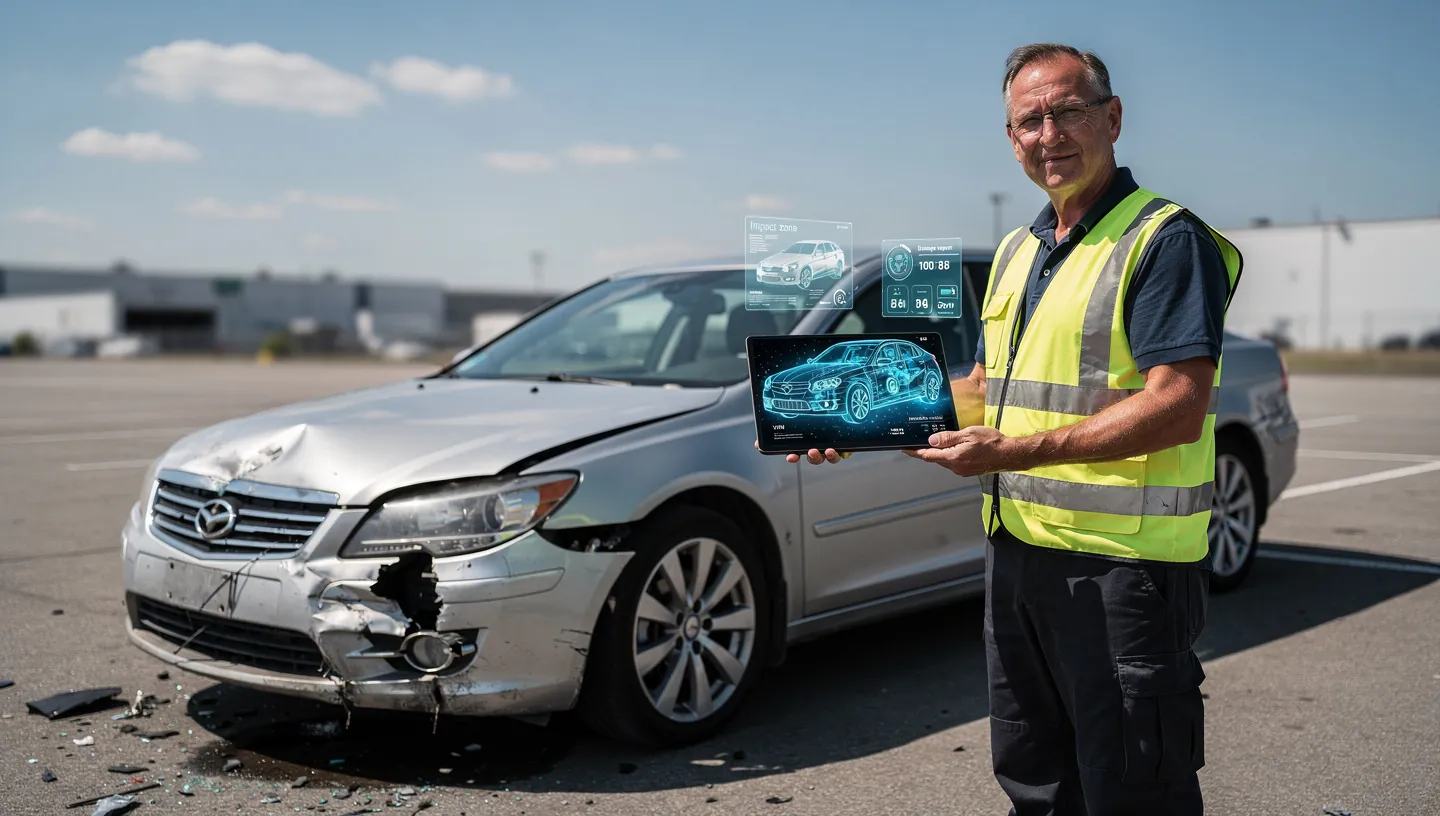
When your car is declared a total loss, you’re suddenly navigating one of the most financially complex situations a driver can face. A totaled car is one where the cost to repair it meets or exceeds its pre-accident value — or crosses a state-mandated percentage threshold. The check you receive isn’t based on what you paid for it, what you still owe on it, or what it would cost to replace it today.
Insurance companies pay out based on Actual Cash Value (ACV) — a calculated figure that accounts for depreciation, mileage, condition, and local market data. This number is generated through a combination of third-party data vendors, AI-driven algorithms, and human adjusters, and it often surprises policyholders who expected more. Understanding exactly how do insurance companies value a totaled car is the single most important thing you can do to protect yourself financially.
The 2025 landscape has added new layers of complexity. Tariffs on imported auto parts are pushing repair costs higher, forcing insurers to declare more vehicles as total losses. Electric vehicles introduce battery valuation challenges that most policyholders — and even some adjusters — aren’t prepared for. This guide breaks down the entire process, from the initial declaration to negotiation strategies, so you can approach the settlement table informed and confident.
Key Takeaways
- A car is totaled when repair costs exceed the vehicle’s Actual Cash Value (ACV) or a specific percentage threshold set by the insurer or state law.
- ACV is determined by fair market value, depreciation, mileage, and local market conditions — not the car’s purchase price or loan balance.
- AI-driven algorithms and third-party valuation tools (such as CCC Information Services) are now the industry standard for calculating ACV.
- The “Depreciation Gap” often leaves owners owing more on a loan than the insurance payout covers.
- You can often buy back a totaled car from the insurer or salvage yard for a reduced price, though it will carry a salvage title.
- Negotiating your settlement requires providing your own comparative market analysis and challenging the adjuster’s condition rating with documented evidence.
- Electric vehicles present unique valuation challenges due to battery health, degradation rates, and complex software diagnostic systems.
What is a Totaled Car and How is it Declared?
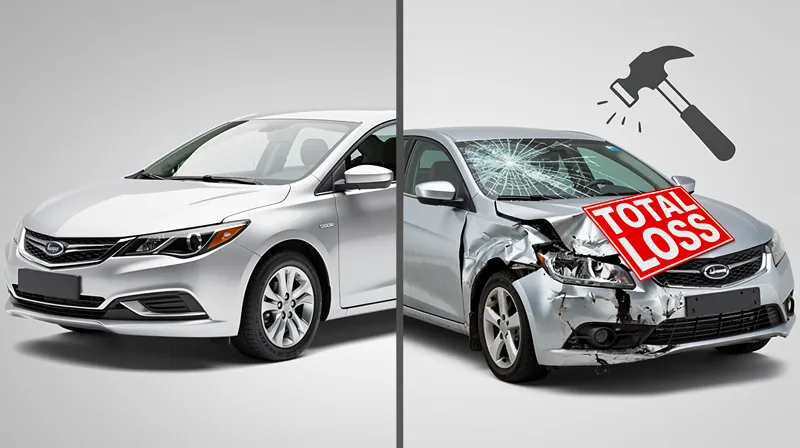
A car is legally and financially declared a total loss when the estimated repair costs reach or exceed its pre-accident market value, or when a state’s specific damage threshold is triggered. At that point, the insurer takes ownership of the vehicle and issues a payment based on ACV minus your deductible. The exact rules that govern this declaration vary significantly by state.
Two primary systems determine whether a car becomes a total loss: the Total Loss Formula and the Percentage Threshold method. Understanding which system your state uses — and how it applies to your specific vehicle — can mean the difference between getting your car repaired and receiving a settlement check.
Total Loss Formulas vs. Percentage Thresholds
The Total Loss Formula (TLF) works like this: if the cost of repairs plus the vehicle’s salvage value equals or exceeds the car’s ACV, the insurer declares it a total loss. For example, if your car has an ACV of $15,000, repair costs are estimated at $10,000, and the salvage value is $5,500 — the sum ($15,500) exceeds the ACV, triggering a total loss declaration even though repairs alone would not.
The Percentage Threshold Rule is more straightforward: if repair costs exceed a fixed percentage of the vehicle’s value, it’s totaled. Here’s how a common example plays out:
- Car ACV: $10,000
- State threshold: 75%
- Repair estimate: $7,600
- Result: $7,600 ÷ $10,000 = 76% — the car is totaled
Salvage value plays a critical role in the TLF calculation. A car with high-demand parts (like a popular truck model) may have a higher salvage value, making it easier for the total loss math to tip over the ACV threshold.
State Regulations and Variations
State regulations on total loss declarations are not uniform, and the differences are meaningful. Some states use the Total Loss Formula while others mandate a percentage-based rule — and the thresholds themselves range from as low as 60% to as high as 100% in some jurisdictions.
- States using the Percentage Threshold: Florida (80%), Texas (100% — actual cash value rule), California (no fixed percentage — uses TLF), and many others set their own limits.
- States using the Total Loss Formula: Illinois, New York, and several others calculate total loss based on the combined repair-plus-salvage comparison.
- Some states allow insurers to use their own internal policies as long as they don’t conflict with state minimums.
Knowing your state’s specific total loss threshold can help you understand whether the insurer’s declaration is valid — and in borderline cases, whether it’s worth commissioning an independent repair estimate to challenge the numbers. Your state’s Department of Insurance website is the most reliable resource for this information.
The Core of Valuation: How Adjusters Calculate ACV

Actual Cash Value is calculated as the vehicle’s fair market value immediately before the accident, accounting for depreciation, mileage, condition, and comparable sales in your local area. It is not the replacement cost of a new vehicle, and it is not based on the outstanding loan balance. The ACV is the cornerstone of every total loss settlement.
Modern insurers don’t calculate ACV by hand. They rely on sophisticated third-party valuation platforms and AI-driven tools that analyze thousands of data points to arrive at a number. Understanding how these systems work — and where they fall short — is essential knowledge for any policyholder preparing to negotiate.
The Role of Third-Party Valuation Tools
The dominant players in the insurance valuation industry are companies like CCC Information Services, Audatex (Solera), and Mitchell International. These platforms pull real-time market data from dealer listings, auction results, and private sales to model what a vehicle like yours would sell for in your local market today.
Here’s what these systems actually do:
- Identify comparable vehicles (same make, model, year, trim, and mileage) recently sold within a defined geographic radius.
- Apply statistical adjustments for condition differences between your car and the comparables.
- Weight auction data, dealer retail prices, and private-party sales to produce an estimated fair market value.
- Generate a formal valuation report that the adjuster presents as the basis for your settlement offer.
The critical issue is the “Black Box” nature of these automated valuations. As a policyholder, you receive a final number — but the proprietary weighting formulas, the specific data sources prioritized, and the exact methodology used to adjust for condition are not fully disclosed. You may be able to request the full comparable sales report, but the algorithmic logic behind the adjustments typically remains opaque. This is a significant information asymmetry that favors the insurer.
Key Metrics: Mileage, Condition, and Location
Four variables have an outsized impact on the ACV your insurer calculates: mileage, condition rating, geographic market, and any modifications or upgrades. Each one can move the final number by hundreds or even thousands of dollars.
Mileage and Depreciation: Vehicles lose value as mileage increases, and the rate of loss is not linear. A car going from 0 to 10,000 miles depreciates faster (as a percentage) than one going from 60,000 to 70,000 miles. Adjusters use a per-mile depreciation schedule — if your mileage is incorrectly entered or reflects pre-accident vs. current odometer readings, it will skew your ACV.
Condition Ratings: Adjusters assign condition categories — typically “excellent,” “good,” “average,” or “poor” — based on a pre-accident assessment of the vehicle. Most insurers default to “average” unless you can prove otherwise. This matters because:
- A vehicle rated “poor” can be valued hundreds of dollars below one rated “average.”
- A rating of “good” or “excellent” — supported by service records, photos, and a clean vehicle history report — can meaningfully increase your payout.
Location: Regional market variations are real and significant. A full-size pickup truck commands a premium in rural Montana compared to urban Los Angeles. If the comparable sales data the insurer uses doesn’t accurately reflect your local market, the ACV will be distorted. Always review the zip codes and distances of the comparable vehicles listed in the valuation report.
Modifications and Upgrades: Aftermarket upgrades — a premium sound system, upgraded wheels, a lift kit, or recently replaced major components — may add value that the automated system doesn’t capture. These must be documented and presented separately to the adjuster.
AI and Machine Learning in Valuation
Today’s valuation platforms don’t just look up prices — they use machine learning models trained on millions of historical vehicle transactions to predict market behavior and adjust for variables at a granular level. This technology has made valuations faster and more consistent, but it has also introduced new types of errors that consumers should understand.
Where AI excels: Pattern recognition across large datasets, real-time pricing adjustments in volatile markets, and identifying comparable vehicles quickly across broad geographic areas.
Where AI falls short:
- It may miss hyper-local market nuances — a vehicle that commands a premium in your specific county may be averaged out against a broader regional dataset.
- It cannot account for unique vehicle features, documented exceptional maintenance history, or rare option packages without human input.
- Algorithmic models trained on historical data may lag in rapidly changing markets — as seen during the supply-chain disruptions of recent years when used car values spiked faster than systems could adapt.
The vehicle adjuster is supposed to review and refine the AI-generated number. In practice, the degree of human review varies by insurer and adjuster workload. A skilled adjuster will catch outliers; an overwhelmed one may simply submit the automated figure.
The 2025 Valuation Landscape: Tariffs, Inflation, and EVs
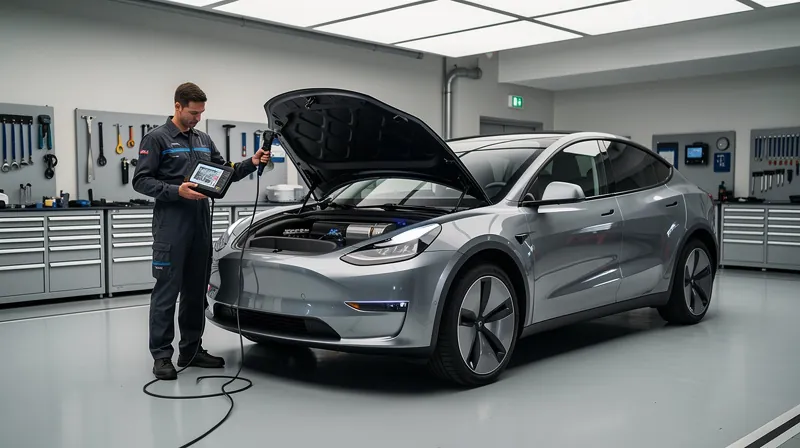
The 2025 auto insurance environment is being reshaped by three converging forces: tariff-driven increases in parts pricing, persistent inflation in new vehicle costs, and the rapid growth of a used EV market that lacks mature valuation infrastructure. Each of these forces directly impacts whether your car gets repaired or declared a total loss — and how much you receive if it does.
The Impact of 2025 Repair Part Tariffs
A 25% tariff on imported auto parts — including a significant volume of components sourced from China and other manufacturing hubs — went into effect in 2025, and its impact on the total loss calculation is direct and measurable. When repair costs rise, cars that previously fell below the total loss threshold now cross it.
Consider the practical math: a vehicle with an ACV of $18,000 and a 75% threshold would previously be totaled only if repairs exceeded $13,500. If parts pricing increases push that same repair estimate from $12,000 to $14,000 due to tariff-inflated component costs, the car is now declared a total loss — even though the vehicle itself hasn’t changed in value.
The downstream effects are significant:
- Insurers are experiencing a higher volume of total loss claims, increasing their overall payout exposure.
- Some insurers are proactively lowering their internal total loss thresholds (within state-permitted ranges) to manage this exposure.
- Repair shops are booking further out, which extends the rental car period and adds additional costs to the insurer — creating pressure to settle claims faster, sometimes to the detriment of thoroughness.
For consumers, the takeaway is that the tariff environment makes it more likely your car will be totaled in 2025 than it would have been for the same damage two years ago. This also means you need to be better prepared to negotiate ACV.
The Depreciation Gap
The Depreciation Gap — the difference between your vehicle’s ACV and either your outstanding loan balance or the cost of a comparable replacement — is one of the most financially painful aspects of a total loss settlement. It is also poorly understood by most policyholders until they’re facing it.
Here’s a realistic example of how the gap develops:
- You purchased a vehicle three years ago for $32,000 with a $5,000 down payment.
- Your current loan balance is $21,000.
- The insurance company calculates your ACV at $17,500.
- Gap: $3,500 out of pocket — unless you have gap insurance.
The gap has widened in recent years due to a fundamental mismatch: new vehicle prices have risen sharply (driven by inflation, supply chain issues, and now tariffs), while used vehicle depreciation has resumed its normal downward curve after the pandemic-era spike. This means the ACV of your current vehicle has come down even as replacement cost remains elevated. The result is that your insurance check buys you less car today than it would have three years ago.
Gap insurance is specifically designed to bridge this difference. If you have gap coverage, it pays the difference between your ACV settlement and your outstanding loan balance. If you don’t have it and are financing a vehicle, strongly consider adding it — it is typically inexpensive and can prevent significant financial hardship.
EV and Battery-Specific Valuation Nuances
Electric vehicles introduce a set of valuation challenges that are genuinely unlike anything in traditional auto insurance. The core issue is the battery pack — the single most expensive component of an EV, often representing 30–50% of the vehicle’s total value.
Why EV valuation is uniquely difficult:
- Battery health and degradation: Unlike mechanical wear, battery degradation is difficult to assess without specialized equipment. A battery at 78% health has meaningfully different value than one at 94%, but this difference isn’t always captured in standard valuation tools.
- Replacement cost vs. total loss threshold: A battery pack replacement for a mid-range EV can cost $10,000–$25,000. Even moderate structural damage to the battery enclosure can trigger a total loss because the battery itself is so expensive to replace — sometimes more than the car is worth.
- Software and diagnostics: Modern EVs are deeply integrated with software systems. Collision damage can corrupt firmware, disable systems, or create cascading diagnostic errors that are expensive to diagnose and resolve. These costs don’t always appear on the initial repair estimate but can emerge during the repair process.
- Comparable sales data gaps: The used EV market, particularly for newer models, has limited comparable sales history. This can lead to wider variance in ACV estimates and makes it harder for both the insurer and the policyholder to validate the final number.
If your EV is involved in a significant accident, consider requesting an independent battery health assessment as part of the claims process. This data can support either a higher ACV (healthy battery) or justify a total loss declaration if the battery is compromised — protecting you either way.
Salvage Value and Buyback Options

When an insurer takes ownership of a totaled vehicle, they sell it to a salvage auction to recover a portion of the payout — this recovery is the salvage value. Salvage value is a key input in the Total Loss Formula and directly influences whether a vehicle is declared a total loss. Importantly, you also have the option to purchase your totaled car back from the insurer, though doing so comes with specific financial and legal consequences.
Calculating Salvage Value
Salvage value is determined by what the market will pay for a wrecked vehicle’s recoverable parts, scrap metal, and the vehicle itself as a potential rebuild project. Insurers typically use salvage auction platforms — such as Copart or IAA — to establish this value, often based on actual historical auction results for similar vehicles in similar condition.
Factors that increase salvage value:
- High-demand vehicle make and model (parts are valuable)
- Damage concentrated in one area (leaving other parts intact and sellable)
- Low mileage on the salvaged vehicle
- Popular trim packages with desirable components
Factors that decrease salvage value:
- High mileage or significant pre-accident wear
- Widespread or structural damage affecting multiple systems
- Uncommon or discontinued models with limited parts demand
- Fire or flood damage (dramatically reduces usable parts)
The impact of a salvage title on future resale is severe. Most buyers apply a 20–40% discount to a vehicle with a salvage title, lenders often won’t finance them, and some insurers won’t offer comprehensive or collision coverage on them. This is a permanent mark on the vehicle’s history that follows it through every subsequent vehicle history report.
How to Buy Back Your Totaled Car
If you want to keep your totaled vehicle — perhaps because the damage is repairable and you know a trustworthy mechanic, or because it has sentimental value — you can typically purchase it back from the insurer as part of the settlement process. The buyback price is deducted from your ACV payment.
The buyback process works as follows:
- Notify your insurer before they release the vehicle to salvage that you want to exercise the buyback option.
- The insurer deducts the salvage value from your ACV payout. For example: ACV of $15,000 minus salvage value of $3,500 = buyback settlement of $11,500.
- The title is transferred to you with a salvage designation.
- You are responsible for all repairs, inspections, and obtaining a rebuilt title before the vehicle can be legally registered and driven.
Important considerations before buying back:
- Get independent repair estimates before agreeing — the true cost to make the car roadworthy may be higher than expected.
- Most states require a rebuilt title inspection before you can re-register a salvage vehicle. Requirements vary by state.
- Insuring a rebuilt-title vehicle can be difficult and expensive; comprehensive and collision coverage may be unavailable from some carriers.
- Never drive a totaled vehicle before completing proper structural and safety repairs — even if it appears drivable, airbag systems, frame integrity, and crumple zones may be compromised.
Negotiating Your Payout: Strategies for Disputed Values

You have the right to dispute your insurer’s ACV calculation, and doing so effectively requires treating the process like a business negotiation backed by data. The single most effective strategy is building your own comparative market analysis and presenting it systematically to the adjuster. Accepting the first offer without review is almost always a mistake.
Start by requesting the full valuation report from your insurer. This document should list the comparable vehicles used to calculate your ACV, including their year, make, model, trim, mileage, condition, location, and sale price. Review every line with a critical eye.
Gathering Comparable Sales Data
To challenge the insurer’s valuation effectively, you need your own set of real-world comparables that support a higher ACV. The goal is to find recently sold vehicles that are as similar to yours as possible — same year, make, model, trim level, drivetrain, and approximate mileage — listed or sold within your local market.
Where to find comparable sales data:
- Kelley Blue Book (KBB) and Edmunds: Use these as a baseline, but understand they represent estimates, not actual transaction data.
- AutoTrader and Cars.com: Active listings in your region for similar vehicles.
- Carmax and dealer websites: Retail pricing from high-volume sellers.
- Local classifieds and Facebook Marketplace: Private-party sales data for your specific market.
Key rules for valid comparables:
- Keep comparables within a reasonable geographic radius (typically 50–100 miles, or your metro area).
- Match mileage within approximately 10,000 miles of your vehicle.
- Use listings from the past 30–60 days — the market changes quickly.
- Ensure trim levels match as closely as possible; a base model listing is not a valid comparable for a fully-loaded trim.
Compile at least three to five strong comparables and present them in a written format to your adjuster, referencing the specific URLs and listing prices. This demonstrates that you have done serious research and are prepared to engage in a data-driven discussion.
Challenging the Adjuster’s Assessment
Beyond comparable sales, there are several specific aspects of the insurer’s valuation report that are worth challenging directly. These are areas where errors are common and corrections can increase your payout.
Incorrect mileage: Verify that the mileage on file matches your actual odometer reading at the time of the accident. Even a few thousand miles of discrepancy on a depreciation schedule can meaningfully change the ACV.
Condition rating disputes: If the insurer rated your vehicle as “average” when it was genuinely in better condition, gather evidence to support an upgrade:
- Dated service records showing regular, documented maintenance.
- Pre-accident photos showing the vehicle’s exterior and interior condition.
- Receipts for recent repairs or replaced components (tires, brakes, battery).
- A clean vehicle history report with no prior accidents or title issues.
Unrecognized upgrades: Document any aftermarket additions — a premium sound system, upgraded wheels, towing packages, or any other feature that adds market value. Provide receipts showing the cost and installation date. The adjuster may not include these automatically, but they are legitimate additions to the ACV calculation.
Problematic comparables in the insurer’s report: Review the comparables the insurer used. Flag any that are located outside your market area, have significantly different mileage or trim levels, or are from markets with notably different price dynamics. Request that they be replaced with more appropriate substitutes.
When to escalate: If negotiation stalls, you have several options:
- File a formal complaint with your state’s Department of Insurance.
- Hire an independent appraiser to produce a counter-valuation — many work on a flat fee or contingency basis.
- Invoke the appraisal clause in your policy, which allows both parties to hire independent appraisers and have a neutral umpire resolve the difference.
- Consult a personal injury or insurance attorney if the dispute involves significant dollar amounts — attorney fees may be recoverable in bad-faith claims situations.
Frequently Asked Questions
How do you calculate the cash value of a totaled car?
The cash value of a totaled car is calculated as its Actual Cash Value (ACV) — the fair market value of the vehicle immediately before the accident, minus depreciation. Insurers determine this using third-party valuation platforms that compare your vehicle to similar recently sold cars in your area, adjusted for your vehicle’s specific mileage, condition, and features. The final settlement you receive is the ACV minus your deductible.
How does the insurance company decide the value of a totaled car?
Insurance companies determine the value of a totaled car by calculating its Actual Cash Value using automated platforms like CCC Information Services, which analyze comparable vehicle sales, depreciation, mileage, and local market conditions. A human vehicle adjuster reviews the system-generated report and may apply additional adjustments. The resulting ACV, minus your deductible, becomes the settlement offer.
Should I accept the first offer for my totaled car?
No — you should not automatically accept the first offer for your totaled car without reviewing the insurer’s valuation report and comparing it against your own market research. First offers are generated by algorithms that may undervalue unique features, use comparables from outside your market, or assign a low condition rating. Gathering your own comparable sales data and presenting it to the adjuster is the most effective way to increase your payout.
Why is a totaled car bad?
A totaled car is financially damaging because the insurance payout is based on ACV — which reflects depreciation — rather than what you paid for the vehicle or what it costs to replace it. If you have an outstanding loan, the ACV check may not cover your full balance, leaving you responsible for the difference. Additionally, if you buy back the vehicle, it will carry a salvage title that permanently reduces its resale value and can make it difficult to insure or finance.
Can I keep a totaled car and drive it?
You can keep a totaled car, but you cannot legally drive it until it has been repaired to meet safety standards, inspected, and re-titled as a rebuilt title vehicle in your state. You would purchase it back from the insurer for the salvage value, which is deducted from your settlement. Driving an unrepaired totaled vehicle is illegal and extremely dangerous, as structural integrity and safety systems like airbags may be compromised.
What is the difference between ACV and replacement cost?
Actual Cash Value (ACV) is the market value of your vehicle at the time of the accident, reflecting its age and depreciation, while replacement cost is what it would cost to purchase a comparable vehicle new today. Most standard auto insurance policies pay ACV, not replacement cost, which is why the settlement check is often less than expected. Some specialty policies and endorsements offer replacement cost coverage, but they are less common and more expensive in standard auto insurance than in homeowner’s policies.
Does gap insurance cover a totaled car?
Yes — gap insurance is specifically designed to cover the difference between your vehicle’s ACV settlement and your outstanding loan or lease balance when a car is totaled. For example, if your insurer pays $17,000 ACV but you owe $21,000 on your loan, gap insurance covers the $4,000 difference. It does not cover your deductible, and it only applies to total loss situations, not partial repair claims.
What happens if the insurance offer is lower than my loan balance?
If the insurance ACV payment is lower than your loan balance, you are responsible for paying the remaining balance out of pocket — unless you have gap insurance. This situation is called being “underwater” on your loan and is common when vehicles depreciate faster than loan principal is paid down. If you don’t have gap coverage, contact your lender immediately to discuss your options and avoid defaulting on the remaining balance.
What is a salvage title?
A salvage title is a legal designation assigned to a vehicle that has been declared a total loss by an insurance company, indicating the car has sustained significant damage relative to its value. Once a vehicle has a salvage title, it cannot be legally driven or registered until it is repaired, inspected, and re-titled as a “rebuilt” or “reconstructed” vehicle. Salvage-titled vehicles are worth significantly less than clean-titled equivalents and may be difficult to insure or finance.
How long does the insurance company have to pay for a totaled car?
Most states require insurers to acknowledge a claim within 10–15 days and to either pay or deny the claim within 30–45 days of receiving all necessary documentation. Specific timelines vary by state law and are regulated by each state’s Department of Insurance. If your insurer is not meeting these timelines, you can file a complaint with your state regulator or consult an attorney about bad-faith insurance practices.
Does a totaled car lose value permanently?
Yes — a vehicle that has been declared a total loss and carries a salvage or rebuilt title loses significant value permanently, typically 20–40% compared to a comparable clean-title vehicle. This reduction reflects the uncertainty about the quality of repairs, potential hidden structural or mechanical damage, and the stigma associated with the vehicle’s history. This discount is reflected in every subsequent vehicle history report check, making the car harder to sell at full market value.
Can I dispute the total loss classification?
Yes, you can dispute a total loss classification if you believe the repair cost estimate is inflated or the ACV has been undervalued, effectively bringing the repair costs below the total loss threshold. To do this, obtain an independent repair estimate from a licensed shop and challenge the insurer’s ACV calculation with your own comparable market data. If you and the insurer cannot agree, most policies include an appraisal clause that allows both parties to hire independent appraisers with a neutral umpire to resolve the dispute.