
Military service demands sacrifice, adaptability, and constant movement — and your car insurance should be able to keep up. Frequent PCS moves, overseas deployments, and base assignments create logistical challenges that standard auto insurance policies simply weren’t designed to handle. A civilian policy can leave dangerous gaps in coverage or cause you to overpay for protection you don’t need while your vehicle sits in storage halfway around the world.
Fortunately, specialized military car insurance options exist precisely to address these gaps. Exclusive providers like USAA and military-friendly carriers like GEICO, Liberty Mutual, and State Farm offer flexible terms, deployment storage discounts, and coverage frameworks built around the realities of service life. Understanding how these policies work — and which ones you’re actually eligible for — can save you hundreds of dollars per year.
This guide covers everything a service member, veteran, or military family member needs to know: eligibility requirements, top provider comparisons, the mechanics of deployment storage discounts, state-specific legal restrictions, and how to stay protected during overseas assignments. Whether you’re an active-duty soldier preparing to deploy or a veteran shopping for better rates, this is your definitive resource.
Key Takeaways
- USAA is the top provider for military members and veterans, averaging $100–$105/month for full coverage, but eligibility is strictly limited to those with a direct military connection.
- Deployment and storage discounts can reduce premiums by up to 60% when vehicles are secured in approved facilities — but state laws in North Carolina and Virginia create significant restrictions.
- Eligibility extends beyond active duty to include Reserves, National Guard members, veterans, spouses, children, widows, and certain unremarried ex-spouses.
- State laws create a “patchwork” of availability, meaning a discount that saves you money in Georgia may be legally unavailable in your next duty station state.
- High-risk profiles — drivers with recent accidents or poor credit — can still find military-tailored options through specialized providers like Direct Auto.
Understanding Military Car Insurance and Eligibility
Military car insurance differs from standard auto insurance by incorporating flexible policy terms designed for deployment, base garaging, and frequent relocations. Rather than penalizing service members for moving across state lines or pausing coverage during overseas assignments, these policies are structured to accommodate the rhythms of military life without leaving gaps or inflating costs unnecessarily.

Standard insurers often treat address changes, temporary vehicle storage, and gaps in driving history as red flags. Military-specific policies treat them as expected circumstances. This fundamental difference in underwriting philosophy translates directly into lower premiums, more accommodating claims processes, and coverage riders that actually make sense for a service member’s lifestyle.
Eligibility is the most critical factor in determining which policies and discounts you can access. USAA, the gold standard of military family coverage, operates an entirely separate eligibility framework from commercial insurers. Understanding exactly where you fall in that framework determines whether you access the best rates available or need to maximize discounts through broader commercial providers.
Who Qualifies for Military Car Insurance?
Military car insurance eligibility is broader than many service members realize. The following groups typically qualify for military-specific rates, discounts, and exclusive provider access:
- Active duty members of the Army, Navy, Air Force, Marine Corps, and Coast Guard
- National Guard and Reserve members with active orders or specific training requirements
- Veterans who were honorably discharged
- Spouses and dependent children of eligible active-duty members
- Widows, widowers, and unremarried ex-spouses of deceased or former military personnel under qualifying circumstances
For National Guard auto insurance and Reserve coverage, eligibility at providers like USAA typically requires that the member has been activated under federal orders at some point or meets a defined training threshold. Part-time Guard members who have never been federally activated may find their eligibility limited to commercial discounts through GEICO or Liberty Mutual rather than the full suite of USAA benefits.
The USAA Eligibility Fence
USAA is a private, member-owned financial services organization that serves “those who served” — and it enforces that mission through strict eligibility controls. Unlike GEICO or State Farm, USAA does not sell policies to the general public under any circumstances.
USAA eligibility is generally inherited through a direct family connection. If a parent held USAA membership, their child can become a member even if they never served. This multi-generational loyalty structure is a significant competitive advantage — once a family is inside the USAA ecosystem, subsequent generations benefit from the same rates and services.
The boundaries are firm, however. A neighbor of a veteran, a civilian spouse of a Guard member who was never federally activated, or a step-child whose parent joined USAA after the marriage may find themselves excluded. Understanding these limits before shopping is essential, because the alternatives — while solid — do carry higher average premiums.
Top Providers and Average Costs for 2026
The best military car insurance providers balance price, eligibility, and specialized benefits. USAA leads on cost at roughly $100–$105/month for full coverage, but GEICO, Liberty Mutual, State Farm, and Direct Auto each serve distinct segments of the military community with competitive offerings and meaningful active duty discounts.
USAA vs. GEICO vs. Liberty Mutual
Choosing between providers requires matching your eligibility, risk profile, and coverage needs to what each carrier does best. Here’s how the top three compare:
| Provider | Avg. Monthly Cost (Full Coverage) | Military Discount | Best For |
|---|---|---|---|
| USAA | ~$100–$105 | Built-in rates | Active duty, veterans, military families |
| GEICO | ~$135–$155 | Up to 15–25% | Non-USAA eligible members, Guard/Reserve |
| Liberty Mutual | ~$195–$217 | Up to 15% | Veterans seeking robust coverage add-ons |
| State Farm | ~$130–$150 | Baseline discounts | Stable, low-baseline rate seekers |
| Direct Auto | Varies (high-risk) | Military-specific underwriting | Recent accidents, poor credit profiles |
USAA wins on price and customer satisfaction in virtually every independent survey, consistently earning top J.D. Power ratings. Its limitation is its exclusivity. GEICO offers the best “always-on” discount structure for service members who don’t qualify for USAA, including emergency deployment savings that activate immediately when orders are received. Liberty Mutual excels in coverage add-ons — its lifetime repair guarantee, gap insurance, and robust roadside assistance make it particularly strong for service members with leased vehicles or newer financed cars that could depreciate rapidly during a PCS move.
Breakdown of Military Discounts
Most major providers offer a layered discount structure that can be stacked for maximum savings. Understanding each discount type helps you negotiate the best possible rate:
- Active Duty Discount: 10–15% reduction standard across most providers for verified active-duty personnel
- Deployment Storage Discount: Up to 60% reduction when the vehicle is placed in an approved secure storage facility during deployment
- Base Garaging Discount: Approximately 15% reduction for vehicles regularly parked on a military installation, reflecting reduced theft and accident risk
- PCS Move Discount: Prorated premium adjustments when your garaging address changes due to a Permanent Change of Station order
- Emergency Deployment Discount: Offered by GEICO specifically; activates when orders arrive for an unplanned deployment, often providing immediate premium relief
Maximizing Deployment and Storage Discounts
The deployment storage discount is the single most valuable financial tool available to deploying service members. When a vehicle is placed in secure, approved storage during deployment, premiums can drop by as much as 60% — because the insurer’s primary risk (the car being driven) is effectively eliminated for the coverage period.
This isn’t automatic, however. Carriers have specific requirements for what qualifies as “secure storage,” what documentation must be submitted, and how the discount interacts with your coverage levels. Missing any of these steps can result in a voided discount — or worse, a denied claim if something happens to the vehicle while you’re overseas.
The 60% Storage Discount: How It Works
The discount triggers when the insurer verifies that your vehicle is in approved, secured storage for an extended period — typically 30 days or more. The core mechanics work as follows:
- The discount applies because the vehicle is not being driven, eliminating collision and liability risk
- Insurers require a “secure plan” — a physical storage arrangement that prevents unauthorized access, such as a locked garage, a gated storage facility, or designated on-base storage
- Documentation is typically required: a signed storage unit lease agreement, a military base gate pass for on-base storage, or a formal letter from the storage facility
- Some insurers require a formal suspension of liability coverage rather than a discount rate, meaning you maintain comprehensive coverage only — protecting against theft, fire, and weather damage without paying for liability you can’t use
- Premium holds — where payments are paused entirely — are available through select providers including USAA, though this creates a gap that must be carefully managed upon return
The critical risk in storage coverage is the liability gap. If you suspend liability and your vehicle is somehow involved in an incident (a garage door falls on it, it rolls out of storage), you need comprehensive coverage in place. Never cancel coverage entirely — maintain at minimum a comprehensive-only policy to protect the asset.
Verification Protocols and Documentation
This is where many service members fall short — and where competitors’ content routinely fails to provide adequate guidance. The documentation process for storage discounts is specific, and errors can void the discount retroactively.
Here’s the exact verification protocol most major carriers follow:
- Submit deployment orders via your insurer’s digital portal or in-person at a local agent office. Most carriers now accept digital uploads of official orders.
- Provide storage facility proof — this means either a signed lease for a commercial storage unit or written confirmation from the base housing or motor pool office for on-base storage.
- Verify the storage location’s security rating before signing any lease. Some carriers have a minimum security standard (e.g., gated access, 24-hour surveillance) that must be met for the facility to qualify.
- Keep physical copies of all storage agreements in a safe deposit box or with a trusted family member. You will need these documents to reactivate full coverage when you return.
- Update your policy upon return within the timeframe specified in your policy — typically 30 days. Failure to reactivate liability coverage promptly after returning stateside is a common, costly oversight.
Failure to provide a current military ID or valid orders can result in the discount being voided and back-premiums being assessed at full rate. Keep your insurer updated at every stage of the deployment cycle: pre-deployment, mid-deployment if your location changes, and upon return.
Navigating State Laws and Complex Eligibility
State insurance regulations create a genuine “patchwork” that can make a highly effective military discount strategy in one state completely unavailable in another. This is one of the most underreported aspects of military car insurance — and one of the most consequential for service members who move frequently across state lines.
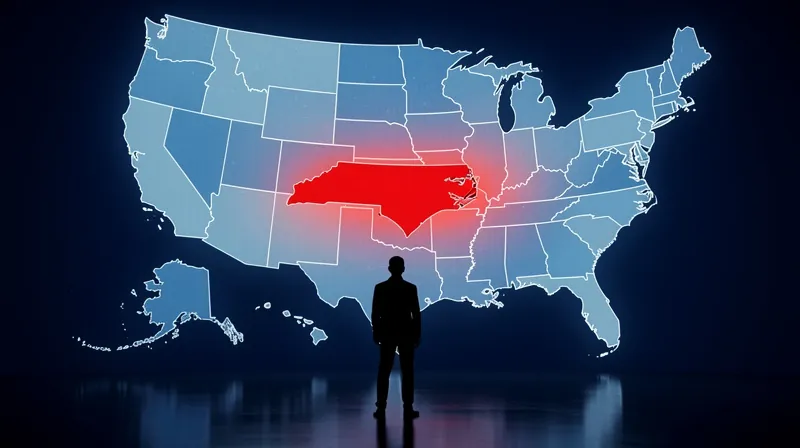
The core issue is that insurance is regulated at the state level. Federal protections under the Servicemembers Civil Relief Act (SCRA) provide some baseline protections — including the ability to terminate a lease or cancel an insurance policy upon deployment without penalty — but they do not override state-level mandates about minimum coverage requirements or how storage discounts are structured.
State-Specific Restrictions on Storage
Not every state allows you to suspend liability coverage while your vehicle is in storage. This is the legal reality that makes the 60% deployment storage discount unavailable in certain markets — a fact that most competitor content completely ignores.
North Carolina and Virginia are the two states where military members most frequently encounter restrictions:
- North Carolina: State law mandates that any registered vehicle maintain active liability coverage at all times, regardless of whether it’s being driven. This effectively prohibits the “liability suspension + comprehensive only” strategy. Military members in NC must maintain full coverage even during deployment storage, significantly limiting the discount potential.
- Virginia: Similar mandates apply. Virginia also has specific rules around the state’s Uninsured Motor Vehicle fee, which creates additional compliance complexity for deployed service members.
- Louisiana: An exception in the South — Louisiana generally allows broader application of storage discounts and tends to have more flexible regulations around coverage suspension for non-operational vehicles, giving military members stationed there more savings leverage.
Before notifying your insurer of an overseas deployment, check your state’s DMV website or consult with a military legal assistance attorney on base. A JAG officer can provide free guidance on your state’s insurance mandates — a resource many service members underutilize. Making the wrong assumption about your state’s rules can result in a lapse of legally required coverage, which carries its own financial and legal penalties.
Complex Eligibility for Survivors and Ex-Spouses
The eligibility rules for military widows, widowers, and ex-spouses are among the least-documented aspects of military car insurance — yet they affect thousands of families. Here’s what the fine print actually says:
- Widows and widowers of USAA members generally retain their USAA membership and associated auto insurance eligibility for life, provided they do not remarry. Upon remarriage, USAA membership and eligibility for insurance products may be affected depending on the specific policy structure in place.
- Unremarried ex-spouses occupy a more complex position. If an ex-spouse was listed on a USAA policy before the divorce, they may retain coverage eligibility for a limited transitional period — but this is not indefinite. USAA requires a formal re-qualification process to continue coverage after the primary member’s policy no longer covers them.
- Inheritance of eligibility is not automatic for any survivor or ex-spouse. It requires submitting documentation proving the familial or marital connection to the veteran, including a marriage certificate, the service member’s DD-214, and in the case of widows, a death certificate.
- Children of veterans who were USAA members retain eligibility regardless of the parents’ marital status, as long as the lineage to the USAA-eligible veteran can be documented.
For non-USAA providers, survivor and ex-spouse eligibility is handled differently. GEICO and Liberty Mutual apply their military discounts based on the policyholder’s own status or household membership, so a widow or ex-spouse would need to qualify independently through their own military service history or remarriage into a military family.
Coverage Options for PCS Moves and Overseas Assignments
Permanent Change of Station moves and overseas assignments introduce insurance complexity that standard policies handle poorly. A PCS-friendly policy must update garaging addresses without penalty, adjust to new state regulations instantly, and offer riders specifically designed for the risks of international vehicle storage and overseas operation.
The financial risk during a PCS move is particularly acute for service members with leased vehicles or recently financed cars. Depreciation during transit and relocation often outpaces the loan balance, creating a gap that standard collision coverage won’t close. Gap insurance — rarely discussed in generic auto insurance guides — is a critical add-on for military members in these situations.
PCS-Friendly Policies
When evaluating a policy for PCS compatibility, these are the specific features to verify before signing:
- Garaging address updates without penalty: Some insurers charge an administrative fee or rate adjustment when you change your garaging address. PCS-friendly policies either waive this fee or prorate the adjustment fairly across the new rating territory.
- Mileage surcharge waivers: Certain policies offer a temporary waiver on mileage-based surcharges during the active PCS period, acknowledging that the long-distance driving involved isn’t representative of your normal usage pattern.
- Immediate address portability: Your policy’s quoted rate is partially based on your garaging ZIP code. Update your garaging address immediately upon arriving at your new duty station — delaying this update means you may be paying rates based on an incorrect risk profile and potentially creating a coverage dispute if you file a claim.
- State registration grace periods: The SCRA provides some protections around vehicle registration and insurance during relocation, but these vary. Confirm with your insurer how they handle the transition period between states.
Overseas and “Imminent Danger” Coverage
Overseas auto insurance (OCONUS coverage) is a specialized category that most standard policies do not address. Service members assigned to combat zones, imminent danger pay areas, or foreign installations face a unique set of risks that require explicit policy language.
Key considerations for overseas and imminent danger coverage include:
- Premium holds during combat zone deployment: Coverage for vehicles in imminent danger pay areas often comes with premium holds — your coverage pauses or reduces to comprehensive-only while the car is in secured stateside storage, but the policy remains active for when you return.
- Liability suspension in overseas assignments: If you’re driving a government-furnished vehicle (GFV) overseas, your personal liability policy may be redundant. Confirm whether your personal policy should be suspended entirely or maintained at a reduced rate to protect your stateside vehicle.
- International roadside assistance: Standard roadside assistance plans (including some AAA memberships) do not extend to foreign countries or military installations in overseas territories. Verify whether your policy’s roadside assistance covers international towing and recovery — the cost of unplanned vehicle recovery in a foreign country can be substantial.
- Comprehensive coverage as the minimum floor: Even if you suspend all other coverage during an overseas assignment, maintain comprehensive coverage on any stateside vehicle in storage. Theft, weather damage, and facility accidents are real risks — and the cost of comprehensive-only coverage is minimal relative to the financial exposure of an uninsured loss.
For service members purchasing or operating a personal vehicle overseas (particularly in Europe under SOFA agreements), separate host-nation auto insurance is typically required and is a completely distinct product from your U.S.-based military car insurance policy. Your JAG legal office or the installation’s transportation officer can provide guidance on host-nation coverage requirements at your specific duty station.
Frequently Asked Questions About Military Car Insurance
Who has the cheapest car insurance for the military?
USAA consistently offers the cheapest car insurance for military members, with average full-coverage premiums of approximately $100–$105 per month. For those who don’t qualify for USAA, GEICO is typically the next most affordable option, offering military discounts of up to 15–25% on top of competitive baseline rates.
Is USAA car insurance only for the military?
Yes, USAA car insurance is exclusively available to people with a military connection. This includes active-duty service members, veterans, and their immediate family members (spouses and children). The general civilian public cannot purchase USAA auto insurance regardless of their insurance history or financial standing.
Do military members get free car insurance?
No, military members do not receive free car insurance. However, they qualify for significant discounts that can substantially reduce premiums — including active duty discounts, base garaging discounts, and deployment storage discounts of up to 60%. The net cost can be far below civilian market rates, but some premium is always required to maintain coverage.
How much is military car insurance?
Military car insurance averages $100–$105 per month for full coverage through USAA, making it among the lowest rates available for comparable coverage levels. Rates through other military-friendly carriers range from approximately $130–$155 per month (GEICO, State Farm) to $195–$217 per month (Liberty Mutual), depending on the driver’s profile, state, and coverage selections.
Can a civilian get USAA insurance?
No, civilians without any military connection cannot obtain USAA insurance. USAA membership and all associated products — including auto insurance — require either personal military service or a direct familial relationship to a USAA member (parent or spouse). There is no pathway for an unconnected civilian to access USAA’s products.
Does car insurance go up when you deploy?
Car insurance should not go up when you deploy — in fact, it should decrease significantly if you properly notify your insurer and place your vehicle in approved storage. Deployment storage discounts of up to 60% are available from most major providers. Failure to notify your insurer, however, can result in continued billing at your standard rate with no discount applied.
What is a PCS move?
A PCS (Permanent Change of Station) move is an official military relocation order requiring a service member to transfer to a new duty assignment, often in a different state or country. PCS moves are a routine part of military life and typically occur every two to three years. For insurance purposes, a PCS move triggers the need to update your garaging address, which can affect your premium rate and state compliance requirements.
Do I need special insurance for overseas deployment?
You need to carefully review your existing policy when deploying overseas, but a completely separate policy may not be required for your stateside vehicle. For the vehicle you’re leaving behind, a domestic storage policy is typically sufficient. If you’re operating a personal vehicle in a foreign country under a SOFA (Status of Forces Agreement), you will likely need separate host-nation auto insurance in addition to your U.S. policy.
How do I qualify for a military deployment discount?
To qualify for a deployment storage discount, you must provide your insurer with verified deployment orders and proof of approved vehicle storage. This typically means uploading your official orders through the insurer’s digital portal and submitting documentation from the storage facility (a signed lease or a letter from on-base storage). The discount activates once the insurer verifies both the deployment status and the secure storage arrangement.
What are the state restrictions for military storage discounts?
North Carolina and Virginia are the two states most commonly cited for restricting military storage discounts, as their laws require registered vehicles to maintain active liability coverage at all times — even when not in use. This prevents service members in those states from suspending liability coverage to access the maximum storage discount. Always check your state’s DMV regulations or consult a JAG officer before modifying your coverage for a deployment.