
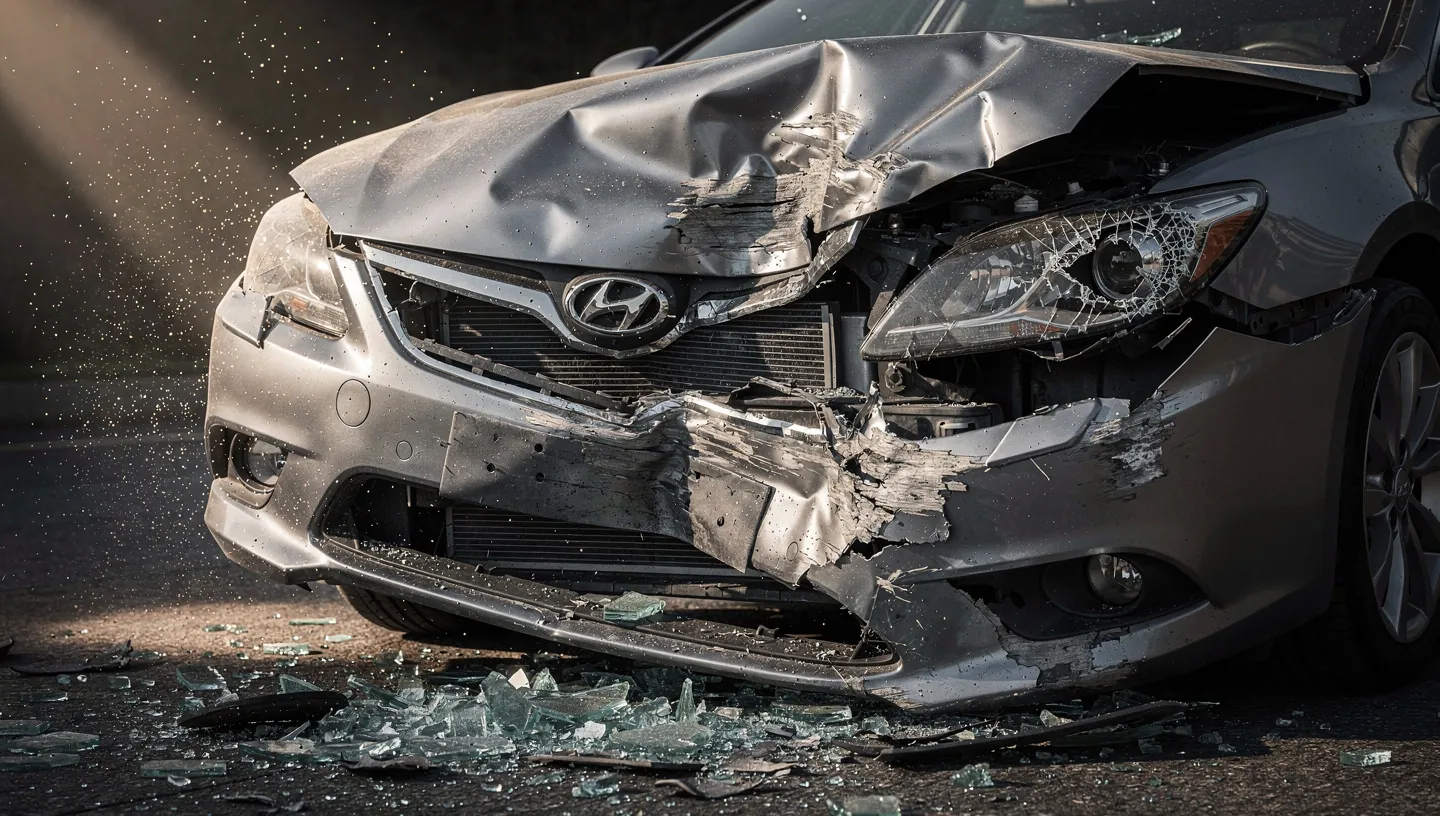
Driving a financed vehicle without insurance is one of the most financially dangerous decisions a car owner can make. The moment you wreck that car, you don’t just lose the vehicle — you inherit a cascade of financial and legal consequences that can take years to overcome. Unlike owning a car outright, financing means a lienholder has a legal stake in the vehicle, making continuous insurance coverage a contractual obligation, not a suggestion.
The immediate instinct after an uninsured accident is to focus on the physical damage. But the real crisis is invisible: an auto loan balance that doesn’t disappear when the car does, legal consequences that can strip your driving privileges, and lender remedies that make a bad situation dramatically worse. Understanding each layer of this problem is the first step toward navigating out of it.
This guide breaks down every consequence you face — from the financial shock of owing money on a totaled car, to No Pay, No Play laws that can bar you from recovering any compensation, to the exact steps required to restore your license through an SR-22 filing. Whether you’re facing this situation right now or trying to understand the risks, this is the complete picture.
Key Takeaways
- You remain legally responsible for the entire outstanding auto loan balance, even if the car is completely totaled and undriveable.
- You will likely face license suspension, heavy fines, and potential jail time depending on the laws of your state.
- Lenders can legally repossess the vehicle and force you to pay for expensive force-placed insurance retroactively.
- Without insurance, you have no coverage for your own damages and remain personally liable for injuries and property damage caused to others.
- In “No Pay, No Play” states, you may lose the legal right to sue for compensation even if the accident was entirely the other driver’s fault.
- Recovering from an uninsured accident requires aggressive negotiation with lenders, potential legal action against the at-fault driver, and mandatory SR-22 filing to restore your driving privileges.
The Immediate Financial Shock: Owning a Loan Balance on a Totaled Car

When you wreck a financed car without insurance, you still owe every dollar remaining on the loan — the lender’s claim on the money doesn’t vanish with the vehicle. Your car may be worth nothing, crushed in a salvage yard, but your contractual obligation to the lender is completely intact. This creates one of the most devastating financial traps a driver can face: paying off a car you can no longer drive.
Most borrowers are already “upside down” on their loans, meaning they owe more than the car’s current market value. Vehicles depreciate rapidly — a new car can lose 20% of its value in the first year alone. Without an insurance payout to absorb that gap, the entire difference becomes personal debt that you are solely responsible for covering.
The consequences compound quickly. You still owe the lender, you have no vehicle to drive, and you’ll likely need to finance a replacement. That means carrying two financial obligations simultaneously while trying to recover from an accident. This is why an insurance lapse at the moment of a crash is categorically different from simply being in an accident with coverage.
Market Value vs. Loan Balance
The gap between what your car is worth and what you owe is called the “negative equity” position, and it’s at the heart of why this situation is so painful. Insurers pay out based on Actual Cash Value (ACV) — the fair market value of the vehicle immediately before the accident, accounting for depreciation, mileage, and condition. ACV is almost always lower than the original purchase price.
In a normal insured total loss, the insurer pays the ACV to the lienholder, and GAP insurance (if you have it) covers the remainder. Without insurance, there is no payout whatsoever. The entire loan balance — say, $18,000 on a car the market now values at $14,000 — becomes your personal, unsecured obligation to satisfy in full.
- ACV is not what you paid — it’s what the car is worth today.
- Depreciation is your enemy — most vehicles are worth less than the loan balance for the first several years.
- The gap becomes your debt — without an insurer to bridge it, you absorb 100% of the shortfall.
The Monthly Payment Trap
Many drivers assume that if their car is destroyed, the loan automatically pauses or cancels. It does not. Your lender’s financial liability protection comes from the contract you signed, not the condition of the vehicle. Missing payments triggers late fees, damages your credit score, and can accelerate the entire loan balance becoming due immediately.
Consider this scenario: You have a $500 per month payment on a vehicle now worth $0. Without insurance coverage, you face a choice between continuing to pay $500 per month on a wrecked car or defaulting and triggering repossession, collections, and severe credit damage. Neither option is acceptable, and both could have been entirely avoided with a standard liability coverage and collision coverage policy.
Legal Consequences: Fines, Suspension, and “No Pay, No Play” Laws

Driving without insurance is a violation of law in 49 states, and the legal consequences after an accident are severe. Beyond the civil financial obligations, you face state-imposed penalties including fines, driver’s license suspension, vehicle registration suspension, and in some jurisdictions, criminal charges. These penalties are applied independently of whether you caused the accident.
The legal system treats an uninsured accident differently than a standard crash precisely because the driver has failed to maintain the minimum financial protection required by law. When you add personal injury to others or significant property damage, the legal exposure grows exponentially. You become personally liable for every dollar of damage caused, with no insurer standing between you and a judgment.
State-Specific Penalties
Fines and suspension lengths vary significantly by state, but the range is consistently painful. First-offense fines typically run from $100 to $1,500, while repeat offenses can reach $5,000 or more. License suspension periods commonly range from 30 days to one year for a first offense, with some states imposing multi-year suspensions for repeat violations.
Some states escalate penalties to criminal misdemeanors or even felonies if the uninsured accident results in bodily injury or death. Additional consequences can include:
- Vehicle impoundment at the scene of the accident
- SR-22 filing requirements for up to three years following reinstatement
- Registration suspension until proof of insurance is provided
- Reinstatement fees ranging from $50 to $500 depending on the state
- Jail time in states that classify driving without insurance as a criminal offense
Repeat offenses dramatically worsen outcomes. A second conviction can result in permanent license revocation in certain states, making the decision to let coverage lapse a potentially life-altering mistake.
No Pay, No Play Laws: What You Need to Know
“No Pay, No Play” laws are among the most consequential and least-understood penalties for uninsured drivers. These statutes, active in approximately a dozen states including California, Louisiana, Michigan, and Oklahoma, specifically prohibit uninsured drivers from recovering certain types of compensation from an at-fault party — even when the accident was entirely the other driver’s fault.
Here is how this plays out in practice: You are stopped at a red light. An insured driver rear-ends you at full speed, totaling your financed car and sending you to the hospital. Under No Pay, No Play law, because you were uninsured, you may be barred from recovering non-economic damages such as pain and suffering, even though the accident was 100% the other driver’s fault. In some states, recovery of economic damages like medical bills and property repair is also restricted.
The practical impact is severe:
- Medical bills that the at-fault driver’s insurer would normally cover may fall entirely on you
- Vehicle repair costs may only be partially recoverable or subject to a set-off
- Pain and suffering claims are frequently barred entirely
- You lose the most powerful legal leverage you would otherwise have against an at-fault driver
States without No Pay, No Play laws still allow recovery from at-fault parties, but the process is adversarial, and your lack of insurance will be used to undermine your credibility in any negotiation or litigation.
Lender Remedies: Repossession and Force-Placed Insurance
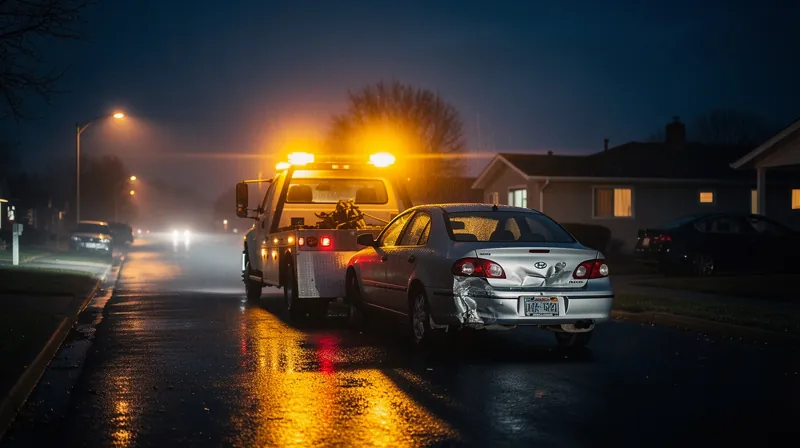
When a lender discovers an insurance lapse — whether through notification of the accident or a routine audit — they have both the contractual right and strong financial motivation to act immediately. The two primary lender remedies are repossession of the vehicle and the imposition of force-placed insurance, and both create severe additional costs for the borrower.
Your loan agreement almost certainly contains a clause requiring you to maintain comprehensive and collision coverage throughout the loan term. Violating this clause is a default event, and lenders are not required to give you a grace period before exercising their remedies. After a major accident, lenders move quickly.
The Right to Repossess
A lender can repossess your vehicle the moment you are in default under the loan agreement, and an insurance lapse constitutes a default independent of your payment status. Even if you are current on every monthly payment, the absence of required insurance coverage can trigger an immediate repossession right in most states.
After repossession, the lender will sell the vehicle — typically at a wholesale auction for significantly less than retail market value. Here is where the deficiency balance becomes a new financial crisis:
- The lender repossesses and auctions the wrecked vehicle, perhaps recovering $4,000 on a car with a $16,000 loan balance.
- The $12,000 deficiency balance — plus repossession fees, storage costs, and auction costs — is now legally owed by you.
- The lender can sue you for this deficiency, obtain a court judgment, and garnish your wages or bank accounts.
- The judgment appears on your credit report, devastating your credit score for up to seven years.
The auction process is specifically designed to recover the lender’s loss quickly, not to maximize the vehicle’s sale price. The deficiency balance after a total-loss auction is almost always larger than borrowers expect.
Force-Placed Insurance: The Retroactive Cost Trap
Force-placed insurance, also called “collateral protection insurance” or CPI, is a policy a lender purchases on your behalf and charges to your loan account when they discover you’ve let coverage lapse. It is one of the most financially punishing aspects of an uninsured accident that most drivers never anticipate.
Force-placed insurance is fundamentally different from a standard auto policy in three critical ways:
- It is dramatically more expensive — premiums can be 5 to 10 times higher than a standard policy because the lender selects the insurer and has no competition incentive.
- It protects the lender, not you — the coverage only compensates the lienholder for their loss; it does not cover your liability to others or your own injuries.
- It is applied retroactively — this is the trap most borrowers don’t see coming.
The retroactive application is particularly devastating. The lender charges premiums back to the date the insurance lapsed, not the date they discovered the lapse. If your coverage ended three months before the accident and the lender discovers the gap two months after the accident, you can be billed for five months of force-placed premiums at rates several times higher than what standard insurance would have cost. This creates a double financial burden: you’re still paying the underlying loan while simultaneously being charged thousands of dollars in retroactive insurance premiums added directly to your loan principal.
The Mechanics of a Total Loss Without Coverage

A total loss occurs when the cost to repair a vehicle exceeds its Actual Cash Value — typically when repair costs surpass 70-80% of the car’s market value, depending on the insurer and state regulations. Without insurance, the entire total loss process that would normally protect you and your lender simply does not exist. There is no adjuster, no payout, no process — just a destroyed asset and a surviving debt.
How Insurance Payouts Work vs. The Reality Without It
Understanding the insured process makes the uninsured reality starkly clear. In a normal total loss scenario with full coverage, the process flows as follows:
| Step | With Full Coverage | Without Insurance |
|---|---|---|
| Accident occurs | You file a claim with your insurer | You have no claim to file |
| Vehicle assessed | Insurer determines ACV | No formal assessment; lender may act unilaterally |
| Payout issued | Insurer pays ACV to lienholder first | No payout issued |
| Remaining balance | GAP insurance covers the difference (if held) | Borrower owes the full remaining loan balance |
| Borrower’s position | Loan satisfied; may receive excess ACV over loan | Full loan balance remains as personal debt |
The contrast is absolute. With insurance, the financial machinery absorbs the loss. Without it, every dollar of loss lands directly on you.
Why GAP Insurance Didn’t Help Here
GAP insurance (Guaranteed Asset Protection) is specifically designed to cover the difference between what a car is worth and what you owe on it at the time of a total loss. It is an invaluable product — but only when it has something to work with. GAP coverage is a supplemental layer that sits on top of a primary insurance payout; it cannot function independently.
Here is the critical point: GAP insurance only pays the gap between the ACV payout and the loan balance. If there is no primary insurance payout to establish the ACV baseline, GAP coverage is contractually triggered. Without a primary collision or comprehensive claim, GAP has no role to play and will not pay out anything. You cannot use GAP insurance as a substitute for collision coverage, and you cannot purchase it retroactively after an accident has already occurred.
At-Fault vs. Not At-Fault Scenarios
Your fault status in the accident dramatically changes which consequences you face — but it does not eliminate them. Whether you caused the crash or were an innocent victim, the absence of insurance creates serious problems. The table below summarizes the key differences:
| Consequence | At-Fault Driver | Not-At-Fault Driver |
|---|---|---|
| Loan balance owed | Full balance, no offset | Full balance (may recover from at-fault party) |
| Liability for other party’s damages | Fully personally liable | Not liable (you didn’t cause it) |
| No Pay, No Play states | Cannot recover damages from others | May be barred from recovering damages |
| License suspension | Very likely | Still likely (for driving uninsured) |
| Fines and penalties | Yes | Yes |
| Legal exposure | High — lawsuits likely | Moderate — may sue at-fault driver |
Personal Liability for Damages
If you caused the accident, your financial exposure is theoretically unlimited. Without liability coverage, you are personally responsible for the other driver’s medical bills, vehicle repairs, lost wages, and pain and suffering. These costs can easily reach six figures in accidents involving serious injury, multiple passengers, or expensive vehicles.
The at-fault uninsured driver faces the full legal apparatus of civil litigation. The injured party’s attorney can file a lawsuit, obtain a judgment against you, and pursue:
- Wage garnishment — a portion of every paycheck until the judgment is satisfied
- Bank account levies — direct seizure of funds from your accounts
- Property liens — legal claims against real estate you own
- Long-term credit damage — judgments remain on credit reports for seven years
Unlike a loan balance, a civil judgment for personal injury has no set ceiling. The combination of medical costs, lost income, and pain and suffering can generate a judgment that follows you for decades.
Recovering from the Other Driver
If the other driver caused the accident, their liability coverage should still pay for your vehicle damage and medical expenses — in theory. In practice, being uninsured significantly complicates your ability to recover. Their insurer knows you are in a weakened legal position, particularly in No Pay, No Play states, and will use that leverage to minimize the settlement offer.
If the other driver is also uninsured, your options narrow dramatically. You can sue them personally, but collecting on a judgment against an uninsured driver is notoriously difficult — people without insurance often lack significant collectible assets. This is precisely why uninsured motorist coverage exists as a product: it protects you from this exact scenario. Without it, you may have a valid legal claim with no practical path to payment.
Rebuilding After the Crash: SR-22 and License Restoration
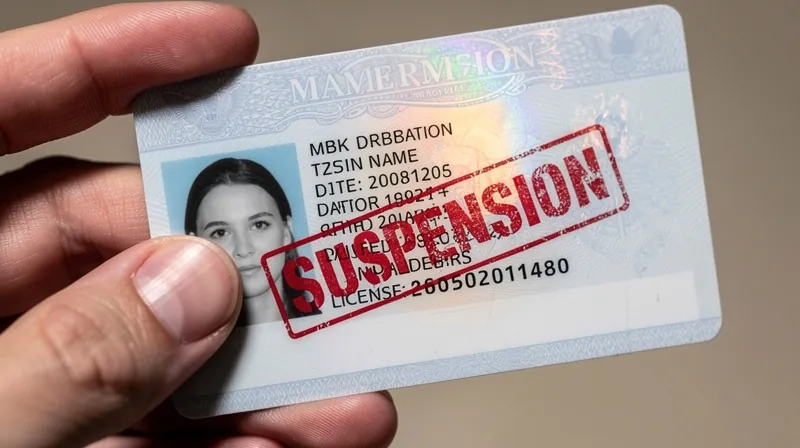
Rebuilding after an uninsured accident is a structured, multi-step process that requires satisfying both state requirements and lender obligations simultaneously. The path forward is navigable, but it demands discipline, transparency with creditors, and a clear understanding of the SR-22 filing requirement that governs your return to legal driving status.
Your first priorities after the immediate crisis are: addressing the loan default with your lender, satisfying state penalties, and initiating the process of reinstating your driving privileges. Ignoring any of these three tracks makes the others harder to resolve.
The SR-22 Filing Requirement
An SR-22 is not an insurance policy — it is a certificate of financial responsibility that your insurance company files with the state on your behalf, certifying that you carry at least the minimum required coverage. Most states require an SR-22 after a conviction for driving without insurance, a serious traffic violation, or an at-fault accident while uninsured.
Here is what the SR-22 process looks like in practice:
- Obtain a new insurance policy — you must first purchase a qualifying auto insurance policy, which will now be significantly more expensive due to your record.
- Request SR-22 filing — your insurer files the SR-22 form directly with your state’s DMV, typically for a fee of $15 to $50.
- Pay reinstatement fees — states charge between $50 and $500 to reinstate a suspended license.
- Maintain continuous coverage — if your policy lapses during the SR-22 period, your insurer must notify the state, your license is immediately re-suspended, and the clock restarts.
- Complete the required period — most states require SR-22 maintenance for three years, though some require up to five.
The long-term insurance cost impact is significant. Drivers with an SR-22 requirement are classified as high-risk, and average insurance premiums can increase by 50% to 100% or more compared to pre-incident rates. This elevated cost persists for the full duration of the SR-22 requirement and often lingers on your insurance record for several years beyond that.
If you are navigating lender negotiations simultaneously, being transparent about your reinstatement timeline can occasionally help. Some lenders will work with borrowers on modified repayment plans for deficiency balances rather than pursuing litigation, particularly if you demonstrate active steps toward financial responsibility.
Frequently Asked Questions
What happens if a financed car is totaled without insurance?
If a financed car is totaled without insurance, you remain legally obligated to pay the full outstanding auto loan balance even though the vehicle no longer exists. There is no insurance payout to cover the car’s value, so the entire debt falls to you personally. Your lender may also repossess the wreck, sell it at auction, and pursue you for the remaining deficiency balance plus costs.
What happens if you drive a financed car without insurance?
Driving a financed car without insurance violates both state law and your loan contract simultaneously, exposing you to two parallel sets of consequences. Legally, you face fines, driver’s license suspension, and potential criminal charges depending on your state. From a lender perspective, you are in contractual default, which can trigger immediate repossession rights and force-placed insurance charges added to your loan balance.
Is it worth suing an uninsured driver?
Suing an uninsured driver is legally viable but practically difficult, because winning a judgment is meaningless if the defendant has no assets or income to collect from. The process requires attorney fees, court costs, and significant time, with no guarantee of recovery. If the at-fault driver has collectible assets like real estate, a stable income, or bank accounts, a lawsuit and subsequent judgment garnishment can be worthwhile.
What happens if you have an accident and you’re not insured?
If you have an accident without insurance, you face immediate personal financial liability for all damages you caused, state-imposed penalties including fines and license suspension, and the loss of any insurance coverage for your own vehicle damage or medical bills. If your car is financed, you also face loan default consequences including potential repossession. In No Pay, No Play states, you may additionally lose your right to recover damages from an at-fault driver.
Can a lender repossess my car if I wreck it without insurance?
Yes, a lender can repossess your car after an uninsured accident because the lack of required insurance coverage constitutes a default under your loan agreement, independent of your payment status. The lender can initiate repossession proceedings even if you are current on all monthly payments. After repossession, they will sell the vehicle and pursue you for any deficiency balance remaining after the sale.
How much is the fine for driving without insurance?
Fines for driving without insurance range from approximately $100 to $1,500 for a first offense, but escalate significantly for repeat violations, with some states imposing fines of $5,000 or more. The exact amount depends entirely on your state’s specific statutes and whether the offense is charged as a civil infraction or criminal misdemeanor. Additional financial penalties including reinstatement fees, SR-22 surcharges, and higher insurance premiums typically far exceed the initial fine itself.
What is “force-placed” insurance and why is it expensive?
Force-placed insurance is a policy purchased by your lender and charged to your loan account when you fail to maintain required coverage, and it is expensive because the lender selects the insurer without competitive shopping on your behalf. Premiums can be 5 to 10 times higher than standard market rates, and the coverage only protects the lender’s interest — not your liability or personal injury exposure. The additional financial burden is that lenders apply it retroactively to the date coverage lapsed, creating a large lump-sum addition to your loan balance.
What is a “No Pay, No Play” state?
A “No Pay, No Play” state is one that has enacted statutes preventing uninsured drivers from recovering certain types of compensation from at-fault parties, even when those parties were entirely responsible for the accident. These laws exist in approximately a dozen states including California, Louisiana, New Jersey, and Oklahoma. The most significant impact is that uninsured drivers may be completely barred from recovering non-economic damages like pain and suffering, and may face limitations on recovering medical and property damage costs as well.
Do I still have to pay my car loan if my car is totaled?
Yes, you are legally required to continue paying your car loan even if the vehicle is totaled, because the loan is a contract between you and the lender that is entirely separate from the physical condition of the vehicle. The debt obligation does not terminate because the asset was destroyed. If you had comprehensive and collision coverage, the insurance payout would satisfy or reduce the balance; without coverage, the full loan balance remains your personal responsibility.
Can I get GAP insurance after an accident?
No, you cannot purchase GAP insurance after an accident has already occurred, because insurance products of all types cannot be applied retroactively to cover events that have already happened. GAP insurance must be in place before a total loss event to be of any use. Even if you had previously purchased GAP coverage, it cannot pay out without a primary collision or comprehensive insurance claim establishing the Actual Cash Value baseline.
How long does my license suspension last for no insurance?
License suspension for driving without insurance typically lasts between 30 days and one year for a first offense, but the exact duration varies significantly by state and the circumstances of the violation. Repeat offenses can result in multi-year suspensions or permanent revocation in certain jurisdictions. Following the suspension, most states require an SR-22 filing maintained continuously for three years before full driving privileges are restored.
What is the difference between liability and collision coverage?
Liability coverage pays for the damage and injuries you cause to other people and their property when you are at fault in an accident, and it is the minimum coverage required by law in most states. Collision coverage pays for damage to your own vehicle resulting from a collision, regardless of fault, and is typically required by lenders on financed vehicles. When you drive a financed car, you need both: liability protects others and keeps you legally compliant, while collision protects the lender’s collateral and gives you a path to recovering your vehicle’s value after a crash.